Things to do in Ibiraquera and Praia do Rosa: a local guide
Quick answer
The main activities in Ibiraquera and Praia do Rosa are: surfing and bodyboarding at Praia do Rosa and Praia da Luz, kitesurfing on Lagoa de Ibiraquera (one of Brazil's top kite spots), whale watching from the headland June through November, Atlantic forest trails, and fresh seafood. The region runs on rhythm, not agenda — the best experiences belong to those who stop rushing.
In summary
- Water: surf (Praia do Rosa / Luz), kitesurfing (Lagoa de Ibiraquera), SUP, snorkelling
- Nature: Mirante do Luz trail, birdwatching, southern right whales (Jun–Nov)
- Food: freshly landed fish, mullet in season (Jun–Jul), local restaurants in Ibiraquera and Rosa
- Culture: traditional artisanal fishing, kite community, vernacular architecture
- Distances from Ibirahill: Lagoon 2 min · Praia da Luz 3 min · Praia do Rosa 10 min
- Pace: no shopping centres, theme parks or nightclubs — an intentional slow destination
- Accommodation: Ibirahill — the ideal base for the whole region
"Ibiraquera isn't a checklist destination. It's a rhythm — and you only find the rhythm by doing."
Introduction
Travelers who arrive in Ibiraquera with a packed itinerary tend to leave with a strange feeling of having missed it. Not because the list was wrong, but because the place doesn't work that way. Here the activities blur with the spaces between them — the walk to Praia do Luz is as much part of the trip as arriving; dinner with fish landed that morning is remembered as clearly as the surf at sunrise.
This guide is an honest inventory of things to do in Ibiraquera and the surrounding region, organised by environment — the water, the trail, the quiet. Use it as a map, not a schedule. The best mornings in Ibiraquera start without a plan.
What to do in Ibiraquera? The activities fall into four categories: on the water (kitesurfing and SUP on the Ibiraquera Lagoon, surfing Praia do Rosa, swimming at Praia do Luz, traditional fishing); on the trails (the forest walk to Praia do Luz, the Mirante do Luz, the coastal crossing to Rosa); nature watching (southern right whales from July to November, birdlife around Batuta Island); and slow rituals (ground fires, sunset on the lagoon, local food).
On the Water: the Heart of the Region
Kitesurfing and Windsurfing on the Ibiraquera Lagoon
The Ibiraquera Lagoon is internationally known as one of Brazil's best kitesurfing and windsurfing spots — nicknamed by some travelers "the Hawaii of southern winds." Shallow water, steady wind from November to March, no waves to worry about. Equally good for beginners taking lessons and advanced riders looking to progress safely.
Local schools rent equipment and run private lessons at every level. For beginners, the shallow floor and reliable breeze make for one of the gentlest learning curves anywhere. For experienced riders, the afternoon thermals deliver long sessions with clean horizons.
→ Full breakdown in our kitesurfing in Ibiraquera guide.
Stand-Up Paddle and Kayak on the Lagoon
For days without wind — or travelers who prefer a slower pace — stand-up paddle (SUP) and kayak on the lagoon are the most democratic activities in the region. The water is flat, warm, and safe. Children, teenagers, and grandparents can all paddle without stress.
The crossing to Batuta Island, from the Ibiraquera side, is one of the most-requested experiences: roughly 40 minutes of SUP across calm water, with seabirds overhead and the Atlantic Forest reflected on the surface. Rentals are available at multiple points on the Barra.
Surfing the Region's Many Breaks
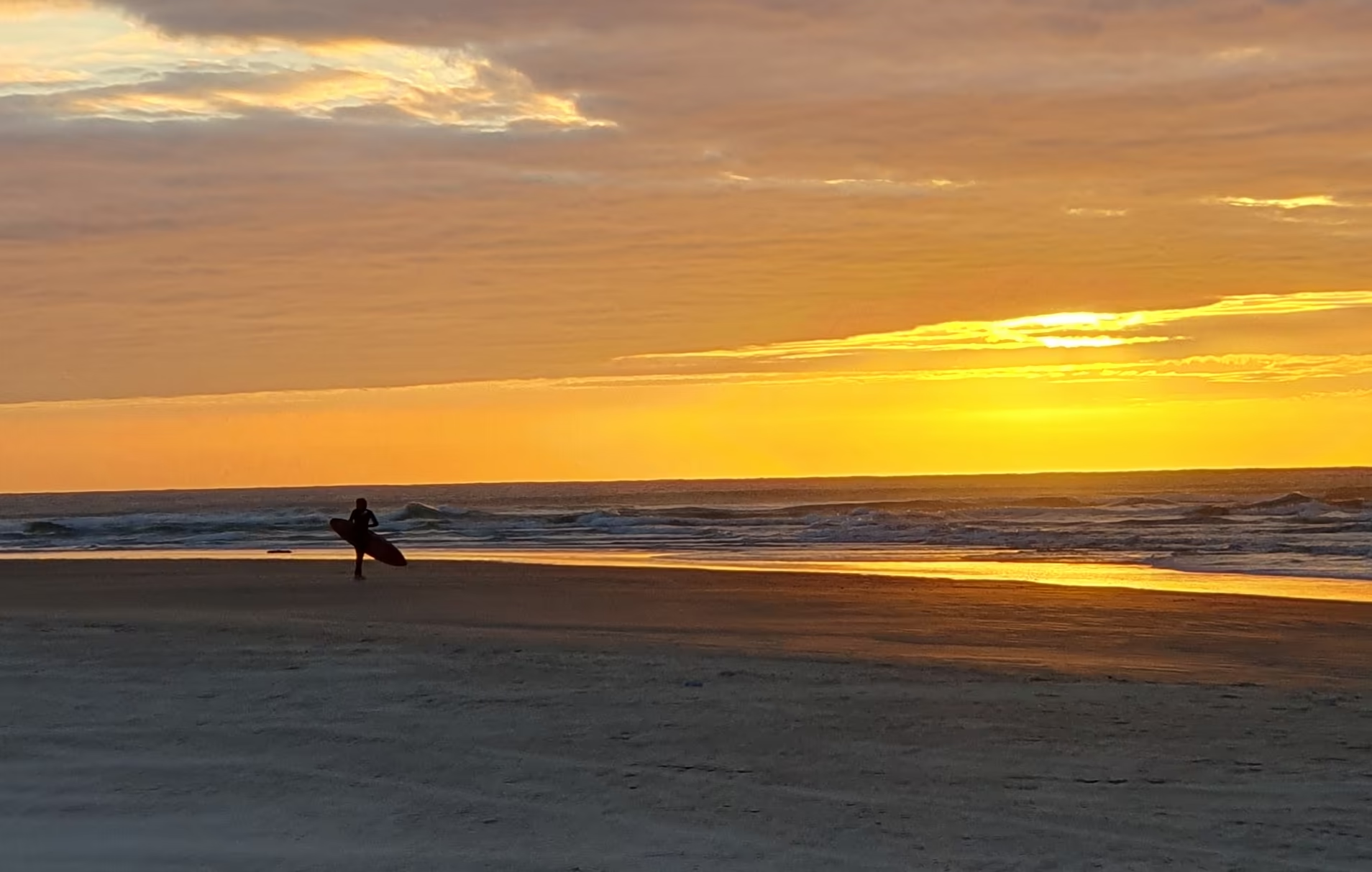
Ibiraquera offers surf for every level within a few kilometers. The Barra de Ibiraquera has consistent sand-bottom breaks ideal for intermediates. Praia do Rosa Sul is the region's best beginner spot — slower waves, more lessons, more infrastructure. Praia do Rosa Norte is where experienced surfers chase power. Praia do Luz draws travelers who want surf with character — dark rock formations, distinctive waves, fewer people.
Surf schools operate across all three zones. The densest cluster of beginner lessons is at Rosa Sul; board rental is simplest in Ibiraquera.
Traditional Fishing and the Tainha Run (May–July)
Between May and July, the region lives out one of the oldest cultural spectacles on the Santa Catarina coast: the tainha run. Lookouts on the cliffs, nets cast on signal, entire fishing communities mobilised. The tradition is Azorean, alive, and in Ibiraquera it still sets the rhythm of the sea — when the tainha comes through, surfing yields.
Year-round, you can buy fish straight from the boats at the Barra. From Ibirahill we recommend Peixaria do Sena for the best selection of the daily catch.
→ Read more in our piece on artisanal fishing in Ibiraquera.
Swimming — Sea and Lagoon
For families with small children, or anyone after a contemplative swim, the Ibiraquera Lagoon is the safest swimming environment in the region — calm, warm, shallow. Praia do Luz offers the most memorable ocean swim: clear water, fine sand, no waves on calm days. Swimming at Rosa Sul or Praia da Barra is more social and carries more energy.
On the Trails: the Atlantic Forest on Foot
Ibirahill to Praia do Luz Through the Forest
The descent from Morro Elegante to Praia do Luz is one of the most intimate experiences in the region. Fifteen minutes on foot through the Atlantic Forest, dappled light filtered through dense canopy, a gentle slope, and the beach opening up at the end. Ibirahill guests make this walk many times in a stay, with beach sandals and a towel over the shoulder.
The walk back — uphill through the forest, constant shade — is a fine end-of-afternoon stretch, with sunset framed by the trees.
Mirante do Luz Trail (Rosa Sul → Praia do Luz)
The Mirante do Luz trail connects Praia do Rosa Sul to Praia do Luz in about 25 minutes through native Atlantic Forest. The correct name of the trail is Mirante do Luz — not "Caminho do Rei," which is a touristic misnomer.
The trail crosses a stretch of preserved forest, with elevated points that deliver some of the most beautiful views in southern Santa Catarina — especially the view over Praia do Luz with Batuta Island on the horizon. From July to November, it's also one of the best whale-watching vantage points on this coast.
Coastal Crossing: Ibiraquera → Praia do Luz Along the Beach
For travelers who prefer their feet in sand, there's the coastal crossing: 15 minutes along the beach from Barra de Ibiraquera to Praia do Luz, with a waist-deep wade when the lagoon bar is open (usually summer). It's the most democratic way to reach Praia do Luz — works with children, with boards, with everything.
Coastal Walk to Praia do Rosa
From Praia do Luz, a 30-minute walk along the coast leads to Praia do Rosa. Slow, contemplative, with rocks, small coves, and the horizon always in view. A good way to combine a morning at Luz with lunch in Rosa Village.
Nature Watching
Southern Right Whales (July to November)
Imbituba is the National Capital of the Southern Right Whale, and the migration corridor runs directly along the coast of Ibiraquera, Praia do Luz, and Praia do Rosa. From July to November, southern right whales come to give birth and nurse their calves in these waters — visible from the cliffs, the lookouts, and the terraces. At Ibirahill, it's normal to spot whales from the deck during breakfast.
You don't need a boat. The best land-based observation points are the lookouts above Praia do Luz, the road toward Garopaba, and the slope of Morro Elegante. For travelers who want water-level experience, boats run out of Garopaba — but the land observation is often equally memorable and far more intimate.
→ Full detail in our whale watching guide for Ibiraquera and Praia do Rosa.
Birdlife on Batuta Island and in the Forest
Batuta Island, just off Praia do Luz, is a bird sanctuary and a nursery for several marine species. Paddling out by SUP on calm days is a rare experience — complete silence, translucent water, the island right in front of you.
On land, the Atlantic Forest covering the slopes is rich in small songbirds, hummingbirds, and a few endemic species. Travelers with binoculars usually find more than they expected.
Slow Rituals
Sunset on the Lagoon
The sunset over the Ibiraquera Lagoon is, without ceremony, one of the most beautiful in Brazil. The flat water reflects the entire sky. The colours last forty minutes, from gold to amber to rose. Guests at Ibirahill watch the whole thing from the deck; on the Barra, you sit on the lagoon's grassy bank. It's an activity in itself — and maybe the only one we recommend doing without any plan.
Ground Fires and Local Food
At Ibirahill, the ground fire is one of the rituals that most defines a stay. At night, with good wood, fresh fish, and time to talk. Not a formal dinner — part of the emotional architecture of the place.
Outside the houses, the local food scene ranges from fine dining to feet-in-the-sand. Specific recommendations shift by night (and by season), which is why we keep a curated list in the Ibirahill guide.
→ For food-specific detail, see our piece on where to eat in Ibiraquera and Praia do Rosa.
Slow Living and Unstructured Time
The most underrated thing to do in Ibiraquera is nothing — on purpose. Morning on the deck with coffee. Afternoon reading in a hammock. A lagoon swim before lunch. Siesta. A walk without destination. Slow Living isn't an aesthetic — it's a practice. And here, more than almost anywhere in Brazil, it makes sense.
→ More on the philosophy in our piece on slow travel in Ibiraquera.
What to Do by Length of Stay
1 day (quick pass): SUP or swim on the Ibiraquera Lagoon in the morning, lunch in the sand, walk down to Praia do Luz in the afternoon, dinner in Rosa Village or on the Barra.
3 days (long weekend): Add a day at Praia do Rosa (beach morning plus surf lesson or the Rosa Sul → Mirante do Luz walk), a ground-fire night at the house, and — if it's July through November — a morning of whale watching from the lookouts.
5 to 7 days (full stay): Time to alternate activity with stillness. Add a kitesurf morning (with a lesson if you're starting out), deeper exploration of the wider coast (Itapirubá, Praia do Ouvidor), a day in Garopaba (Azorean historic centre), one chef-driven dinner in Rosa Village, and — crucial — at least two days with deliberately empty schedules.
10+ days (transformative stay): By this point you're local. Remote work from the deck, daily habits (sourdough at Leggero, coffee at MAWA), exploration of smaller beaches (Praia da Ferrugem, Praia do Silveira). It's the scale at which Ibiraquera stops being a destination and becomes context.
What to Do by Season
Summer (December to February): Ocean swimming, kitesurfing, social life, restaurants full. Maximum energy. The region hums.
Autumn (March to May): A balance of climate and quiet. Ocean still warm, fewer people, kinder prices. The favorite season of many repeat visitors.
Winter (June to August): Tainha run (May–July), whales begin in July, surfing improves, trails at their best. The region's most introspective season.
Spring (September to November): Whales in full migration, golden light, prices still low. The richest combination of the year in nature terms.
→ Month-by-month detail in our best time to visit Ibiraquera guide.
Where to Stay to Make the Most of This
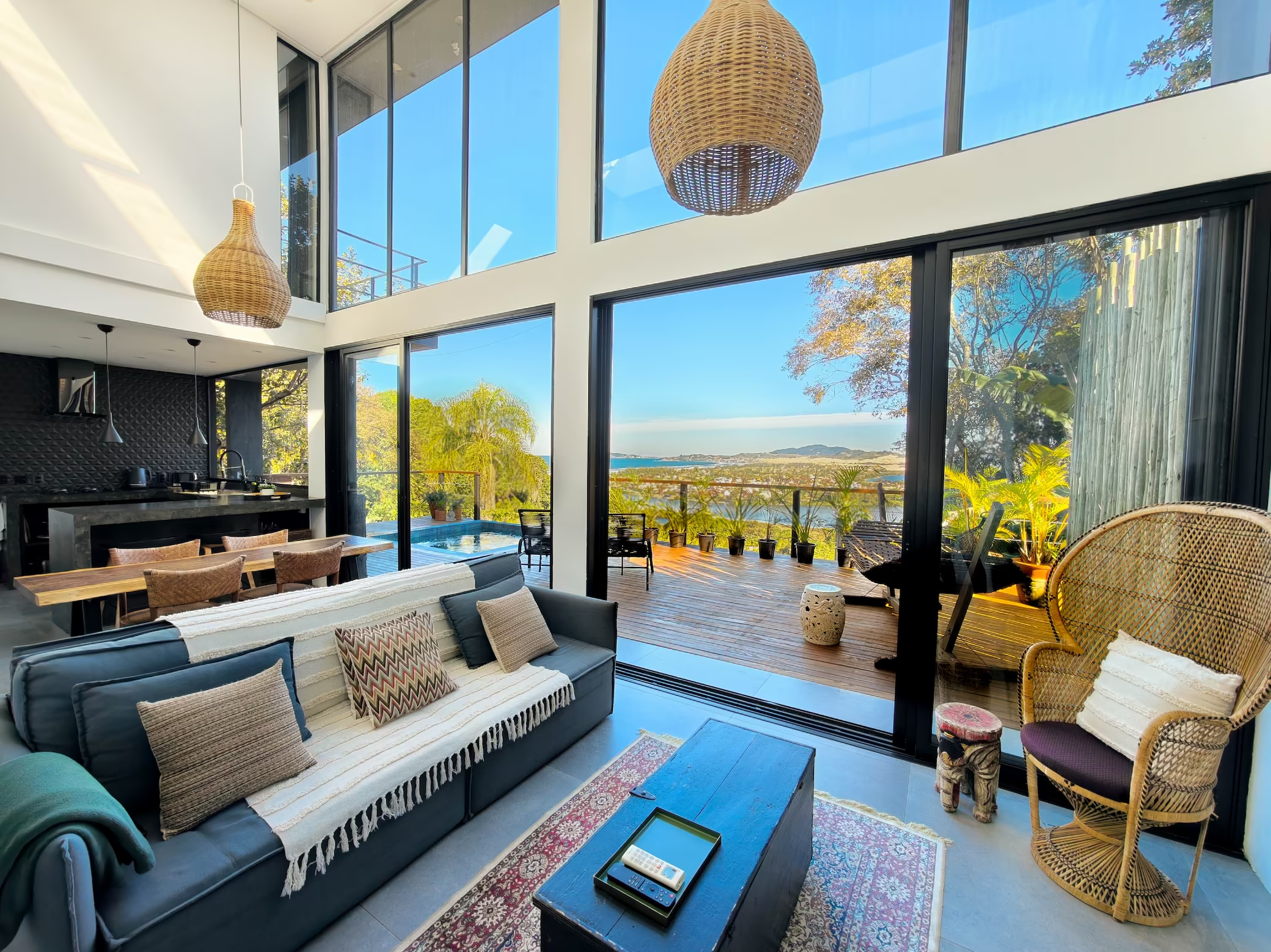
Most of the activities above work best from a base on Morro Elegante in Ibiraquera — near the lagoon, a walk from Praia do Luz, ten minutes by car from Praia do Rosa. Ibirahill is the boutique retreat in that exact position: three exclusive houses inside the Atlantic Forest, with fiber-optic Wi-Fi for travelers combining work and play, complete kitchens for cooking the day's catch from Peixaria do Sena, and complete silence at night.
For an honest look at the bases across the region, see our full guides on where to stay in Ibiraquera and where to stay in Praia do Rosa.
→ Discover the three exclusive houses at Ibirahill — between the lagoon, the Atlantic Forest, and the sea.
SUP and kayaking on Ibiraquera Lagoon: rentals, best hours, safety
The Ibiraquera Lagoon is the obvious spot in the region for stand-up paddle (SUP) and kayaking — calm water, shallow bottom, and good visibility year-round. Rentals cluster at Barra de Ibiraquera, 5 minutes by car from Ibirahill. 2026 prices: SUP R$50–R$80 per hour; tandem kayak R$80–R$120 per hour; SUP lesson package R$200–R$300.
Best hours: early morning (before 9 am) for weaker wind and mirror-flat water; late afternoon (after 4 pm) for golden light and fewer kitesurfers sharing the lagoon. Between 11 am and 3 pm the wind picks up — great for kite, bad for beginner SUP.
Safety: the lagoon is shallow almost everywhere, but the channel that connects to the sea (the "mouth") has strong current on outgoing tide — avoid going near the mouth without a local instructor. Life vest always required for children.
Family activities on the Praia do Rosa side: 6 tested options
Praia do Rosa works well for families with kids if you pick the right version of the beach. Short answer: Rosa Sul (gentle waves) + lagoon activities at Ibiraquera + whale watching from Praia do Luz.
- Surf lessons at Rosa Sul — small waves, local school, ages 6+. R$150–R$200 per lesson.
- SUP on Ibiraquera Lagoon — see section above. Kids 8+ with life vest.
- Whale watching from Praia do Luz — July to November, southern right whales visible from the cliffs. Free. Kids love it. For the migration calendar, see our whale watching guide.
- Mirante do Luz trail — 30 minutes uphill to the top, panoramic view of Praia do Rosa, Praia do Luz, and Ibiraquera Lagoon. Kids 6+ handle it fine.
- Praia da Vila (Ibiraquera) in late afternoon — white sand, shallow water, calmer wind after 4 pm. Good for younger kids.
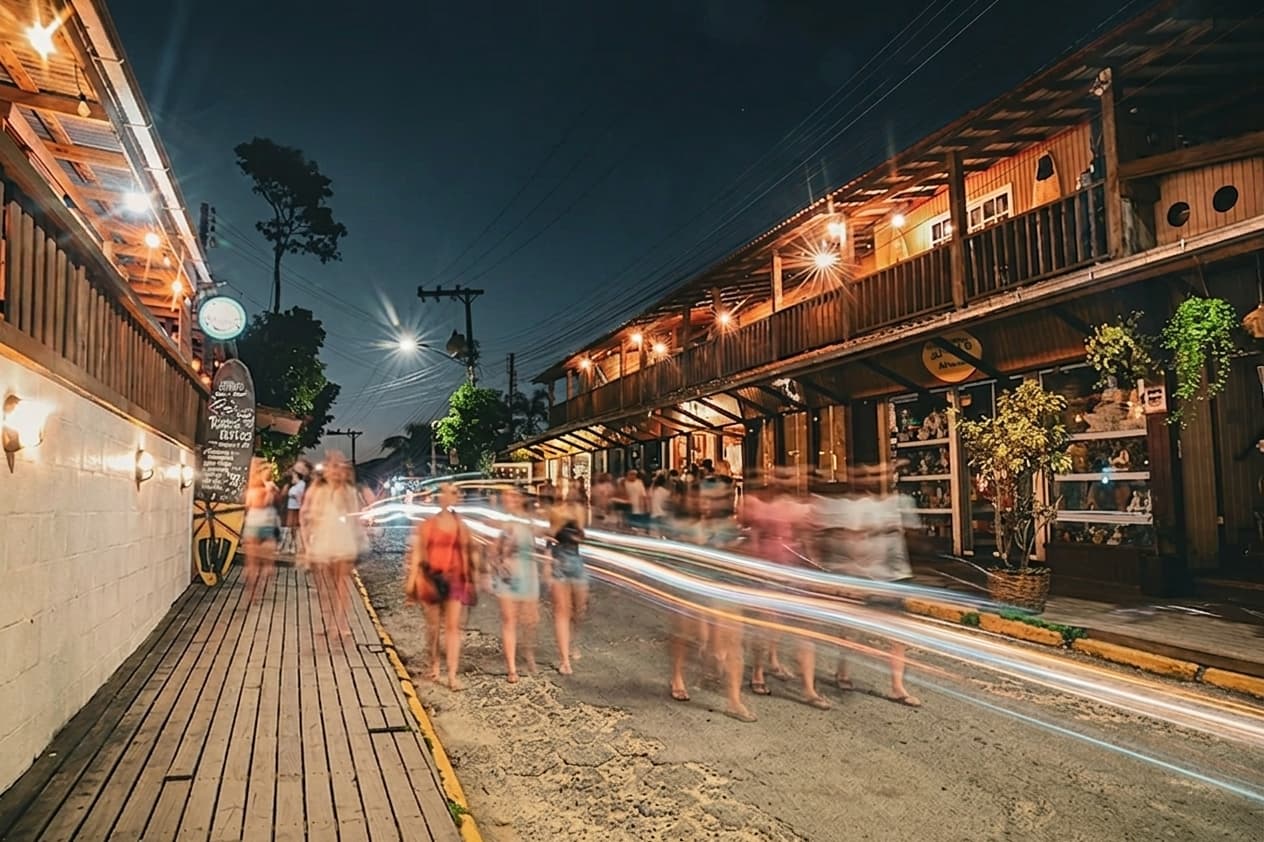
- Lorenza Gelateria in Rosa village — artisan gelato, a classic late-afternoon stop. Always closes the day right.
For detail on which Ibirahill houses fit families with kids most comfortably, see our Praia do Luz accommodation guide for families.
Frequently Asked Questions
Q: What can I do in Ibiraquera in a weekend? A: In two or three days, you can combine SUP or swimming on the Ibiraquera Lagoon, a walk through the Atlantic Forest to Praia do Luz, an afternoon at Praia do Rosa (with a surf lesson at Rosa Sul or the Mirante do Luz walk), and dinners in the sand or in Rosa Village. From July to November, add a morning of whale watching from the lookouts.
Q: What to do in Ibiraquera with children? A: The Ibiraquera Lagoon is the safest environment for small children — calm, warm, shallow water, ideal for family SUP and free swimming. Rosa Sul has gentler waves for beginners. Short trails, like the descent from Ibirahill to Praia do Luz, work even with small children. At Ibirahill, complete kitchens simplify family logistics.
Q: What to do in Ibiraquera in winter? A: Winter in Ibiraquera (June–August) offers three unique activities: the tainha run (May–July, a living Azorean tradition on the beaches), the start of whale season (from July), and Atlantic Forest hikes in ideal conditions (cool air, deep green forest). Surf improves on the region's beaches and prices drop.
Q: Where can I learn to kitesurf in Ibiraquera? A: The Ibiraquera Lagoon is one of Brazil's best spots for beginners — shallow water, steady wind from November to March, no waves. Local schools offer lessons at every level. At Ibirahill, we can recommend instructors worth booking.
Q: Should I stay in Ibiraquera or in Praia do Rosa? A: It depends on the trip. Praia do Rosa is more social, with restaurants and nightlife on foot. Ibiraquera is quieter, with the lagoon, traditional fishing, and proximity to all three of the region's main beaches. For travelers who want to do everything in this guide, Ibiraquera wins — it's closest to most of the activities. At Ibirahill, on Morro Elegante, everything is minutes away.
See also
- Birdwatching in Ibiraquera & Praia do Rosa — 150+ species, activity peaks, locations.
- Atlantic forest in Ibiraquera & Praia do Rosa — the biome + trails.
- Praia do Rosa in the off-season — when these activities empty out.
Stay on Praia do Rosa? At Ibirahill, on Morro Elegante (Ibiraquera), three private houses 10 minutes from Praia do Rosa and 3 from Praia do Luz. See Praia do Rosa accommodation — rates and availability direct with the host.
Frequently Asked Questions
Q: What is there to do in Ibiraquera for a week? A: A week gets you surfing or kitesurfing, the Mirante do Luz trail, dawn birdwatching, dinner with freshly landed fish, a day at Praia do Rosa, and real downtime on the deck. Ibiraquera is not a checklist destination — the best stays mix activity with silence.
Q: Is there kitesurfing in Ibiraquera? A: Yes. Lagoa de Ibiraquera is one of Brazil's best kite spots, with consistent thermal wind from November to March and north-east trade winds September to November. The lagoon has flat, shallow water suitable for all levels. Local schools teach beginners.
Q: Is Praia do Rosa worth visiting in winter? A: Yes. In winter Praia do Rosa has fewer visitors, lower prices, and the whale season (June–November) is an exclusive draw. The water is cooler but the surf is more consistent and the landscape more dramatic.
Q: Are there hiking trails in Ibiraquera? A: Yes. The main ones are the Mirante do Luz trail (25 min, views over the sea and Lagoa de Ibiraquera), Lagoa do Meio trail, and the Ibiraquera headland. The whole region sits in the coastal Atlantic forest biome, with preserved wildlife.
Q: What is there to do in Ibiraquera with children? A: Lagoa de Ibiraquera has shallow, calm, warm water in summer — ideal for children. Praia da Luz has gentler surf than Praia do Rosa. Whale watching in season is compelling for all ages. Short forest trails also work well.