The art of slow travel: why Ibiraquera is the anti-resort
Quick answer
Slow travel is a way of traveling in which the goal is to understand a place, not merely visit it. In practice: staying more days at the same destination, integrating into the local rhythm, learning how the light shifts at 7 am, having a favorite coffee spot, knowing the state of the sea before leaving the house. It is not traveling slowly out of laziness — it is traveling slowly to arrive somewhere deeper.
In summary
- 🗺️ Location: Ibiraquera, Santa Catarina — 80 km south of Florianópolis
- 🌊 Highlights: 8 km² lagoon, Praia do Luz (3 min), Praia do Rosa (10 min), Atlantic Forest
- 🐋 Bonus: whale-watching season July–November (southern right whale)
- 🕐 Ideal stay: 4–7 days minimum to settle into the local rhythm
- 💚 Philosophy: slow living — no resort scale, no agenda, no traffic lights
- 🚗 Access: ~1 hour by car from Florianópolis via BR-101 and SC-100
- 🏨 Where to stay: Ibirahill — boutique nature stay in Ibiraquera, SC
Ibiraquera, on the southern coast of Santa Catarina, has rare conditions for this: an 8 km² lagoon, Praia do Luz (3 km, no bars or kiosks), intact Atlantic Forest, and a community of artisanal fishermen and kitesurfers — all within a ~5 km radius. There is no resort, no buffet, no activities coordinator. The rhythm is set by the tide, the wind, and the whale migration season.
At a glance
- 📍 Location: Ibiraquera, Imbituba, SC — 80 km from Florianópolis
- 🌊 Lagoon: 8 km², warm water 22–26°C, flat-water for kite and SUP
- 🏖️ Beach: Praia do Luz, 3 km with no bars or kiosks, 15 min on foot from Ibirahill
- 🌿 Nature: native Atlantic Forest, trails, endemic fauna, whales (Jul–Nov)
- 🐋 Traditions: artisanal tainha fishing (Jun–Jul); whale watching (Jul–Nov)
- 🏡 Base: Ibirahill — boutique retreat on Morro Elegante, no formal reception, no scheduled itinerary
What the anti-resort means in practice
The word "resort" carries a set of promises: services on demand, programmed entertainment, everything resolved, no friction. It is a legitimate form of holiday. But it is one that insulates the traveler from the place they are in.
Ibiraquera is the opposite in every relevant dimension:
- No buffet. No activities coordinator. No access wristband.
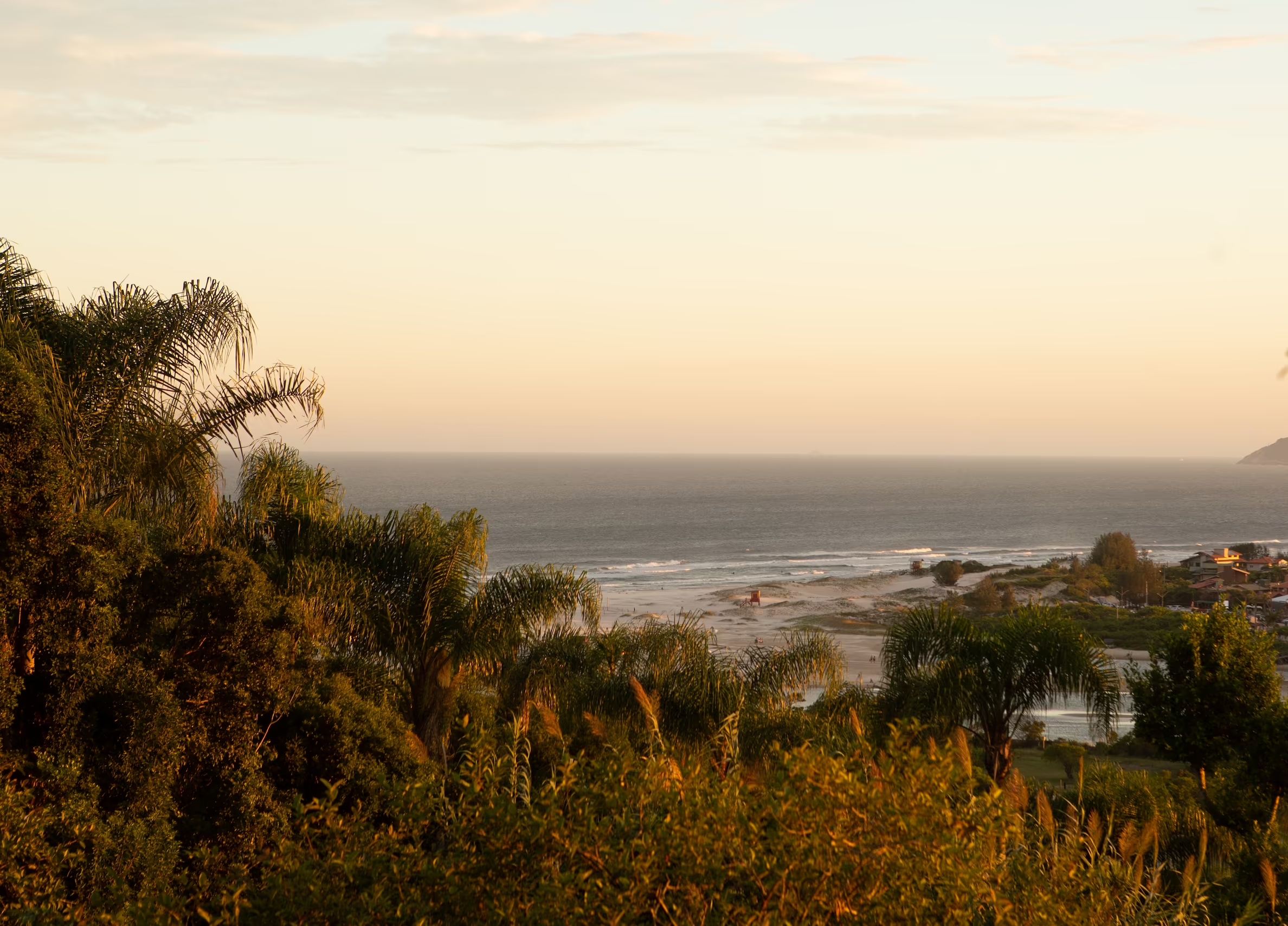
- Lagoa de Ibiraquera — 8 km² of warm water — no resort can reproduce: unique sunset scenes, an active community of kitesurfers and fishermen.
- Praia do Luz requires 15 minutes on foot from Ibirahill to be reached — and rewards with absolute silence and waves with character.
- A fish market where yesterday's catch is on the counter today.
- A community — in Rosa, at the Barra, in the Centrinho — that has its own life and was not built for tourists.
That mild friction — the small effort required to find something — is exactly what transforms a trip into an experience that stays with you. Total comfort, paradoxically, erases memory.
What Ibiraquera has that few places have
Ibiraquera brings together, within a ~5 km radius, elements that normally require separate destinations:
| Element | Detail |
|---|---|
| Coastal lagoon | 8 km², warm water 22–26°C, flat-water for kite and SUP |
| Ocean beach | Praia do Luz: 3 km no bars; Praia da Barra: 3 km with surf |
| Atlantic Forest | Morro Elegante hillsides — trails, birds, silence |
| Fishing community | Active artisanal fishing — tainha (Jun–Jul), shrimp, daily catch |
| Whale migration | Southern right whale, Jul–Nov — visible from the coast and terraces |
| Creative cuisine | Restaurants at the Barra and Praia do Rosa, 10 min by car |
| Urban proximity | Florianópolis 80 km — international flights connect |
Ibiraquera's rhythm
There is a pattern that repeats with first-time visitors to Ibiraquera who plan to stay a few days and end up extending their stay. Not because there is nothing to do elsewhere. It is because the rhythm of the place sets in — and once it does, leaving feels like a loss.
The day starts early and for good reasons: the swell, the kite, the walk down to Praia do Luz with the sun still low. Mid-morning has tea and quiet. Lunch has time. The afternoon has concentration or contemplation. Dusk has the lagoon turned gold. The evening — if Rosa calls — has dinner and conversation. If not, early bed and the sound of the Atlantic Forest.
It is not emptiness. It is a different kind of density — the kind that the world's best slow travel destinations protect as their most precious asset.
Why southern Santa Catarina for slow travel
The southern Santa Catarina coast is one of the most underrepresented regions in quality tourism in Brazil — and in slow travel, that is a structural advantage.
- No high-frequency direct international flights to Florianópolis — which filters weekend-trip tourism.
- The distance from São Paulo (just under 700 km) filters further.
- The absence of large hotel chains in the Ibiraquera area means those who arrive generally came with intention.
- The absence of theme parks means the region has no way to entertain those who don't want to be entertained by the place itself.
The result is a density of travelers with a similar profile: curious, calm, willing to stay.
Praia do Luz and the philosophy of access by merit
No place on this coast embodies slow travel philosophy better than Praia do Luz.
There is no direct car access to the sand. No coconut stand. No mobile signal. There are 15 minutes on foot along the dirt road from Ibirahill — and then a 3 km stretch of sand that, at the height of summer, maintains a silence that easily accessible beaches cannot hold even at 6 am.
The preserved Atlantic Forest on Morro Elegante's slopes ends exactly where the beach begins. Ilha do Batuta, a bird sanctuary, sits offshore. Sea lions appear on the rocks without warning. The southeast swell arranges waves with a regularity surfers know by heart.
It is a beach that does not give itself to those who don't seek it. That condition — the small effort as a filter — is the essence of slow travel applied to geography.
Connection with local traditions
Artisanal tainha fishing (June–July)
From May to July, the tainha (mullet) arrives on the Santa Catarina coast — and with it, the Azorean tradition that has defined Ibiraquera's fishing communities for generations. Lookout watchers position themselves on the clifftop mirantes to spot the shoals; they signal the fishermen below with gestures. Nets are cast at the right moment. It is a genuine community event, not staged for tourists.
Witnessing the tainha harvest — or simply buying the day's catch directly from a fisherman at the Barra — is one of the most authentic slow travel experiences on the Brazilian coast.
Whale watching (July–November)
From July to November, southern right whales migrate from Antarctica to breed in the protected bays of Imbituba — the National Capital of the Southern Right Whale. From Ibirahill's terraces and the clifftops above Praia do Luz, whales of up to 17 meters and 45 tonnes can be seen less than 1 km from shore.
How long to stay
In slow travel, the length of the stay is not a detail — it is the most important decision of the trip.
- 3 days: enough to see the place.
- 1 week: enough to begin understanding it.
- 2 weeks: when guests start having their own references — the favorite café, the right time to arrive at Praia do Luz, the lagoon sunset as a daily ritual.
The pattern that repeats among Ibirahill guests who return: not those who stayed and saw everything, but those who stayed long enough for the place to become familiar.
Ibirahill houses have full kitchens — which makes longer stays logistically simple. A week at Ibirahill with home cooking costs less than a week at an equivalent-standard hotel with lunches and dinners out.
Ibirahill as a slow travel base
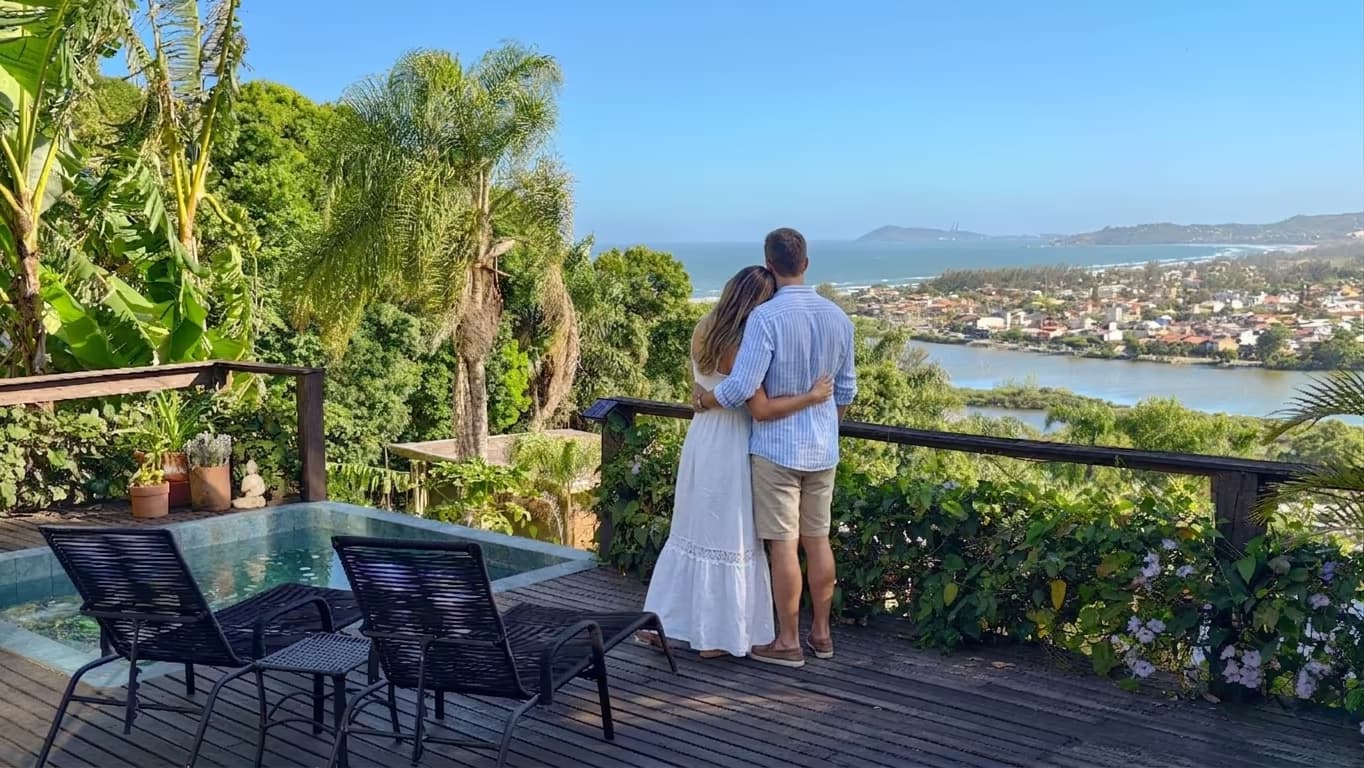
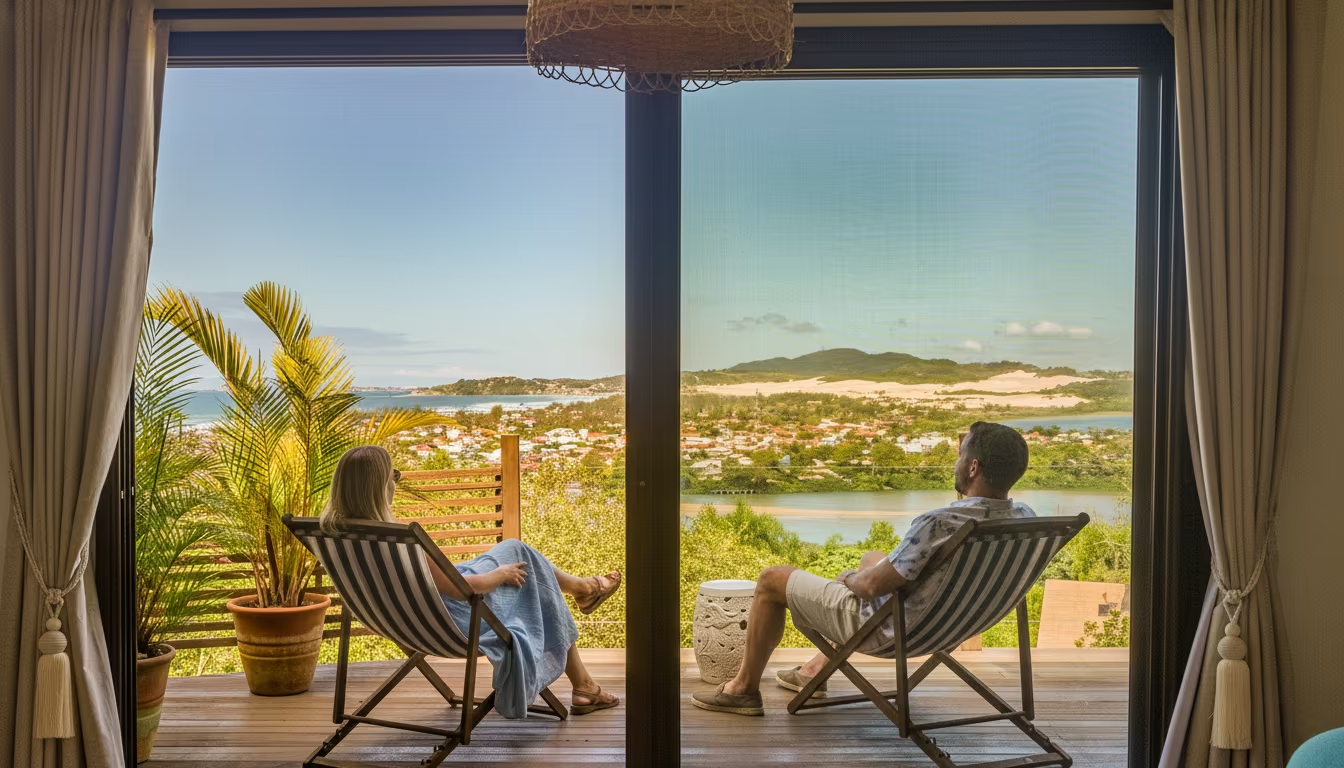
The three Ibirahill houses — Casa Galeria, Casa Atelier, and Casa Bajau — were built on Morro Elegante in Ibiraquera with the intention of placing guests in the deepest possible relationship with this landscape.
Each house has:
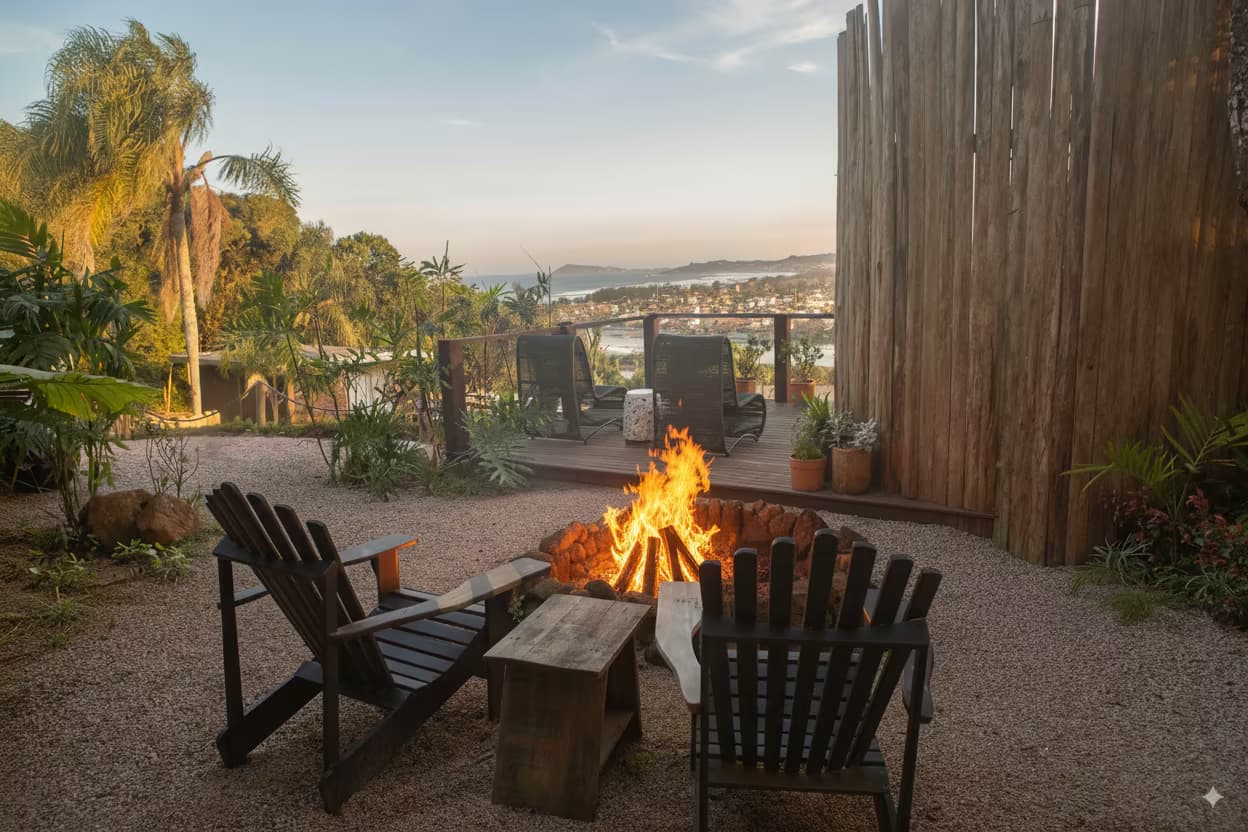
- Private outdoor space and ground fire
- Full kitchen (for stays without a restaurant schedule)
- Fiber-optic Wi-Fi (for digital nomads extending their stay)
- Direct Atlantic Forest access from the door
- Silence — not as absence, but as guaranteed quality
Distances: Praia do Luz 15 min on foot; Praia do Rosa 10 min by car; lagoon 2 min walk; Atlantic Forest directly from the door.
Not a hotel. No formal reception, no uniformed concierge. There is Leo — who knows every trail, every restaurant, every tide, every season — available for those who want guidance and respectful of the silence of those who don't.
→ The Ibirahill houses, availability and planning information at ibirahill.com/casas
Frequently asked questions
What is slow travel and how does it work in Ibiraquera?
Slow travel is the way of traveling in which the goal is to understand a place, not merely visit it. In Ibiraquera, that means staying long enough for the rhythm of the place to set in — getting to know the lagoon, finding Praia do Luz, noticing the difference between the morning and afternoon swell, having a favorite restaurant. A week is the minimum; two weeks is where the magic begins.
Is Ibiraquera suitable for slow travel or is it too busy?
It depends on the season and the beach. Praia do Rosa has an intense social scene in high season — vibrant, not quiet. But Praia do Luz is silent year-round, being accessible only on foot. Lagoa de Ibiraquera is large enough to never feel crowded. And Ibirahill, on Morro Elegante, sits above the movement — privacy guaranteed regardless of the time of year.
How long should I stay in Ibiraquera for a slow travel experience?
A week is the minimum to begin feeling the rhythm of the place. Ten days to two weeks is where the stay stops being tourism and starts being life — however temporary. The Ibirahill houses have full kitchens, making longer stays logistically simple.
What is the difference between Ibirahill and a luxury resort?
A resort resolves everything for you — and in resolving everything, it disconnects you from the place. Ibirahill does the opposite: it offers genuine comfort and privacy, but places you inside the region, not above it. Praia do Luz is 15 minutes on foot. The fish market is 10 minutes by car. The lagoon is a walk away. There is no programmed entertainment — there is a place with its own texture and time to discover it.
Is Ibiraquera good for slow travel at any time of year?
Yes, but each season has its profile. September–November is the preferred window: whales present, consistent kite wind, beaches without high-season crowds, shoulder-season prices. Winter (June–August) has even less movement and the magic of the tainha fishing season and quality surf. Summer (December–February) is exuberant — good for social slow travel, less ideal for isolation and silence.
What is the artisanal tainha fishing?
The artisanal tainha (mullet) fishing is an Azorean tradition active in Ibiraquera and on the Santa Catarina coast from May to July. Lookout watchers position themselves on the clifftop mirantes to spot the shoals; they signal the fishermen below with gestures who cast the nets at the right moment. The fish is sold directly at the Barra de Ibiraquera. It is one of the most authentic and visible cultural practices in the region.
Keep exploring
- Ground fire in Ibiraquera — the slow ritual of evenings at Ibirahill
- Artisanal fishing and the mullet run — Azorean tradition still ruling the sea
- Atlantic Forest in Ibiraquera and Praia do Rosa — the biome behind the silence
- Praia do Rosa in the off-season — when the anti-resort meets the beach in the same state