Praia do Luz in Imbituba: the quietest beach in the region
Quick answer
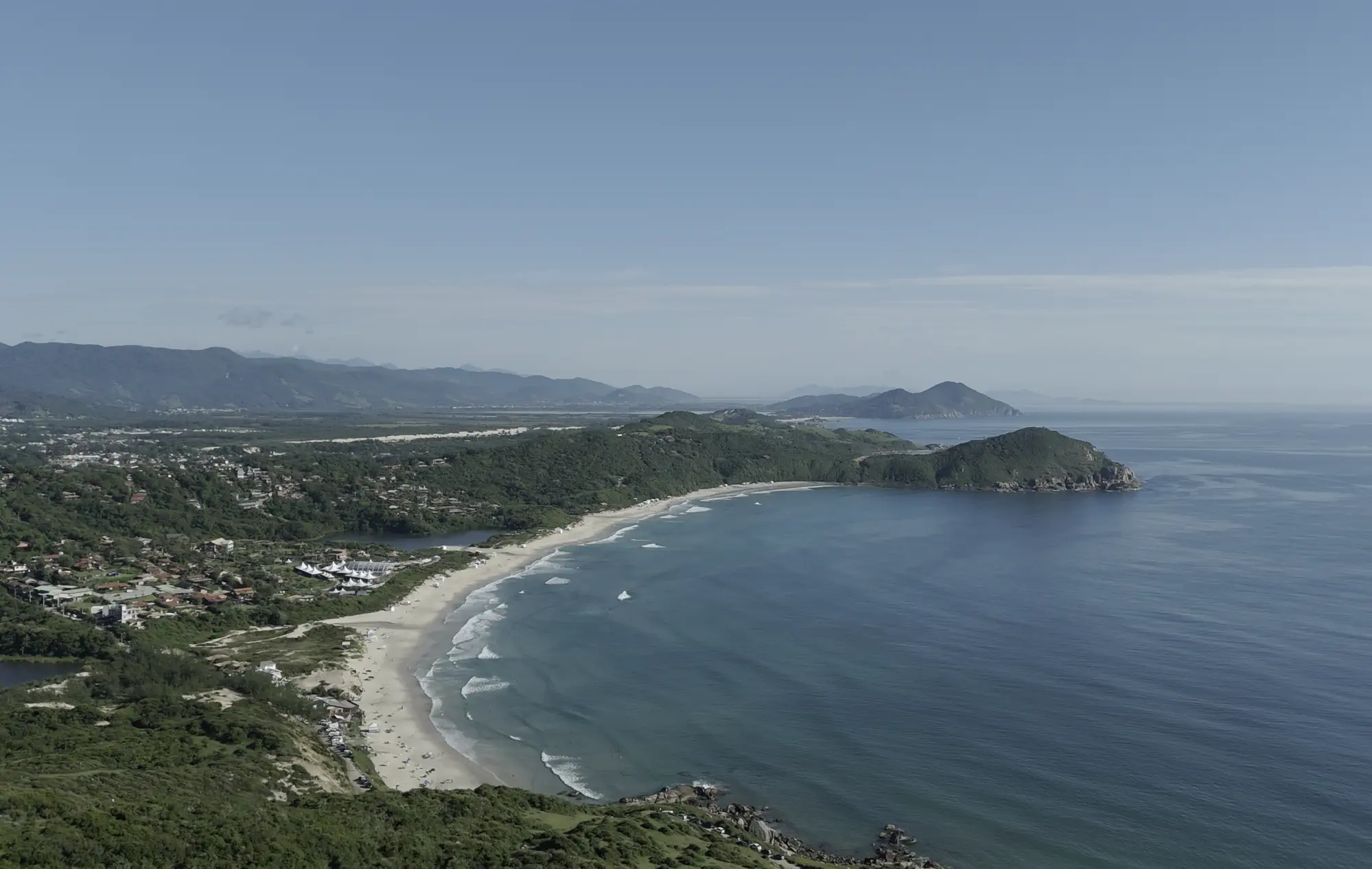
Praia do Luz, in Imbituba (Santa Catarina, Brazil), is one of the quietest beaches on the Santa Catarina coast — a strip of sand between two headlands, with Atlantic forest reaching the beach and almost no infrastructure. It sits 3 minutes from Ibirahill (Morro Elegante) and 10 minutes from Praia do Rosa. July–September overlaps with whale season.
A Beach With a Life of Its Own
What is Praia do Luz in Imbituba? A semi-isolated ocean beach on the Santa Catarina coast, 15 minutes on foot from Ibirahill through the Atlantic Forest. It catches the region's best SE swell and is visited by local surfers, fishermen, and southern right whales between July and November. No kiosks, no paved access, no infrastructure.
There is a version of travel writing that describes places by cataloguing their absences — what hasn't been built yet, what the crowds haven't found, what the developers haven't touched. It's a way of talking about beauty that, ironically, tends to erase the people who were already there.
Praia do Luz doesn't need that framing. It has its own story, and it involves people who have been in a real relationship with this stretch of coastline long before any travel magazine thought to include it in a roundup of hidden gems.
The fishermen have been reading the water here for generations — the same way their fathers did, and their fathers before them. The surfers arrived later but have been coming back with the same fidelity, chasing the same breaks, knowing which swell direction makes the wave behave. Together, these two communities have defined the rhythm of the place: purposeful, unhurried, oriented toward the sea rather than toward any notion of being visited.
That's what makes Praia do Luz interesting. Not that it lacks something, but that it has something most beaches on the Santa Catarina coast have already traded away — a genuine local character that tourism hasn't yet had a chance to package.
The Setting
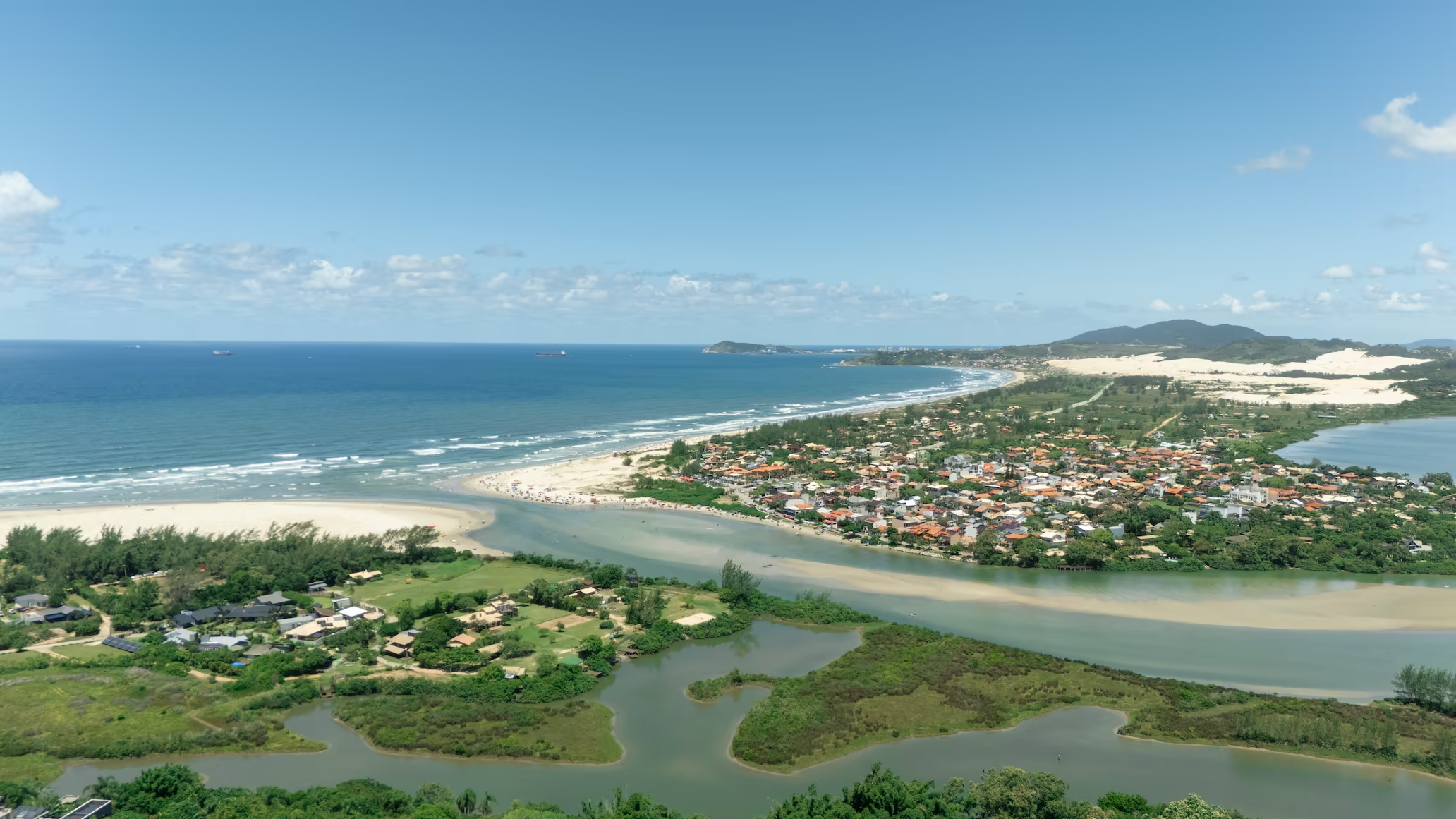
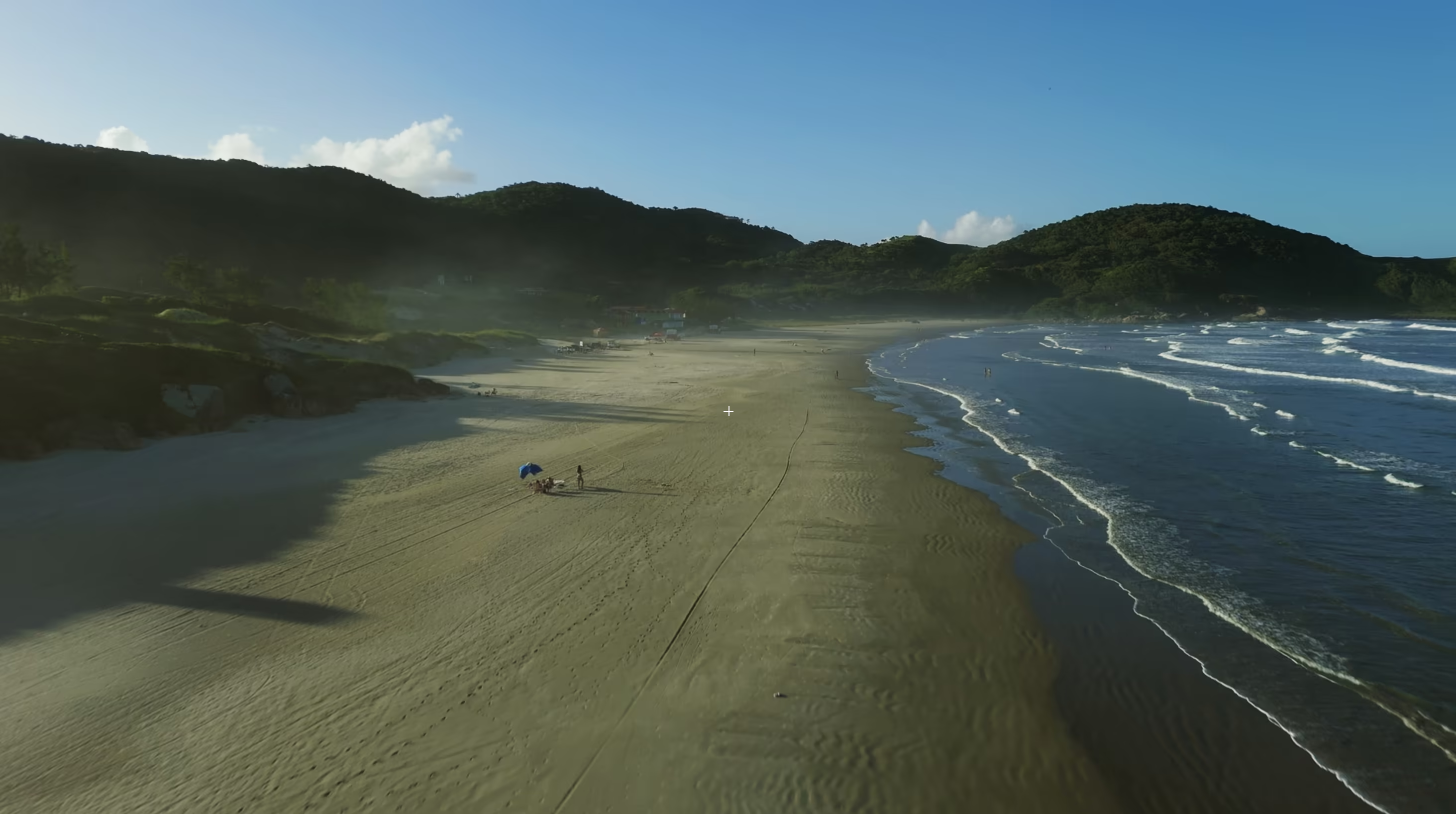
Praia do Luz sits between two of Santa Catarina's most celebrated beaches — Praia do Rosa to the north and the Barra de Ibiraquera to the south — and occupies a stretch of coastline that, in terms of pure natural drama, holds its own against both.
Behind the beach rises Morro Elegante, one of the region's defining geographical features: a hillside dense with Atlantic Forest that gives Praia do Luz its distinctive sense of enclosure and shelter. The forest presses in toward the sand, the hills frame the bay on either side, and the result is a beach that feels simultaneously open to the full force of the Atlantic and somehow protected from the rest of the world.
The sand is dotted with rock formations of various sizes that break the shoreline into smaller coves and sheltered nooks — the kind of spots where you put down a towel, stay longer than planned, and lose track of time entirely. This is a beach that rewards slow exploration over the sunbed-and-sunscreen approach.
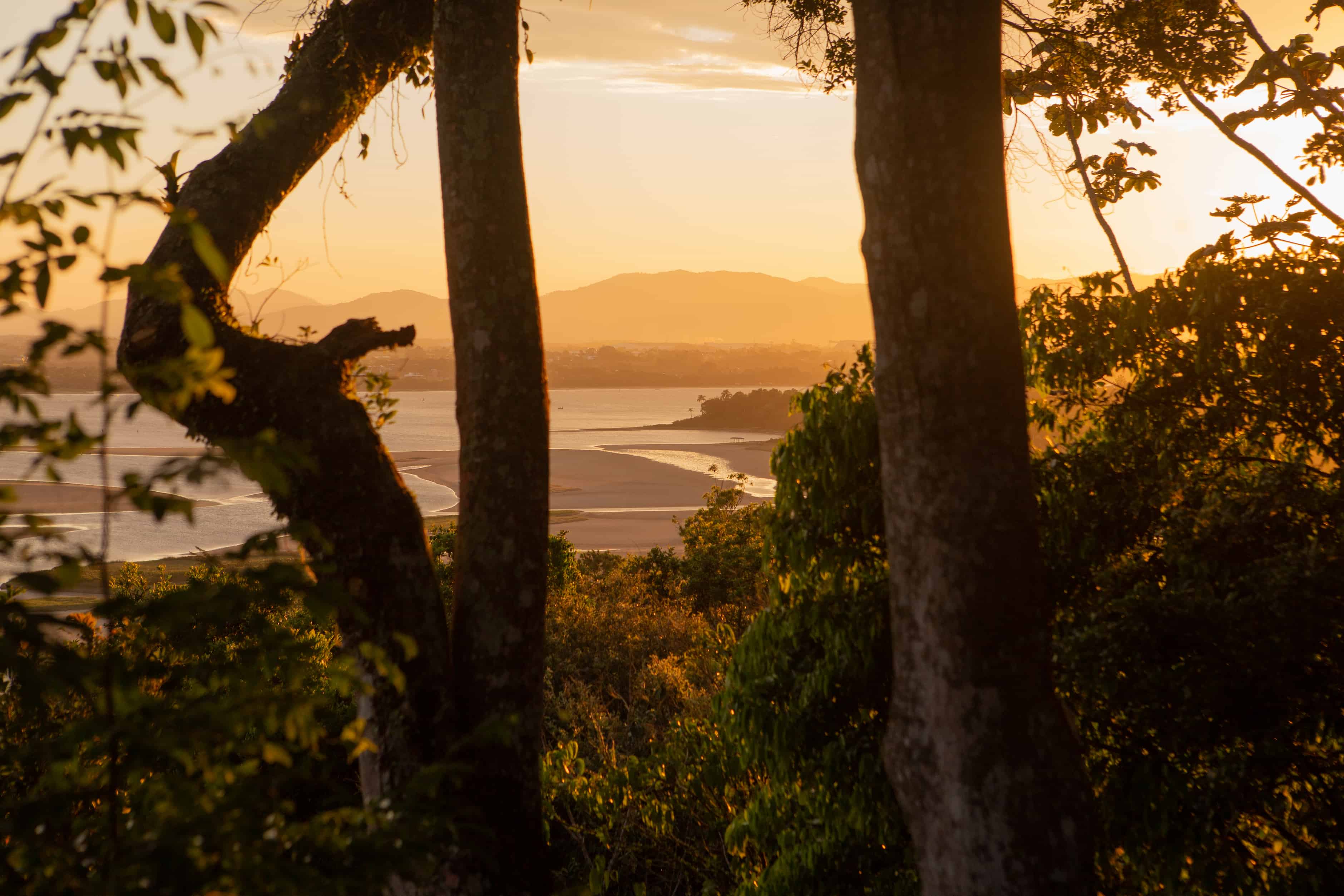
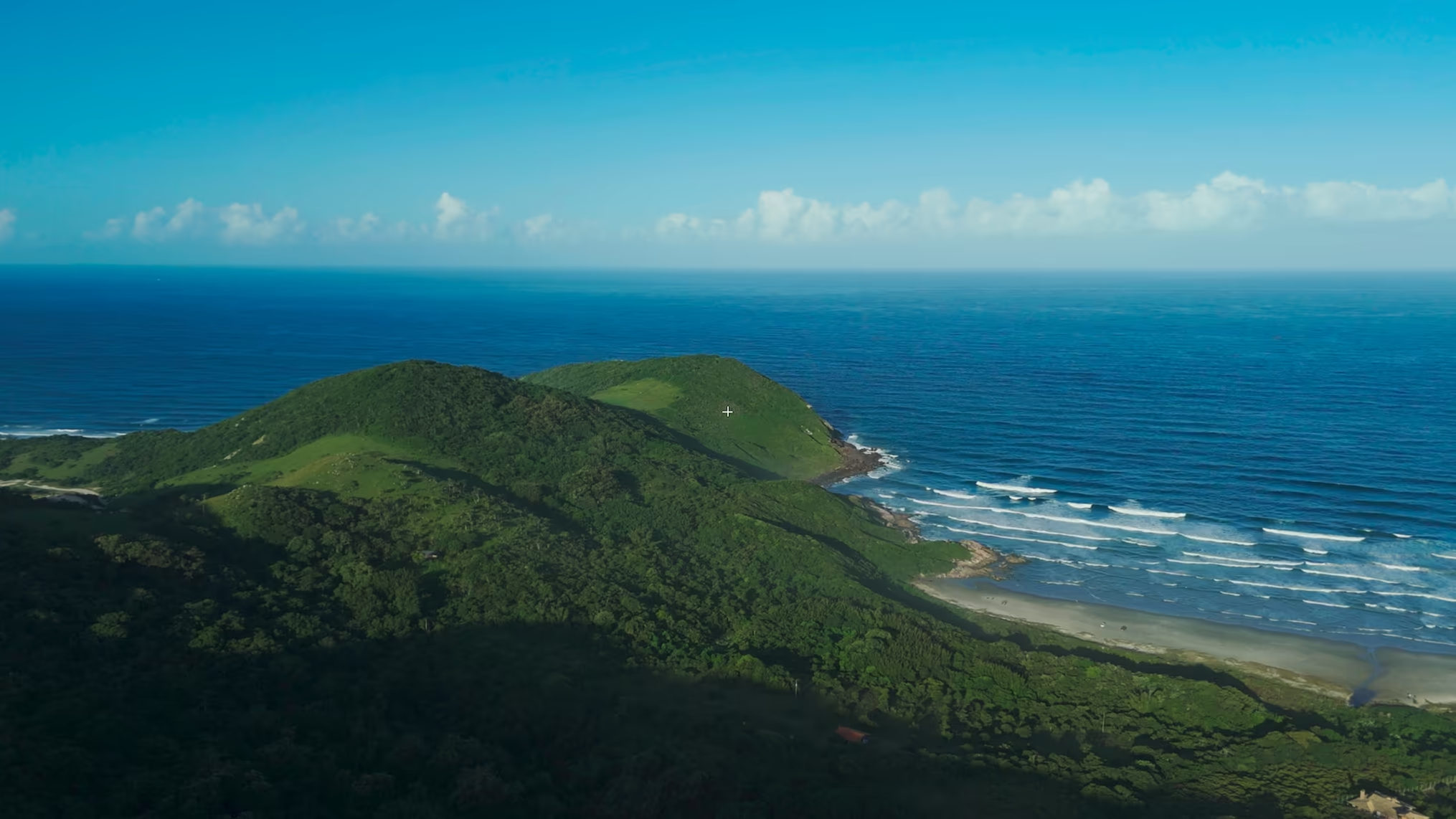
From the higher ground of Morro Elegante above the beach, the full sweep of the region reveals itself: the Lagoa de Ibiraquera and the Barra to the south, the hills above Praia do Rosa to the north. And between July and November, something else entirely — the southern right whales moving through the corridor below, breaching and rolling in water so close you can follow them without binoculars.
The Waves
For surfers, Praia do Luz has been a quiet open secret for years.
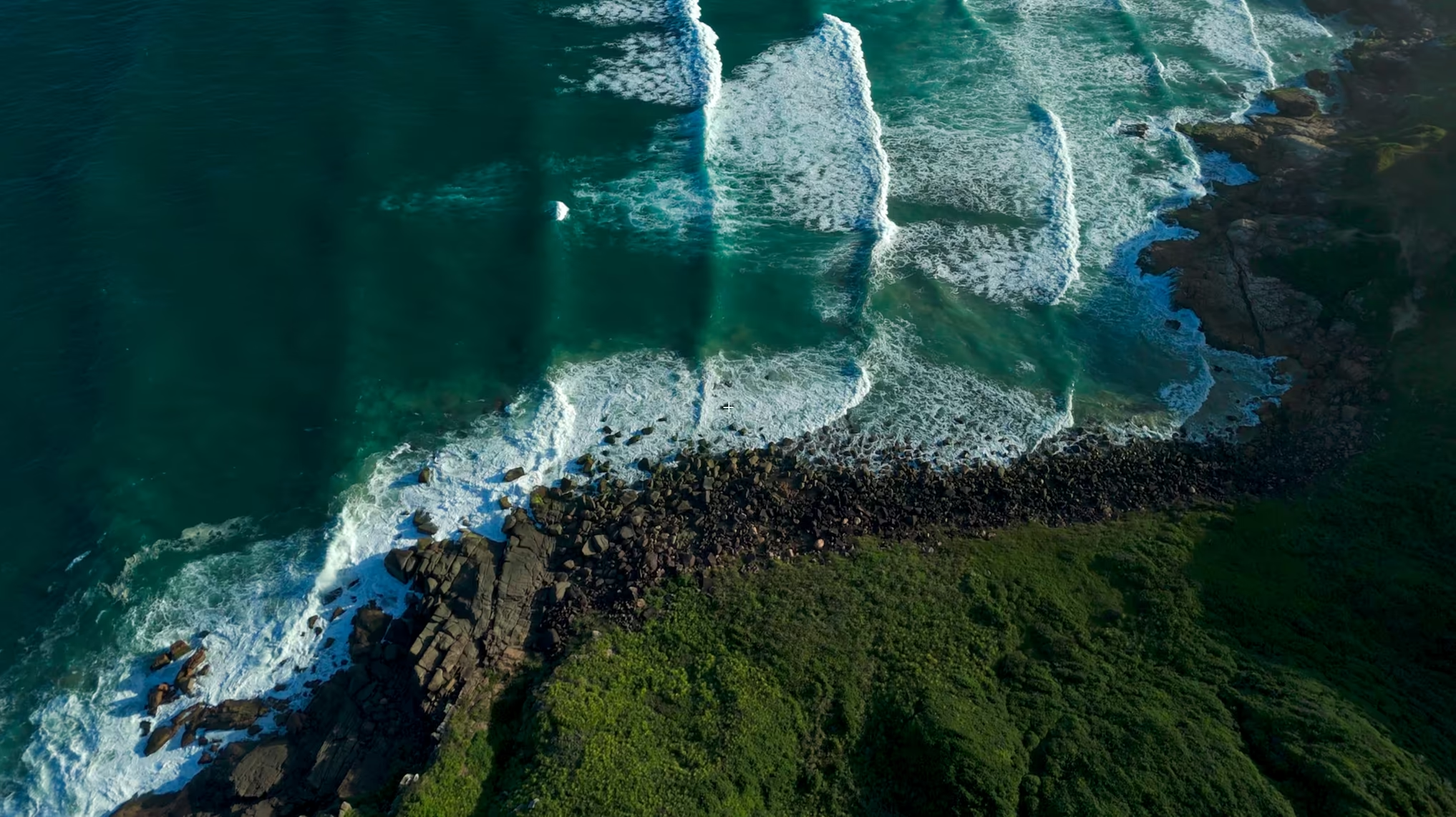
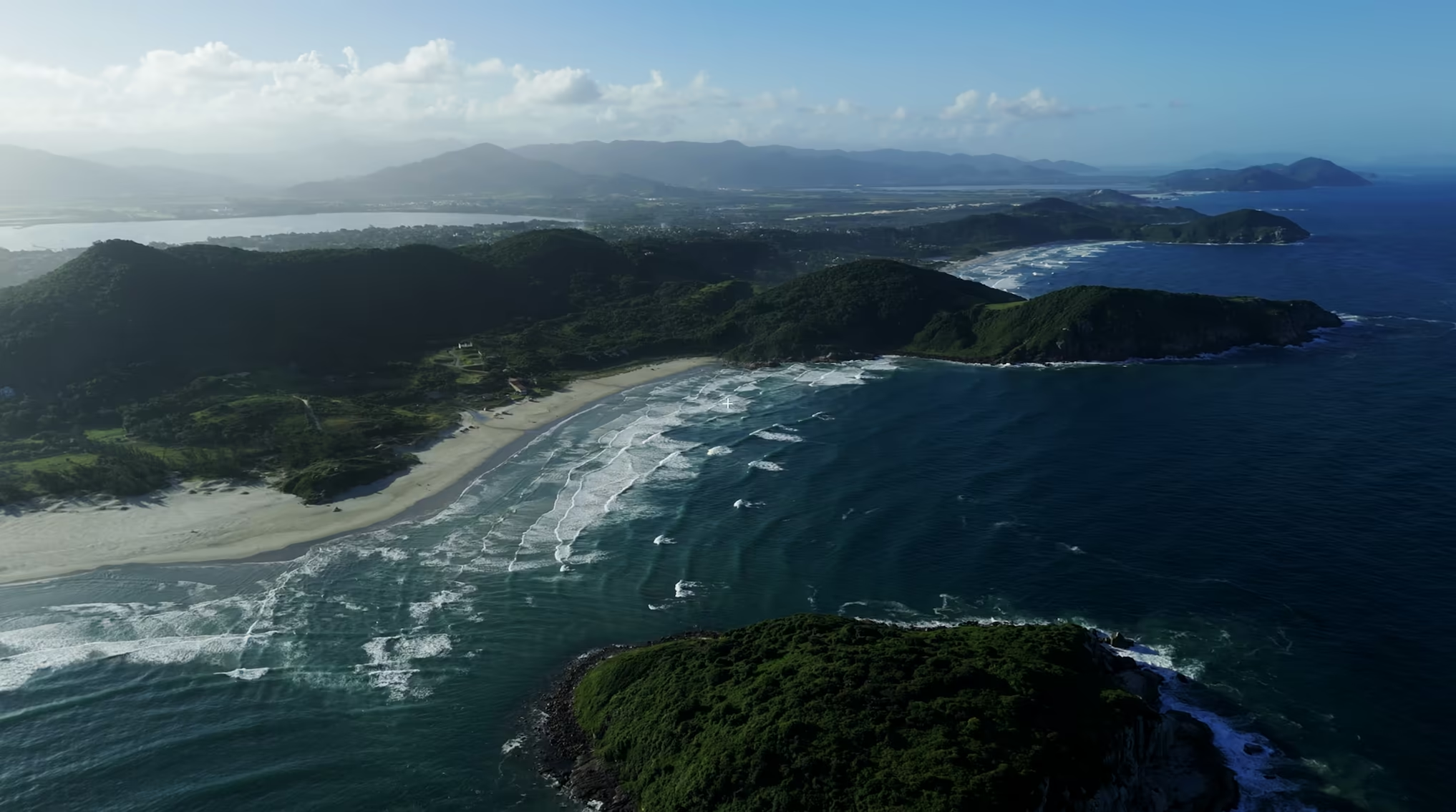
The break here has real character. The offshore influence of Ilha do Batuta shapes the swell in ways that produce waves with more edge than the gentler conditions at Rosa Sul — faster entries, more power underfoot, the kind of break that rewards commitment. On a good southeast swell — south or southeast wind — the conditions here are genuinely exciting. In summer, when the ocean eases, it becomes more accessible without losing its interest.
It is not a crowded surf break. The local surfers who come here know each other, know the water, and know the particular quality of a session at Luz that's hard to replicate at the bigger, more trafficked spots nearby. There's a lineage to it — the knowledge of this wave passing from one generation of locals to the next — that gives the beach a sense of ownership and quiet pride entirely absent from the more famous breaks in the region.
Worth noting: during the tainha season (May–July), fishing takes precedence. The nets go into the water, and the surf gives way to what came first — an order of priorities that, incidentally, says a great deal about the spirit of the place.
If you surf, come. Read the conditions, respect the people who were here first, and take what the water offers.
The Fishing
The fishing culture at Praia do Luz is not a museum piece or a tourist attraction. It is simply what happens here, as it has happened for as long as anyone can remember.
Boats go out. They come back. The catch is dealt with on the sand, the way it always has been. The practical rhythm of the working beach — the early mornings, the conversations between people who know this water intimately — runs alongside everything else the place offers, entirely indifferent to whether anyone from outside is watching.
This connection to the fishing culture of the broader Ibiraquera coastline runs deep. The lagoon system that defines the region functions as a natural nursery for fish, shrimp, and crab, and the communities around it have built their lives around that abundance for generations. Praia do Luz, facing the open ocean, is where the deeper-water fishing happens — a different kind of harvest from the lagoon, but part of the same ancient, daily relationship with the sea.
Between May and July, the tainha (mullet) season shifts the whole mood of the coastline. Lookouts take up position on the high ground. Nets go into the water at the signal. If you happen to be staying on Morro Elegante during these weeks, you watch it unfold from above with a quiet sense of witnessing something real and unrepeatable.
The Wildlife
Between July and November, the waters off Praia do Luz become one of the finest whale-watching settings on the Santa Catarina coast — not because there's an organised tour operating from here, but because the southern right whales simply pass through on their annual migration, as they always have.
From the hillside of Morro Elegante, the vantage point is extraordinary. The whales move through the bay below, close enough to observe without magnification, and the combination of height and silence makes the experience feel genuinely intimate — more like being a witness than a spectator.
The region is part of the Southern Right Whale's protected corridor, and Imbituba has been designated the National Capital of the Southern Right Whale. During peak months, it's not unusual to see multiple whales simultaneously — mothers and calves, males displaying — moving through the water with a deliberateness that makes everything on shore seem small and recent.
But the whales are not the only distinguished visitors. The waters off Praia do Luz also host sea lions and sea turtles, both of which appear with enough regularity that anyone who spends real time here will eventually cross paths with one. These are encounters that don't announce themselves or come with guarantees — they arrive on nature's schedule, not tourism's.
Ilha do Batuta, just offshore, is a world apart. A bird sanctuary and nursery for numerous species, the island pulses with its own rhythm — nesting colonies, seabirds in transit, the constant movement of species that use it as a departure point and a homecoming. From the beach it is a quiet presence on the horizon; up close, an entire ecosystem.
The Atlantic Forest on Morro Elegante's slopes offers its own abundance. Toucans, tanagers, and parakeets are regular sightings on the trails between the hillside and the beach, particularly in the early morning before the heat settles in.
When to Go
Praia do Luz is worth visiting in every season, though each offers something different.
Summer (December–February): The ocean at its warmest and the beach at its most sociable — though sociable here is relative. The local fishermen and surfers are joined by visitors, but the beach absorbs the extra company without losing its character.
Autumn (March–May): The swell builds from the south and the surf improves. The light shifts — more dramatic, more directional — and the Atlantic Forest on Morro Elegante is lush after the summer rains.
Winter (June–August): The fishing culture is most visible and most intense. The tainha season runs through these months. The ocean gets serious, the surfing gets better, and July brings the first whales of the year.
Spring (September–November): Peak whale season. The beach in September or October, with a good swell running and the whales moving through the bay below the hillside, is one of the finest things this coastline offers any time of year.
Staying Close
Ibirahill sits on the hillside of Morro Elegante, fifteen minutes on foot from Praia do Luz through the Atlantic Forest. That walk — downhill, shaded, the sound of the sea arriving before the beach does — is part of what defines the experience of staying here. The beach is not a destination you drive to but a part of the landscape you inhabit.
The first time we came to Praia do Luz was in 2017. We arrived to find it completely empty — just the rocks, the waves, and the forest pressing in from behind. The experience moved us more than we expected. It was, in part, what made us decide to build here.
That quality of an untouched place — the same one that kept us here in 2017 — is what you find when you walk down from the hillside today. Ibirahill was built to be a door to it.
Casa Galeria, Casa Ateliê, and Casa Bajau at Ibirahill are 15 minutes on foot from this beach — the natural base for those who want to explore Praia do Luz properly.
For the full breakdown on where to stay near the beach, see our where to stay near Praia do Luz guide.
→ Get in touch with us directly to talk about a stay at Ibirahill and how to make the most of Praia do Luz.
Read Also
- The Complete Guide to Ibiraquera, Brazil — Beaches, Lagoon & Hidden Paradise
- Praia do Rosa vs. Praia do Luz vs. Ibiraquera — The Definitive Beach Comparison
- 10 Best Beaches Near Imbituba, Brazil — Local's Guide
- Whale Watching Near Praia do Rosa — Complete Guide 2026
Frequently Asked Questions
Q: How do you get to Praia do Luz in Imbituba? A: There is no car access to the beach. You arrive on foot: via the Mirante do Luz trail from Praia do Rosa Sul (~25 minutes through Atlantic Forest), along the beach from Ibiraquera (~15 minutes, with a possible waist-deep crossing when the Barra is open), or directly down the Morro Elegante hillside (~15 minutes). If you're staying at Ibirahill, that descent through the forest is part of the experience.
Q: Does Praia do Luz have any restaurants or facilities? A: None. No restaurants, bars, permanent kiosks, or facilities of any kind. Occasional beach stalls may appear in summer, but nothing is guaranteed. That absence is precisely what has preserved the beach's character. Come prepared — water, sunscreen, everything you need — and enjoy having nothing between you and the Atlantic.
Q: Is Praia do Luz good for surfing? A: Yes, particularly for intermediate to advanced surfers. The break has real character — shaped by the offshore influence of Ilha do Batuta, it produces faster, more powerful waves than the gentler conditions at Rosa Sul. The best conditions come with a southeast swell and south wind. During the tainha season (May–July), fishing takes precedence and nets may be in the water — respect that rhythm.
Q: Can you see whales from Praia do Luz? A: It is one of the finest whale-watching locations on the entire coast. From July to November, southern right whales move through the corridor offshore, visible from the cliffs and hillsides above the beach without binoculars. The silence and absence of infrastructure make the encounter more intimate than any organised boat tour. For season details, see our whale watching guide.
Q: Is Praia do Luz safe for swimming? A: On calm summer days, yes — conditions are accessible and the water is inviting. In swell or strong current, no — the beach has no permanent lifeguard service, and conditions can be demanding. Always read the sea before entering. For families with young children, Lagoa de Ibiraquera is a much safer alternative: warm, shallow, and completely calm year-round.
Keep exploring
- Imbituba, Santa Catarina — the quiet town that holds Praia do Luz.
- The beaches of Imbituba — every neighboring beach, mapped.
- Artisanal fishing in Ibiraquera — the same 300-year Azorean tradition.