Beaches of Imbituba: guide to the 12 main coastal spots
Quick answer
Imbituba, on the southern coast of Santa Catarina, encompasses a range of distinct beaches within 20 km: from sheltered rocky coves suited for snorkeling to long open-sand stretches favored by surfers and anglers. The most visited beaches include Itapirubá Norte, Praia da Ferrugem, and sections of Praia do Rosa — each with its own wave profile, microclimate, and crowd character. The combination of beaches, lagoons, and Atlantic Forest makes Ibiraquera (25 km from Imbituba) an ideal base to explore the whole region without changing accommodation.
In summary
- 🗺️ Municipality: Imbituba, Santa Catarina — 90 km south of Florianópolis
- 🏖️ Beaches in this guide: 12 main spots within 20 km
- 🌊 For surfing: Itapirubá Norte, Praia da Ferrugem, Praia do Rosa
- 👨👩👧 For families: sheltered coves and calm lagoon shores
- 🐋 Bonus: whale watching (July–November) from coastal cliffs
- 🚗 Ideal base: Ibiraquera — central access to all regional beaches
- 🏨 Where to stay: Ibirahill — boutique stay in Ibiraquera, SC
Quick facts
- Municipality: Imbituba, Santa Catarina, Brazil
- Official total: 45 oceanic beaches
- Main beaches (scope of this guide): 12, from south (Itapirubá Norte) to north (Praia Vermelha)
- Most internationally famous: Praia do Rosa (one of the world's 30 most beautiful bays)
- Most preserved: Praia D'Água (foot trail only)
- Busiest: Praia da Vila (central Imbituba)
- Best for families: Ibiraquera Lagoon (calm shallow water)
- Best for surf: Praia da Vila (world surf circuit venue)
- Whale concentration: Praia da Ribanceira (July–November)
- Transition with Garopaba: Praia do Ouvidor (technically in Garopaba, ecologically linked to northern Imbituba)
The beaches of Imbituba run along roughly 40 km of Atlantic coast, from the southern boundary (Itapirubá Norte, neighbouring Garopaba) to the northern edge (Praia Vermelha). The municipality has 45 oceanic beaches in total — this guide covers the 12 main ones, which concentrate almost the entire tourism, cultural and ecological experience of the region, drawing on field research from the Universidade Federal de Santa Catarina.
The 12 Beaches by Sector
Southern Complex (Itapirubá–Vila Nova)
| Beach | Municipality | Characteristics |
|---|---|---|
| Itapirubá Norte | Imbituba | Continuous arc with Vila Nova; SE-NW orientation; fine sand; dune fields; sambaqui (shell-mound) records and toninha dolphin strandings. Itapirubá Sul lies in Garopaba — not the same beach. |
| Vila Nova | Imbituba | Physically connected to Itapirubá Norte; open ocean with moderate-energy waves; preserved restinga dune cordons; suitable for swimming. |
Central Arc (Vila, Porto, D'Água)
| Beach | Municipality | Characteristics |
|---|---|---|
| Praia da Vila | Imbituba | Surf sanctuary; high-energy waves; strong rip currents in the Castelinho sector; venue for world circuit surf events. Urban beach near central Imbituba. |
| Praia do Porto | Imbituba | Modified by port infrastructure since 1957; semi-sheltered by the central breakwater; the wreck of "Siderúrgica Oito" (1963) forms an artificial reef. |
| Praia D'Água | Imbituba | Isolated micro-cove; reachable only via steep rocky-shore trails; regenerating Atlantic forest on slopes; no road access, no infrastructure. |
Ribanceira & Amores Sector
| Beach | Municipality | Characteristics |
|---|---|---|
| Praia da Ribanceira | Imbituba | Steep terrain from Morro do Mirim; "Duna dos Três Mares" viewpoint; medium-to-fine sand; the primary southern right whale concentration point (July–November). |
| Praia dos Amores | Imbituba | Tiny cove roughly 50 metres long; rocky coves with transparent water; high preservation; rustic, no infrastructure; traditional fishing shelter. |
Ibiraquera–Luz Estuarine System
| Beach | Municipality | Characteristics |
|---|---|---|
| Praia / Lagoa de Ibiraquera | Imbituba | Estuarine system with cyclic tidal opening; traditional artisanal mullet beach-seine fishing; the shallow lagoon is southern Brazil's top kitesurf spot. |
| Praia do Luz | Imbituba | Small beach with no artificial lighting; natural tide pools among rock formations; consistent swell with west/south winds; dirt-road access; a few simple pousadas and pop-up beach stalls in summer. |
Northern Compartment (Rosa & Vermelha)
| Beach | Municipality | Characteristics |
|---|---|---|
| Praia do Rosa | Imbituba | Ranked among the world's 30 most beautiful bays; 7-km crescent; central brackish Lagoa do Meio; established luxury hotel infrastructure; Rosa Norte (powerful surf) and Rosa Sul (beginner-friendly) sectors. |
| Praia Vermelha | Imbituba | Deserted micro-cove roughly 200 metres long; surrounded by high bluffs; reddish mineral deposits; butiá-palm groves; access only via ecological trail. |
Transition Zone (Garopaba)
| Beach | Municipality | Characteristics |
|---|---|---|
| Praia do Ouvidor | Garopaba | Although administratively in Garopaba, ecologically linked to northern Imbituba. Archaeological sites with lithic-tool workshops; connected to Praia do Rosa via the Trilha do Ouvidor (~1.5 km). |
The Most Famous: Praia do Rosa
Praia do Rosa is the Imbituba beach that makes international lists — ranked among the world's 30 most beautiful bays. A 7-km crescent with the central Lagoa do Meio and established luxury hotel infrastructure dating back to the 1990s. World-class surf at Rosa Norte; gentler waves for beginners at Rosa Sul; whale watching from July to November.
→ Where to stay in Praia do Rosa.
The Most Preserved: Praia D'Água
Praia D'Água is the only beach in the municipality maintaining near-absolute isolation — reached exclusively via steep rocky-shore trails, with continuous Atlantic Forest regeneration on the surrounding slopes. No road, no infrastructure, no commerce. For travelers seeking absolute silence, it is the most radical point on the Imbituba coastline.
Praia Vermelha (in the north) and Praia dos Amores share that category — both small, accessible only by trail, with no commercial infrastructure of any kind.
The Most Family-Friendly: Ibiraquera Lagoon
Technically an estuarine system, not an oceanic beach. But inseparable from the tourism experience of the northern triangle. Calm, warm, shallow water — the safest aquatic environment in the municipality. Ideal for children, paddleboarding, kayaking, beginner kitesurf. The Ibiraquera bar opens cyclically, connecting the lagoon to the sea.
The Most Cultural: Praia da Ribanceira
Praia da Ribanceira concentrates more than landscape — it is the primary southern right whale observation point from July to November, with views from the "Duna dos Três Mares" lookout and the slopes of Morro do Mirim. Culturally protected dune cordons, with vehicle traffic restrictions to preserve the ecosystem.
→ Detail in whales in Imbituba.
The Most Surf-Famous: Praia da Vila
Praia da Vila, in central Imbituba, is the surf sanctuary of the region. High-energy waves have made it a venue for world circuit events. Strong rip currents in the Castelinho sector demand advanced level. For beginners, Rosa Sul is the right beach.
The Most Industrial-Historic: Praia do Porto
Praia do Porto has been modified by port infrastructure since 1957 — the central breakwater shelters part of the sand. The 1963 "Siderúrgica Oito" shipwreck created a submerged artificial reef, a point of interest for technical diving. Not a tourism beach in the traditional sense, but part of Imbituba's maritime identity.
Combining Several Beaches in a Single Day
The geography of the northern triangle allows three beaches in one day, based in Ibiraquera or on Morro Elegante:
- Morning: Swim in the Ibiraquera Lagoon (calm water)
- Midday: Walk down through the Atlantic Forest to Praia do Luz
- Afternoon: Drive to Praia do Rosa for lunch and sunset in the village
Total distance between the three: under 10 km.
For the central and southern sectors (Vila, Porto, Ribanceira, D'Água, Amores, Vermelha), a car is essential — distances widen and access varies between paved roads, dirt tracks, and foot-only trails.
Water Quality
All Imbituba oceanic beaches hold "proper bathing" classification for the 2025–2026 season (IMA monitoring). The Ibiraquera Lagoon shows vulnerability after heavy rain, due to diffuse pollution and residential sanitation issues — check official monitoring before swimming in the lagoon during rainy periods.
Where to Stay for the Beaches
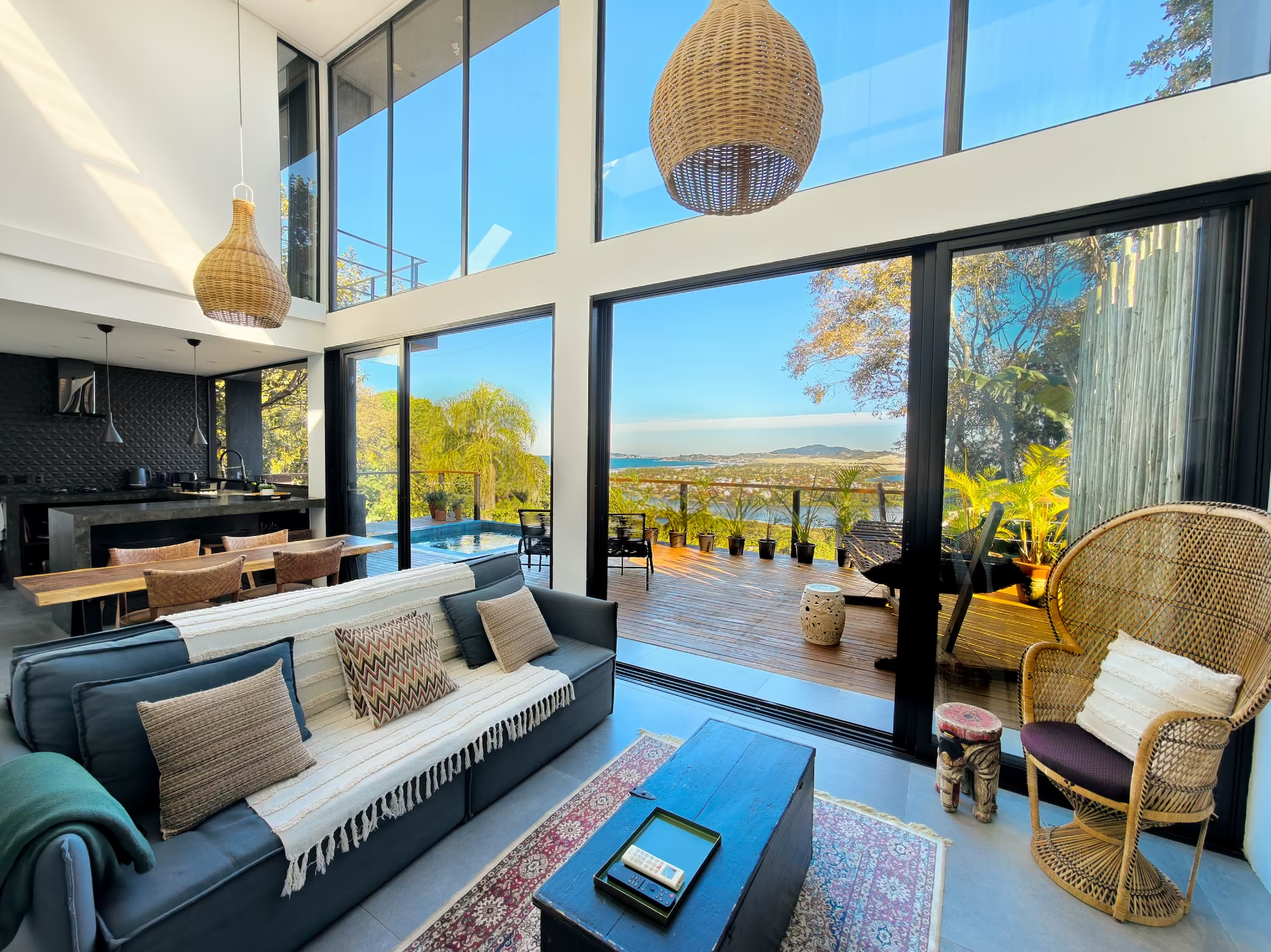
Morro Elegante in Ibiraquera is the most central position for the northern triangle — 15 minutes on foot from Praia do Luz via the forest trail, 10 minutes by car from Praia do Rosa, 2 minutes from the Lagoon, 5 minutes from Barra de Ibiraquera. Ibirahill — three exclusive houses inside the Atlantic Forest — is the only boutique retreat on Morro Elegante.
For the central and southern sectors (Vila, Porto, Ribanceira, D'Água, Amores), driving from Ibirahill opens the region: Vila in ~15–20 min, Ribanceira in ~25 min, Itapirubá Norte in ~30–35 min.
→ See the three houses at Ibirahill — a central base for exploring the beaches of northern Imbituba from a single retreat.
Read More
- 10 best beaches near Imbituba — the in-depth editorial guide.
- Praia do Luz: the beach that still belongs to itself
- Where to stay at Praia do Luz
- Rosa, Luz or Ibiraquera: which beach matches you
Frequently Asked Questions
Q: How many beaches does Imbituba have? A: The municipality has 45 oceanic beaches in total. The 12 main ones — covered in this guide — concentrate almost the entire tourism, cultural and ecological experience of the region.
Q: Which is the best beach in Imbituba for families? A: The Ibiraquera Lagoon for small children (calm, shallow water). For older children, Rosa Sul. Vila Nova also works for family swimming with a more open ocean.
Q: Which is the most beautiful beach in Imbituba? A: Subjective. Praia do Rosa ranks among the world's 30 most beautiful bays. For wilder landscape, Praia Vermelha and Praia D'Água — both accessible only by trail.
Q: Is Praia do Ouvidor in Imbituba or Garopaba? A: Technically in Garopaba. Although ecologically linked to northern Imbituba and connected to Praia do Rosa via the Trilha do Ouvidor (~1.5 km), it sits under the administrative jurisdiction of the neighbouring municipality.
Q: How do you get from one beach to another in Imbituba? A: A car is essentially required. Within the northern triangle (Rosa, Ibiraquera, Luz) some connections can be made on foot along the beach or through the forest. For the central and southern sectors, the car is the only practical option.
Stay on Praia do Rosa? At Ibirahill, on Morro Elegante (Ibiraquera), three private houses 10 minutes from Praia do Rosa and 3 from Praia do Luz. See Praia do Rosa accommodation — rates and availability direct with the host.