Praia do Rosa vs Luz vs Ibiraquera: a local's honest pick
Quick answer
Praia do Rosa, Praia do Luz and Ibiraquera are three neighbouring beaches in Imbituba (Santa Catarina, Brazil). Rosa is the best-known and busiest; Luz is the quietest of the three (calmer sea at low tide, no infrastructure); Ibiraquera is the balance — lagoon, forest and easy access to both. Ibirahill sits in Ibiraquera, 3 min from Luz and 10 min from Rosa.
"Three beaches. One coastline. Completely different worlds."
They sit within ten kilometres of each other on the Santa Catarina coast, connected by trails and a shared horizon of South Atlantic. But Praia do Rosa, Praia do Luz, and Ibiraquera are not interchangeable — and choosing the wrong one for your travel style is the most common mistake visitors to this region make.
Rosa has the restaurants, the nightlife, and the social scene. Luz has the rocks, the silence, and the whales. Ibiraquera has the lagoon, the kayaks, the kites, the fish — and a genuinely family-friendly atmosphere that the other two don't quite offer.
Each beach is extraordinary in its own way. Each is right for a different kind of traveller. Here's how to tell which one is yours.
Praia do Rosa: The Village Beach
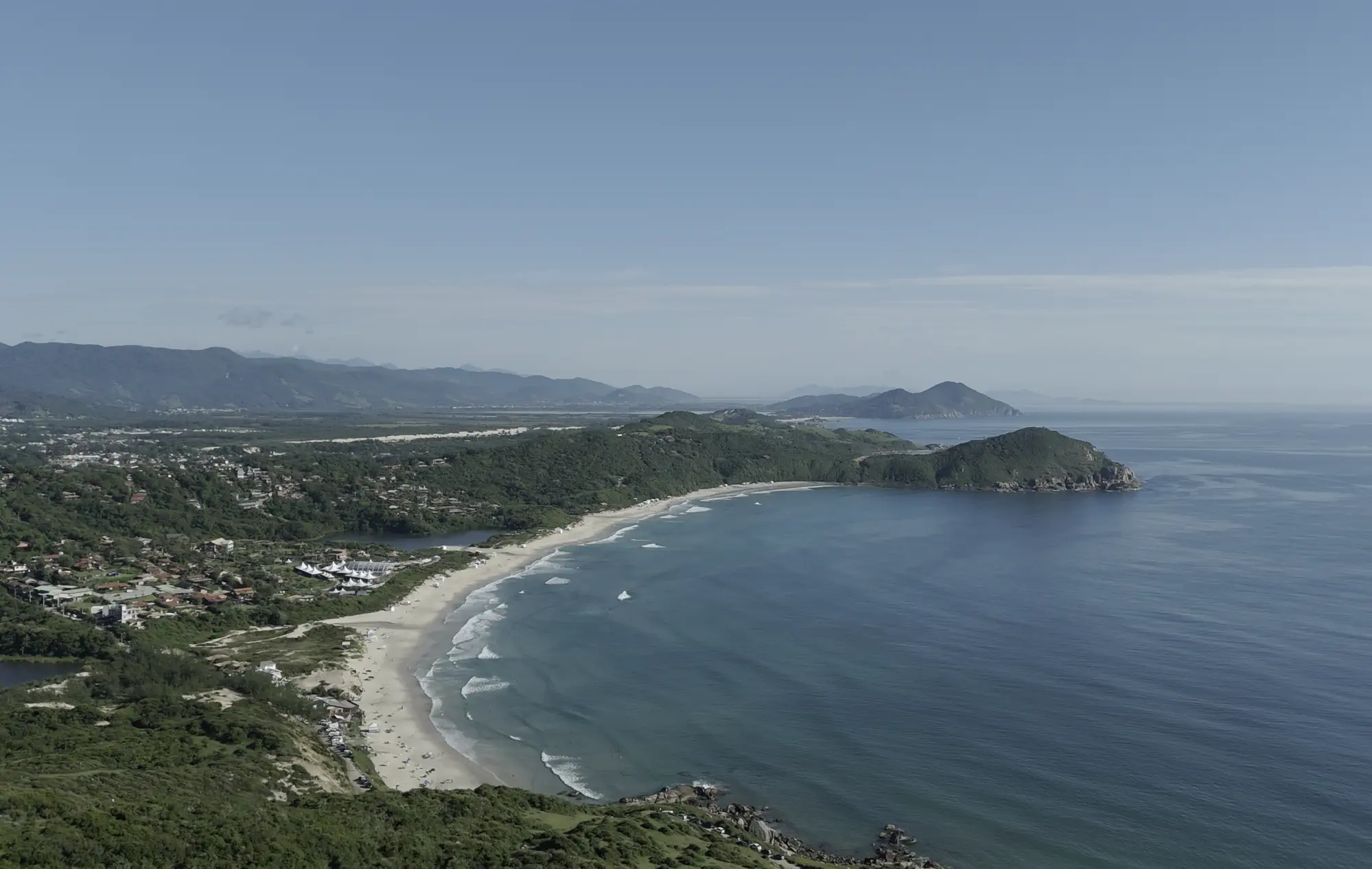
There's a reason Praia do Rosa has made international best-of lists and drawn travellers from São Paulo to Oslo. It is, objectively, one of the most beautiful small beach towns in Brazil — a cove of less than two kilometres, wrapped in green hills, with two natural lagoons (Lagoa do Meio and Lagoa do Canto) nestled into its shoreline and the full force of the South Atlantic arriving at its feet.
Rosa is the social heart of this coastline. The village has evolved over decades — from fishing community to surf outpost to, today, a genuine destination with excellent restaurants, bars, boutique pousadas, and a nightlife scene that runs properly late in summer. The aesthetic is eclectic and a little mystical: wooden guesthouses, incense, hammocks, and a crowd that mixes Brazilian elite with international surfers and a steady stream of travellers seeking the "undiscovered Brazil" that Rosa, to be honest, was no longer entirely undiscovered about ten years ago.
The surf is world-class and the beach divides neatly into two personalities: Rosa Norte, for experienced surfers chasing faster, more powerful waves; and Rosa Sul, where calmer conditions make it the best place in the region for beginners and surf lessons.
The vibe in summer is lively, colourful, and genuinely busy on weekends and peak season. Some streets are still unpaved and traffic builds — though nothing that compares to a proper city. Prices climb. The village fills. If this is when you're coming, book early and embrace the energy — Rosa in full summer swing has a magic of its own.
In the shoulder season, Rosa is a different and more nuanced place: quieter, more contemplative, still beautiful, and significantly more affordable. July to November brings whale season, when southern right whales move through the bay in extraordinary numbers — and Rosa, sitting at the northern end of their corridor, is one of the best places in the region to watch them.
Best for: First-time visitors to the region, social travellers, surfers of all levels, those who want a genuine village atmosphere with solid infrastructure, nightlife, and the widest range of dining options in the area.
Not ideal for: Those seeking absolute peace and quiet, families with very young children needing very calm water, anyone who finds crowds frustrating in high summer. Rosa is for people who like being at the centre of everything.
Praia do Luz: The Wild One
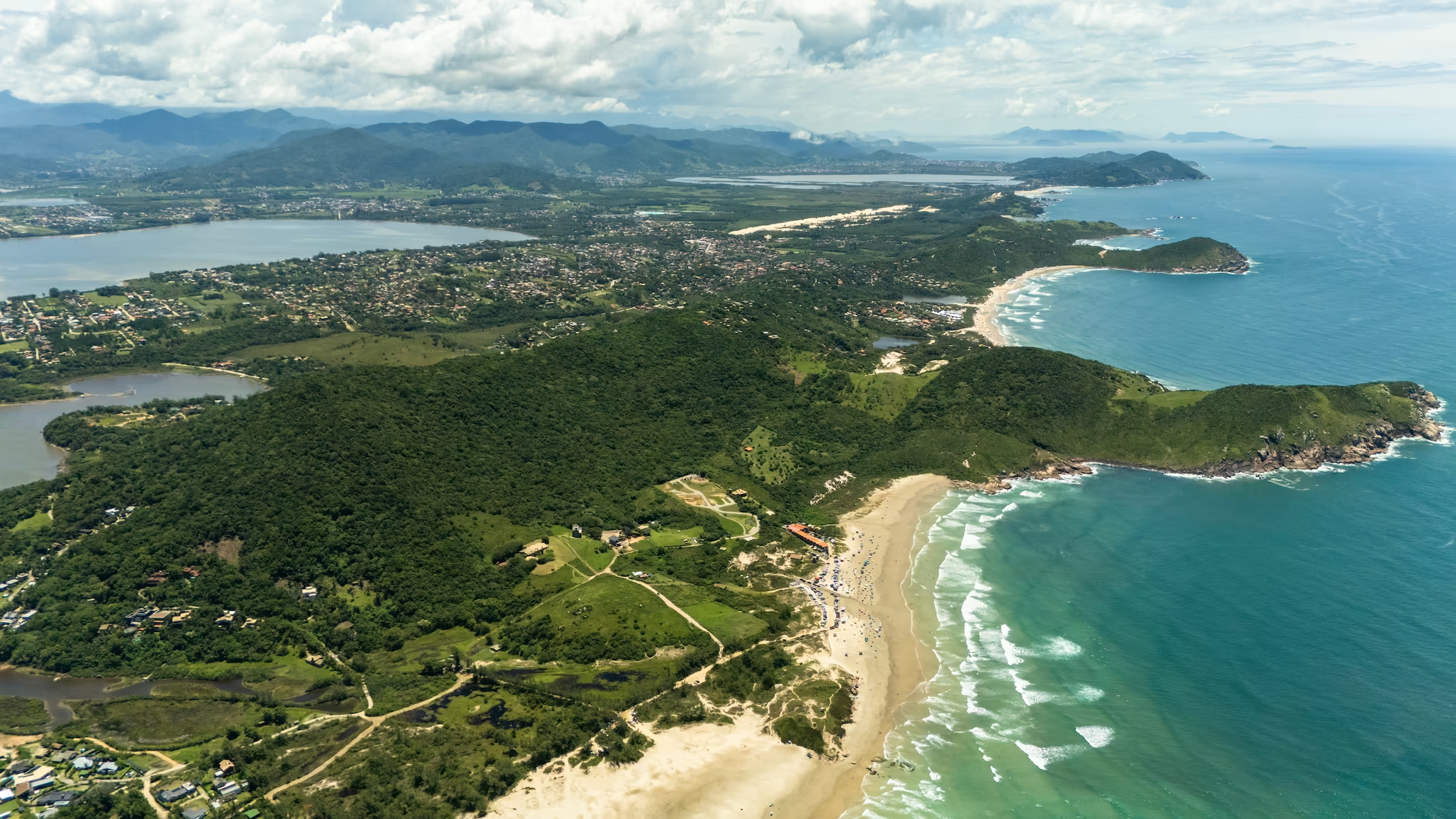
Praia do Luz has no village. No restaurants, no supermarket, no shops. What it has is approximately 600 metres of Atlantic coastline and raw, unspoiled beauty — and that single fact has kept it more or less exactly as it has always been. In summer, drink-and-snack stalls appear on the sand, but there is no permanent structure of any kind.
Arriving at Praia do Luz requires a choice: the Mirante do Luz trail from Praia do Rosa Sul (~2.5km, about 25 minutes through native Atlantic Forest); the coastal walk from Ibiraquera along the beach (~15 minutes, with a waist-deep crossing when the barra is open); or, from Ibirahill and Morro Elegante, a 15-minute walk down an unpaved track through the hillside.
The beach itself is characterised by its rock formations — dark, earthy stone that interrupts the shoreline, creating sheltered coves and pockets where you put your towel down, stay longer than planned, and lose track of time entirely. It's a beach of textures and detail that rewards slow exploration.
The waves have character. The offshore presence of Ilha do Batuta — a bird sanctuary just a short distance from shore — shapes the swell and creates conditions that attract surfers, particularly in the cooler months when south swells build. Swimming is magnificent on calm summer days; less so when the swell is running. There is no lifeguard in winter.
From July to November, the cliffs and hillsides above Praia do Luz become, quietly, one of the finest whale watching vantage points on the entire coast. The same whales that move through the protected corridor below Rosa Norte pass within sight of the Luz headlands — and from this elevated position, with no crowds and no infrastructure, the encounter is intimate in a way that organised boat tours rarely achieve.
Best for: Hikers, surfers (intermediate to experienced), nature lovers, whale watching enthusiasts, anyone who wants a beach that feels genuinely removed from the tourism industry, and those who love having space without having their space invaded. It easily becomes the favourite spot of Ibirahill guests.
Not ideal for: Those looking for buzz, restaurants and bars to break up the beach day, or nightlife.
Ibiraquera: The Lagoon Beach
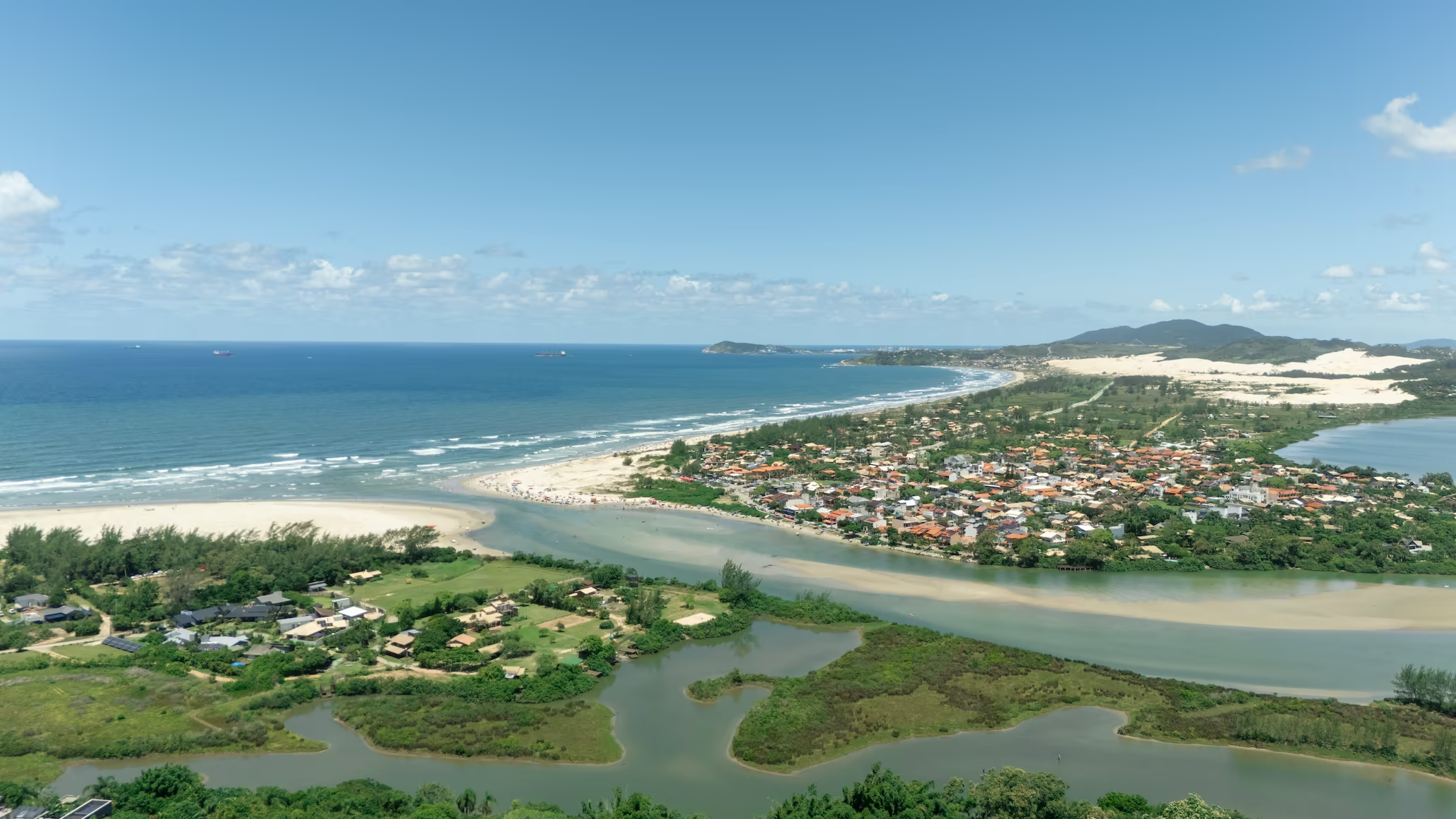
Ibiraquera plays by different rules entirely. Where Rosa is a cove and Luz is a wild stretch of sand, rock, and Atlantic, Ibiraquera is an ecosystem — a complex of lagoon, forest, barra, and ocean beach that offers more kinds of water experience than anywhere else on this coastline.
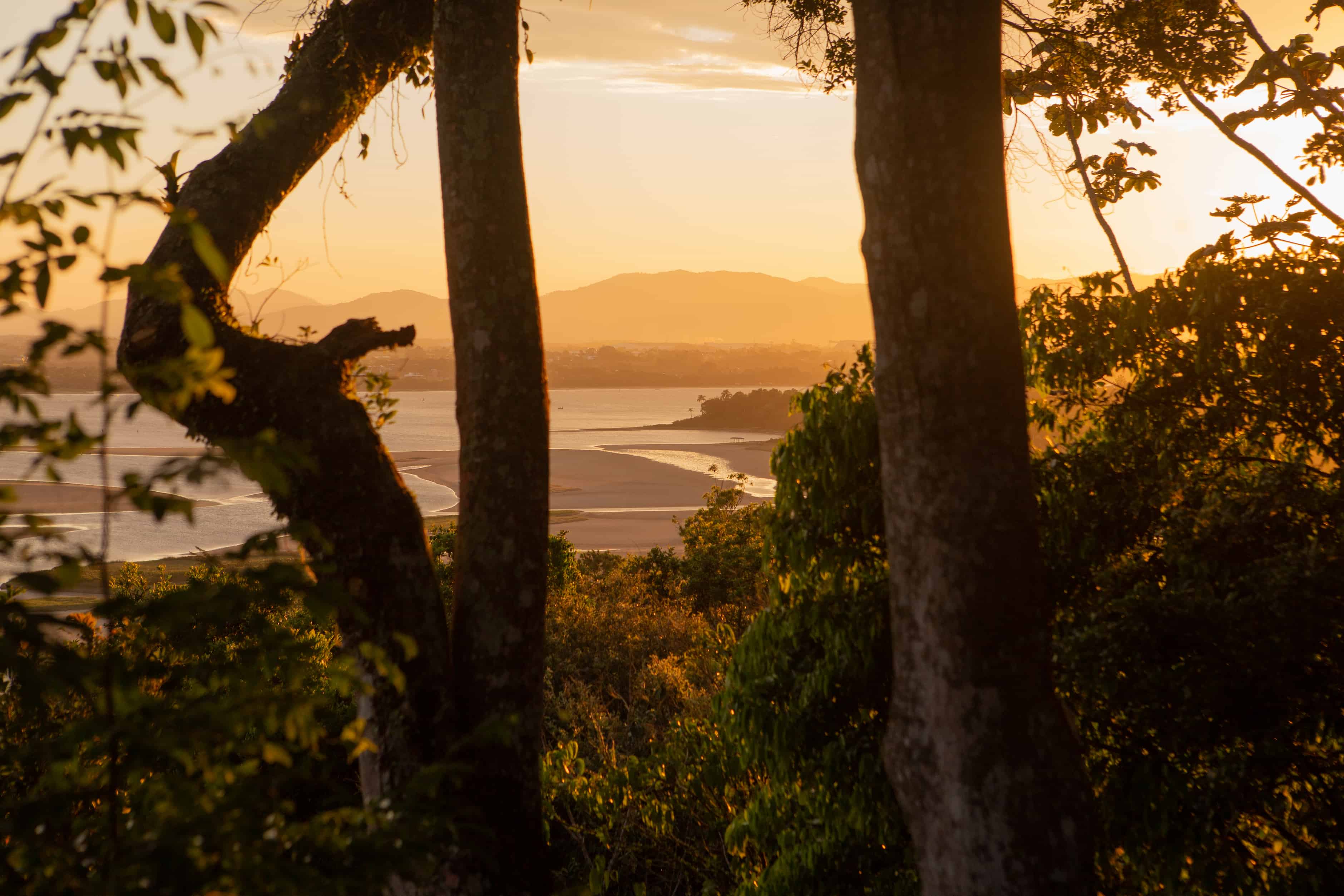
The lagoon is the defining feature. Lagoa de Ibiraquera is a vast, shallow body of water — three interconnected sub-lakes stretching several kilometres — that is warm, calm, extraordinarily clear, and home to one of the most vibrant kitesurf and watersports communities in Brazil. The upper lagoon is the quietest; the middle section is the kiter's domain; the lower narrows before meeting the sea at the Barra, where a unique hybrid beach of fresh and saltwater sits in one of the region's most photogenic settings.
The ocean beach at the Barra has its own considerable appeal: three kilometres of open Atlantic coastline, no cars permitted on the sand, and waves that attract serious surfers and kiters who want to add an ocean session to a lagoon morning. This is not a beginner beach — the swell and current are real — but for those who can read the conditions, the Barra offers a genuinely exciting wave.
There are local restaurants serving fresh fish and seafood, prepared simply and with care, in the tradition of the fishing communities that have always lived here. Our recommendation is Restaurante Tartaruga. In high season, drink-and-snack stalls also set up on the sand, but there is no permanent infrastructure.
The soul of Ibiraquera, though, is perhaps best understood through its fishing culture. The lagoon has been a nursery for fish, shrimp, and crab for generations, and the communities along its banks still live by the water's rhythms. Every year between May and July, the arrival of the tainha (mullet) transforms the shoreline: lookouts appear on the clifftops, fishermen wait below, and the ancient choreography of net and shoal and signal plays out as it has for centuries. It is one of the most authentically moving things you can witness on the Santa Catarina coast.
Best for: Water sports enthusiasts (kitesurfing, wing foiling, paddleboarding, kayaking, windsurfing), families with young children (lagoon swimming is exceptionally safe), those interested in local culture and fishing traditions, travellers seeking calm over buzz. And of course, Ibirahill guests — the lagoon is 3 minutes by car or a 15-minute walk from the property.
Not ideal for: Those looking for nightlife or a wide restaurant scene; those who want the open ocean as their primary environment.
Side by Side: A Quick Comparison
| Praia do Rosa | Praia do Luz | Ibiraquera | |
|---|---|---|---|
| Vibe | Social, village, cultivated | Wild, untouched, intimate | Calm, local, water-focused |
| Beach length | ~2km | ~600m | ~3km (Barra) |
| Crowd level | High in summer | Very low year-round | Moderate |
| Surf | Rosa Norte (advanced), Rosa Sul (beginner) | Intermediate–advanced | Barra (intermediate–advanced) |
| Family swimming | Good (Rosa Sul) | Good (on calm days) | Excellent (lagoon) |
| Watersports | Surf lessons, stand-up paddle | Surfing, hiking | Kite, wing foiling, paddle, kayak, windsurf |
| Restaurants | Excellent variety | None (summer stalls only) | A few local spots |
| Nightlife | Yes | No | No |
| Whale watching | Yes (Jul–Nov) | Yes, from clifftops (Jul–Nov) | From hillside (Jul–Nov) |
| Access | Car, taxi | Walk only (~25 min from Rosa or ~15 min from Ibirahill) | Car |
| Best season | Year-round (summer for social, winter for quiet) | Year-round | Year-round (summer for watersports, winter for fishing/whales) |
The Ibirahill Advantage: All Three, From One Base
Here's what makes staying at Ibirahill on Morro Elegante genuinely unusual: you don't have to choose.
The hillside position — above the lagoon, a short walk from Praia do Luz, and ten minutes by car from Praia do Rosa — means that all three of these worlds are accessible from a single base. Wake up and take in the lagoon, the dunes, the ocean, and the hills from your terrace. Walk down to Praia do Luz before the sun gets high. Drive to Rosa for lunch and a session at Rosa Sul. Return to silence.
There is nowhere else on this coastline where you can do all of that — with the comfort and privacy that Ibirahill offers.
→ Find the right house for your travel style at ibirahill.com/casas, or get in touch to check availability.
Read Also
- The Complete Guide to Ibiraquera, Brazil — Beaches, Lagoon & Hidden Paradise
- Praia do Luz, Imbituba: The Beach That Still Belongs to Itself
- 10 Best Beaches Near Imbituba, Brazil — Local's Guide
- Kitesurfing Ibiraquera — The Ultimate Guide to Lagoon & Wave Riding in Southern Brazil
Frequently Asked Questions
Q: Which beach is best for families with young children? A: Ibiraquera, without question. The lagoon is warm, shallow (0.5–1.7m across most of its surface), and entirely calm — ideal for children who are learning to swim or who simply want safe, playful water. Rosa Sul is a solid second option for ocean swimming on calm days.
Q: Which beach is best for beginner surfers? A: Praia do Rosa Sul is the region's most popular spot for surf lessons, with instructors available and consistent, manageable waves. The lagoon at Ibiraquera is equally good for beginners in watersports like kayaking and stand-up paddle.
Q: Can I visit all three beaches in one day from Ibirahill? A: Yes — that's precisely the point. Praia do Luz is a 15-minute walk. Ibiraquera's lagoon is 3 minutes by car. Praia do Rosa is 10 minutes by car. A day that covers all three — morning at Luz, afternoon at Rosa, sunset from the lagoon — is entirely manageable and one of the more memorable ways to experience this coastline.
Q: When is the best time to see whales from these beaches? A: July to November is whale season, when southern right whales move through the protected corridor offshore. All three beaches offer vantage points — Praia do Luz is arguably the finest, with elevated clifftop positions and no crowds. Rosa Norte and the hillsides above Ibiraquera also offer excellent sightlines.
Q: Which beach has the best restaurants? A: Praia do Rosa has by far the widest and most varied restaurant scene. Ibiraquera has a handful of traditional local spots — including Restaurante Tartaruga, our recommendation — focused on freshly caught fish and seafood. Praia do Luz has no permanent restaurants; summer stalls only. For a full guide to the region's food scene, see ibirahill.com/guia.
Keep exploring
- Imbituba, Santa Catarina — the town that holds all three beaches.
- The beaches of Imbituba — the region's 12 beaches, with context.
- Things to do in Ibiraquera — experiences at the heart of the trio.
Keep exploring
- Charming inn on Praia do Rosa — 4 boutique stays to compare.
- Honeymoon on Praia do Rosa — 5-day itinerary for couples.
- Praia do Rosa in the off-season — other windows to travel.