Kitesurf Ibiraquera: lagoon & wave guide
Quick answer
Ibiraquera is one of the best kitesurfing spots in southern Brazil — combining Lagoa de Ibiraquera (still water, shallow bottom, consistent wind October–April) with Praia do Rosa and Praia do Luz (open sea for advanced sessions). Rentals, instructors and wetsuits are available in the Praia do Rosa Centrinho. Ibirahill, 5 min from the lagoon's north shore, is the closest base.
"Two bodies of water. Two completely different rides. One extraordinary place."
Introduction
Ask any experienced kiter what makes a destination genuinely exceptional — not just good, but exceptional — and the answer almost always involves variety. One spot for learning, one for freestyle, another for waves. Usually those spots require a car, a flight, or at minimum a few hours between sessions.
Ibiraquera does it differently. Here, the lagoon and the ocean are separated by a narrow strip of sand. Walk from one to the other in minutes. Flat-water freestyle in the morning, ocean waves in the afternoon — or the reverse, depending on which way the wind is reading. It's a combination that is genuinely rare in global kite geography, and it's the reason this quiet corner of Santa Catarina has built a quiet but devoted following among kiters who know what they're looking for.
This is the complete guide to kitesurfing in Ibiraquera — conditions, seasons, skill levels, and everything you need to plan a trip.
The Two Spots: An Overview
Ibiraquera's kitesurfing landscape is defined by its dual geography: Lagoa de Ibiraquera (the lagoon) on one side, and Barra de Ibiraquera (the ocean beach) on the other. They share a wind window and a shoreline, but they are completely different experiences.
Understanding which spot is right for you — and when — is the first step to making the most of your time here.
The Lagoon: Where Learning Becomes Effortless
Lagoa de Ibiraquera is, by most accounts, one of the best learning environments for kitesurfing in the southern hemisphere. The reasons are straightforward and compelling:
Depth: The lagoon averages between 0.5 and 1.7 metres across most of its surface. This means that when you fall — and when you're learning, you fall — you land in water that is shallow enough to stand in without drama. The psychological freedom this creates is remarkable: the lagoon removes the fear component from the learning curve in a way that no ocean school can quite replicate.
Flat water: In most conditions, the lagoon surface is completely flat. No chop, no swell, no cross-current to fight. Beginners can focus entirely on the kite and the board; freestyle riders can build combinations without the interruption of unexpected waves.
Wind consistency: The northeast wind that drives most of the kiting here blows reliably across the lagoon's open expanse without the gusts and lulls created by terrain. Wind readings of 7–20 knots are typical; during spring and early summer, conditions can push into the 22–25 knot range.
No obstacles: The lagoon beach is a long sandy strip without rocks downwind. Falls and crashes — inevitable parts of any kiting session — happen in soft water without the hazards that make ocean kitesurfing more unforgiving.
The lagoon is divided into three sub-lakes. The middle section is where most kiting happens: wide enough to give full freedom of movement, consistent wind, and close enough to the Barra to allow easy transitions to the ocean when conditions call for it. The upper lagoon is quieter and more scenic; the lower lagoon narrows toward the Barra, creating more technical conditions that suit more experienced riders who want to explore.
The Barra: Ocean Waves for Those Ready
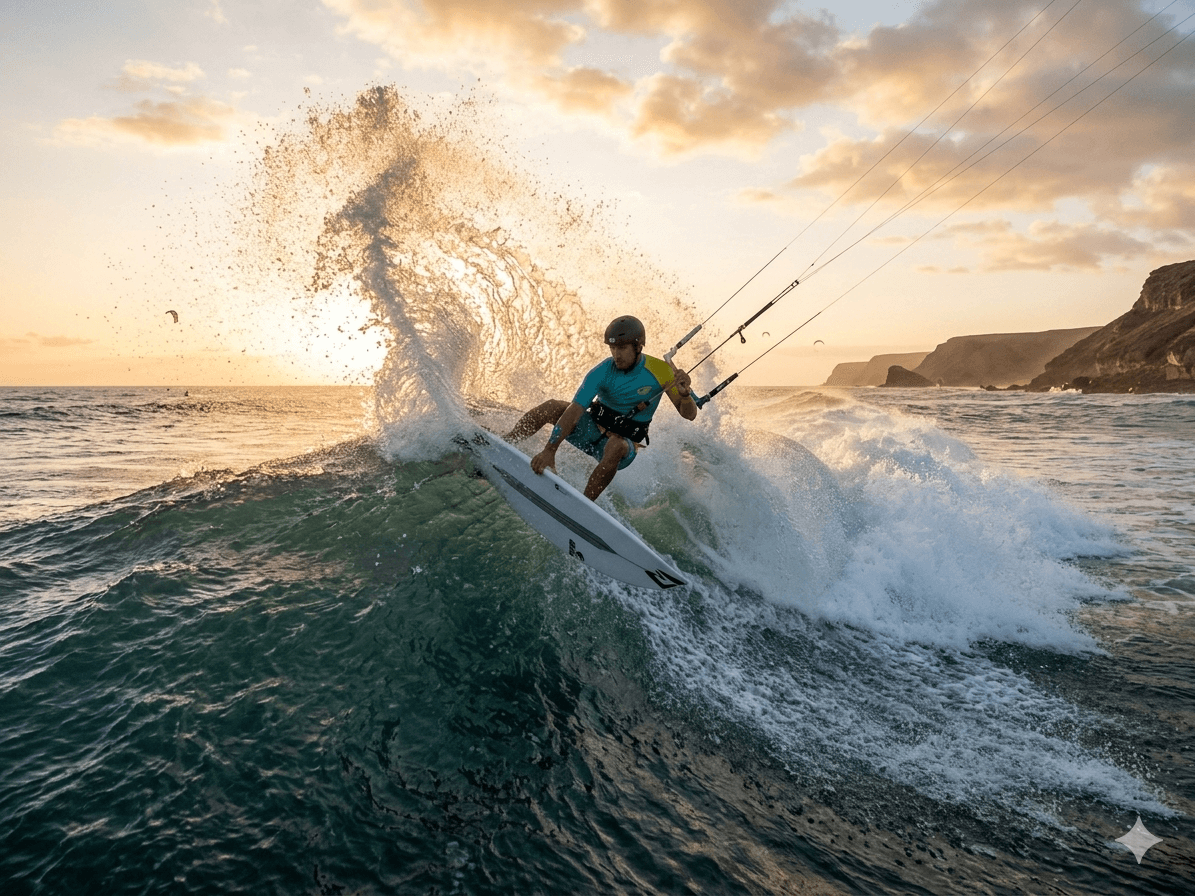
The Barra de Ibiraquera ocean break occupies a different tier of the kiting experience entirely. This is not a learning spot — it's where riders who have their flat-water skills consolidated come to discover what those skills are actually for.
The wave setup at the Barra is distinctive. The break sits approximately 250 metres from shore — further out than a typical beach break — which means there is a stretch of relatively flat water between the shore and the wave zone where riders can build speed and power before entering the break. This geometry makes the Barra unusually accessible for kite wave riders: you're not launching directly into shore break, but entering the surf zone with space and momentum.
The waves themselves can range from 0.5 metres to over 3 metres depending on the swell. On a standard day with a 2-metre (6ft) swell — which is roughly what you can expect in good conditions — the Barra offers clean, powerful wave riding with room to manoeuvre. On solid south swells in the winter months, the conditions become serious: fast, powerful, and demanding respect. The right-hand point-break style waves are the main attraction; lefts are also available depending on swell direction.
One of the Barra's most talked-about characteristics among the kite community is the combination of that flat-water approach zone with proper Atlantic waves. It's a setup that allows progressive riders to attempt tricks between the shore and the break, then transition into wave riding — effectively getting two different kinds of session without changing equipment.
Required skill level for the ocean: Intermediate minimum. Riders should be confident with water relaunches, have solid upwind skills, and understand how to read surf conditions before attempting the Barra on any significant swell.
Wind: When and What to Expect
The wind at Ibiraquera blows from the northeast and is shaped by the thermal cycles and coastal geography of this part of the Santa Catarina coast. Here's how conditions vary across the year:
September to March (Best Season): The most consistent and often strongest wind period. Northeast thermals are reliable, typically building from mid-morning and peaking in the afternoon. Winds in the 15–25 knot range are common during this period; spring can bring the highest gusts. This is when the lagoon is at its most active and the beach kiting community is largest.
December to February (Peak Summer): Warm, social, and well-windy. The lagoon is crowded with kiters, but large enough that the density rarely becomes a problem. Conditions tend to be slightly lighter than in spring — 15–20 knots more typical than 20–25 — but consistent enough for multiple sessions per day. The ocean Barra in summer tends toward smaller, cleaner conditions: more fun than massive.
April to August (Off-Season): Wind is less consistent but still present — Ibiraquera is genuinely a year-round kite destination, with rideable conditions on 3–4 days per week even in the quiet months. The winter months bring south swells and the best ocean conditions of the year for wave riding. The lagoon is emptier, which has its own appeal.
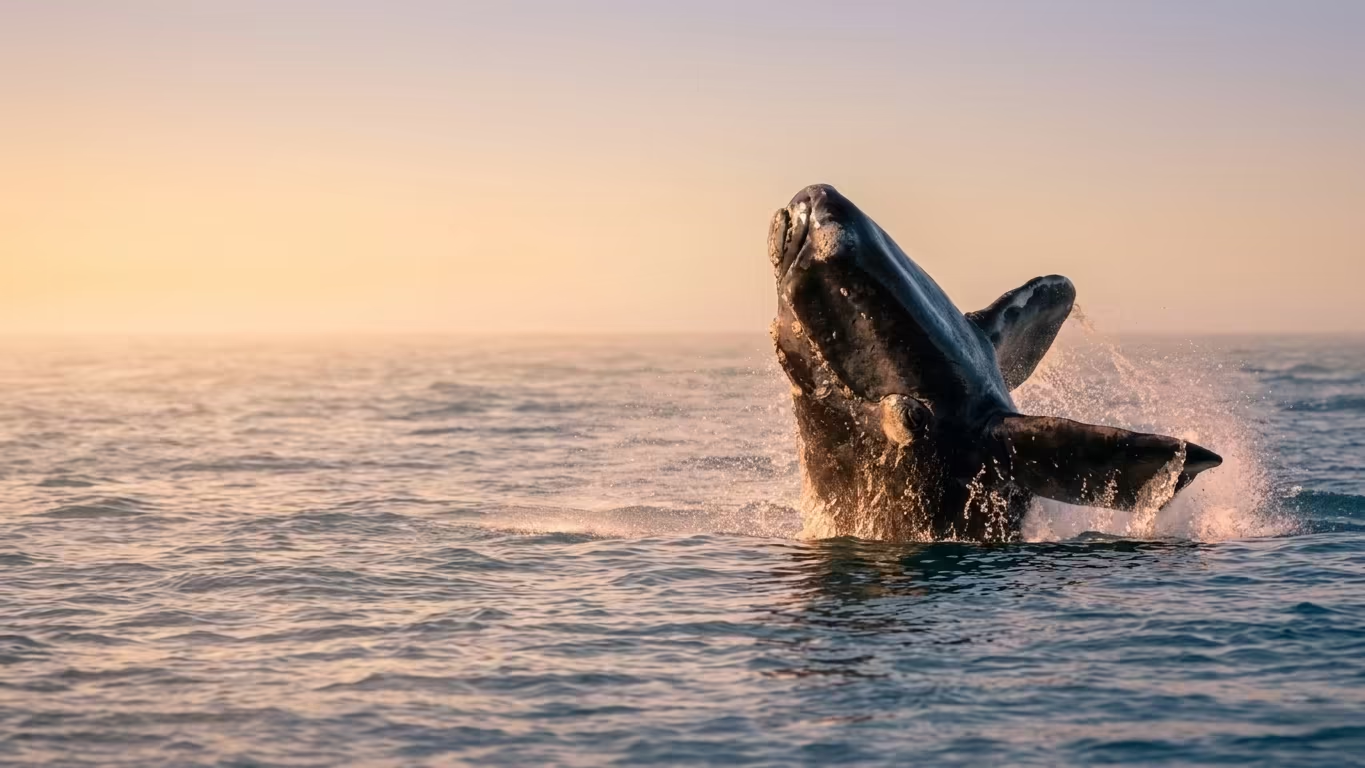
July: Generally considered the best month for ocean wave riding at the Barra — consistent south swells, solid wind, and the extraordinary backdrop of the whale migration corridor active just offshore.
Wind direction note: The northeast wind that drives lagoon kitesurfing creates side-offshore conditions at the ocean Barra. Understanding this distinction matters for safety — riders should be aware of their angle to the shore and the conditions for water relaunch before committing to an ocean session.
Getting Started: Lessons and Schools
Ibiraquera has an established kite teaching community, and learning here — with the lagoon as your classroom — is an unusually good experience for exactly the reasons described above. The shallow, flat water removes the most intimidating aspects of beginning, and the consistency of the wind means sessions rarely get cut short by dying conditions.
For those already at an intermediate level who want to develop ocean riding skills, private coaching with a local instructor who knows the Barra's specific rhythms is strongly recommended before tackling it independently. The break has its own character and the local knowledge makes a material difference.
Beyond Kiting: Wing Foiling, Windsurf & Paddle
The same conditions that make Ibiraquera exceptional for kitesurfing have made it equally attractive for the newer disciplines of wing foiling and wingsurf, which have grown rapidly in popularity on the lagoon in recent years. The flat, shallow water and consistent NE wind are perfectly suited to wing foiling progression — and the experience of foiling silently above the lagoon surface, with the hills reflected below and a kite skimming the horizon, is something genuinely difficult to describe to anyone who hasn't done it.
Windsurfing has a long history at Ibiraquera; the lagoon has always been one of the region's key windsurf spots, and the community — while smaller than the kite scene today — remains active.
Stand-up paddleboarding and kayaking are the other end of the spectrum: no wind required, no lessons necessary, and a completely different experience of the same water. Early morning paddle on the lagoon, before any wind arrives and the surface is perfectly still, is one of Ibiraquera's most quietly extraordinary experiences — available to anyone, regardless of skill level.
Practical Information
Getting there: Ibiraquera is approximately 80km south of Florianópolis International Airport (FLN), a 1-hour drive via BR-101. Equipment rental and lessons are available at the lagoon — no need to travel with gear, though serious riders often bring their own.
What to bring: Light wetsuit or rash guard for the ocean (the South Atlantic is cool even in summer); water, sunscreen, and a hat for long lagoon sessions; good footwear for the unpaved access paths.
The session window: Wind typically builds from mid-morning and peaks in the early afternoon. Early mornings are often windless and perfect for paddling; late afternoons can bring lighter conditions ideal for beginners to practice. Plan your day accordingly.
Staying put: For kiters, the accommodation question is important. You want to be close enough to the lagoon to check conditions and get on the water quickly when the wind arrives — but you also want somewhere comfortable enough to rest and recover properly between sessions. The hillside at Morro Elegante offers both: views of the lagoon and the weather building over it from your terrace in the morning, and direct access to the Barra trail for ocean sessions in the afternoon.
Casa Bajau at Ibirahill is designed with active travellers in mind — including kiters and surfers who want a private base close to the water without sacrificing the quality of their off-water hours. The lagoon is 3 minutes by car; Praia do Luz is a 15-minute walk. For local restaurant and activity recommendations, the Ibirahill guide is the place to start.
→ Contact our team to discuss a kite trip from Ibirahill — we can help you plan sessions, connect with local instructors, and make the most of your time on the water.
A Final Word on What Makes This Place Different
Ibiraquera will never be Jericoacoara or Cumbuco — the big northeastern Brazil kite destinations with their trade winds and their organised kite infrastructure and their permanent communities of international riders. It is quieter, more discreet, more integrated into a landscape that has multiple things going on beyond the kite beach.
That's the point. The riders who make the journey here tend to be people who want the kitesurfing to be part of something larger — a place where you can kite in the morning, eat lunch from a boat at the Barra, walk the coastal trail to Praia do Luz in the afternoon, and watch the sun go down over the lagoon from a hillside terrace.
The kiting is genuinely world-class. But at Ibiraquera, it's one layer of something richer.
Read Also
- The Complete Guide to Ibiraquera, Brazil — Beaches, Lagoon & Hidden Paradise
- Praia do Rosa vs. Praia do Luz vs. Ibiraquera — The Definitive Beach Comparison
- Best Time to Visit Ibiraquera: Month-by-Month Guide
Surfing Praia do Rosa: a local guide by skill level
Praia do Rosa is one of Santa Catarina's most consistent surf beaches. The bay faces south, which delivers swell year-round — peaking in winter (June to August) and producing the cleanest, most tubular waves in April and May. Guests at Ibirahill on Praia do Luz are a 10-minute drive from the Rosa parking lot.
Rosa Norte: heavy waves for advanced surfers
The northern point has a rock bottom, long powerful waves, and works best with south-southeast swell. It's the part of the beach that shows up in international "best waves Santa Catarina" lists. On bigger days (over 2 m), it's an experienced-only break — take-off is vertical and the peak gets crowded.
Rosa Sul: gentler waves, ideal for beginners and lessons
The southern point has a sand bottom, gentler waves, and hosts almost every surf school in the area. Lessons with a local instructor run R$120–R$180 per hour (2026 prices). September to December is the best window to start — smaller, more predictable waves.
When to surf Praia do Rosa: best months
- June–August: consistent south swell, bigger waves (1.5–3 m). Cold winter (water 17–19°C, 3/2 wetsuit required).
- April–May: cleaner waves, frequent offshore wind, water still warm (20–22°C). Local favorite window.
- September–November: smaller waves, ideal for beginners.
- December–February: high season, crowded peak, small-to-medium waves.
Surf vs kitesurf: how to combine both in Praia do Rosa and Ibiraquera
If you're after board surf, Praia do Rosa is the base. If you're after kitesurf, the Ibiraquera Lagoon (10 minutes by car from the Rosa parking lot) is a South American reference — the rest of this guide covers the kitesurf side of the region. For travelers who want both sports on the same trip, basing yourself in Ibiraquera or Praia do Luz gives short access to both: Ibirahill's boutique stay is 3 minutes from Praia do Luz and 10 minutes from Praia do Rosa.
Frequently Asked Questions
Q: Is Ibiraquera good for beginner kitesurfers? A: It's one of the best beginner environments in the southern hemisphere. The lagoon is shallow (0.5–1.7m), flat, and has no rocks or obstacles downwind — which removes the fear factor from the learning curve in a way ocean schools can't replicate. Multiple instructors operate on the lagoon; ask Ibirahill for current recommendations.
Q: What is the best time of year to kitesurf in Ibiraquera? A: September through March is the most consistent period, with northeast thermals building reliably from mid-morning. Spring can bring the strongest gusts (22–25 knots). July is generally considered the peak month for ocean wave riding at the Barra — south swells are at their most powerful, and the whale migration adds an unforgettable backdrop.
Q: Can I rent kite equipment at Ibiraquera? A: Yes — equipment rental and lessons are available at the lagoon. You don't need to travel with gear, though experienced riders often bring their own. Contact Ibirahill for current operator recommendations, as the local scene evolves.
Q: Is the lagoon or the ocean better for kitesurfing? A: They're better for different things. The lagoon (flat water, consistent NE wind, shallow and safe) is ideal for learning, freestyle progression, and wing foiling. The Barra (Atlantic waves, more demanding, requires intermediate skills minimum) is where riders who want wave riding come. Most visitors do both — that combination is what makes Ibiraquera special.
Q: What other watersports are available at Ibiraquera besides kitesurfing? A: Wing foiling and windsurfing have long histories here. Stand-up paddleboarding and kayaking are available for all skill levels and require no lessons. Early morning paddling on a completely still lagoon is one of the area's most quietly memorable experiences — open to anyone.
Keep exploring
- The kitesurfers of Ibiraquera — the Lagoa's kite community, year-round.
- Things to do in Ibiraquera — activities beyond kite.
- Beaches of Imbituba — the neighboring beaches worth the detour.