Best time to visit Ibiraquera & Praia do Rosa, by month
Quick answer
The best time to visit Ibiraquera and Praia do Rosa depends on what you are looking for. For beach and sun, December through February is the austral summer — warm weather guaranteed, but high prices and crowds. For whales and quiet, June to September brings headland sightings with near-empty beaches. For kitesurfing, September to November has the most consistent winds. There is no weak month — only different months.
In summary
- Summer (Dec–Feb): full beaches, guaranteed sun, high season, peak prices
- Autumn (Mar–May): mild climate, sea still warm from summer, best value
- Winter (Jun–Aug): southern right whales, low season, empty beaches, lower rates
- Spring (Sep–Nov): kitesurfing peak, whales still visible, pre-summer without crowds
- Sea temperature: 17–20°C in winter · 24–26°C in summer
- Minimum stay: 2 nights most of year; 3–5 nights in high season
- Accommodation: Ibirahill — open year-round; book ahead in summer
"There is no wrong time to be here. There are different times — and each one has its own kind of magic."
Introduction
The question of the best time to visit Ibiraquera doesn't have a single answer — and that, curiously, is one of the region's greatest assets. Unlike destinations with a narrow window of good weather, Ibiraquera offers genuine reasons to be here in any month of the year. What changes is the rhythm, the landscape, and what's on offer.
The best time to visit Ibiraquera depends on what you're looking for. For beaches, surf, and social life, December to February is peak season. For whales, July to November. For kitesurfing, September to March. For the combination of whales, kite, waves, and uncrowded beaches all at once, September to November is the sweet spot — the favourite period of those who know the region well.
This guide covers all twelve months honestly: what each season offers, where it falls short, and which traveller profile each period suits best.
When to Visit Ibiraquera: The Year at a Glance
A quick overview before diving into the detail:
| Month | Temperature | Sea | Highlights | Crowds |
|---|---|---|---|---|
| January | Hot (26–30°C) | Calm to moderate | Peak season, social life, surf at Rosa | High |
| February | Hot (26–30°C) | Calm to moderate | Carnival, summer peak | High |
| March | Warm (24–28°C) | Building swell | Post-season, prices drop, waves improve | Medium |
| April | Mild (20–25°C) | Good swell | Coast empties, quality surf | Low |
| May | Mild (18–23°C) | South swell | Tainha season begins, winter approaching | Low |
| June | Cool (15–20°C) | South swell | Tainha, artisanal fishing, cold | Very low |
| July | Cool (13–19°C) | South swell | First whales, winter surf, tainha | Low |
| August | Cool (14–20°C) | Solid swell | Whales with calves, kite picking up | Low |
| September | Mild (17–23°C) | Swell + kite | Whale peak, consistent kite | Medium |
| October | Mild (19–25°C) | Swell + kite | Abundant whales, local festivals, sun returns | Medium |
| November | Warm (22–27°C) | Mixed | Last whale window, strong kite | Medium |
| December | Hot (24–29°C) | Calm | Season begins, festivities, summer starts | High |
The Santa Catarina Summer: December to February
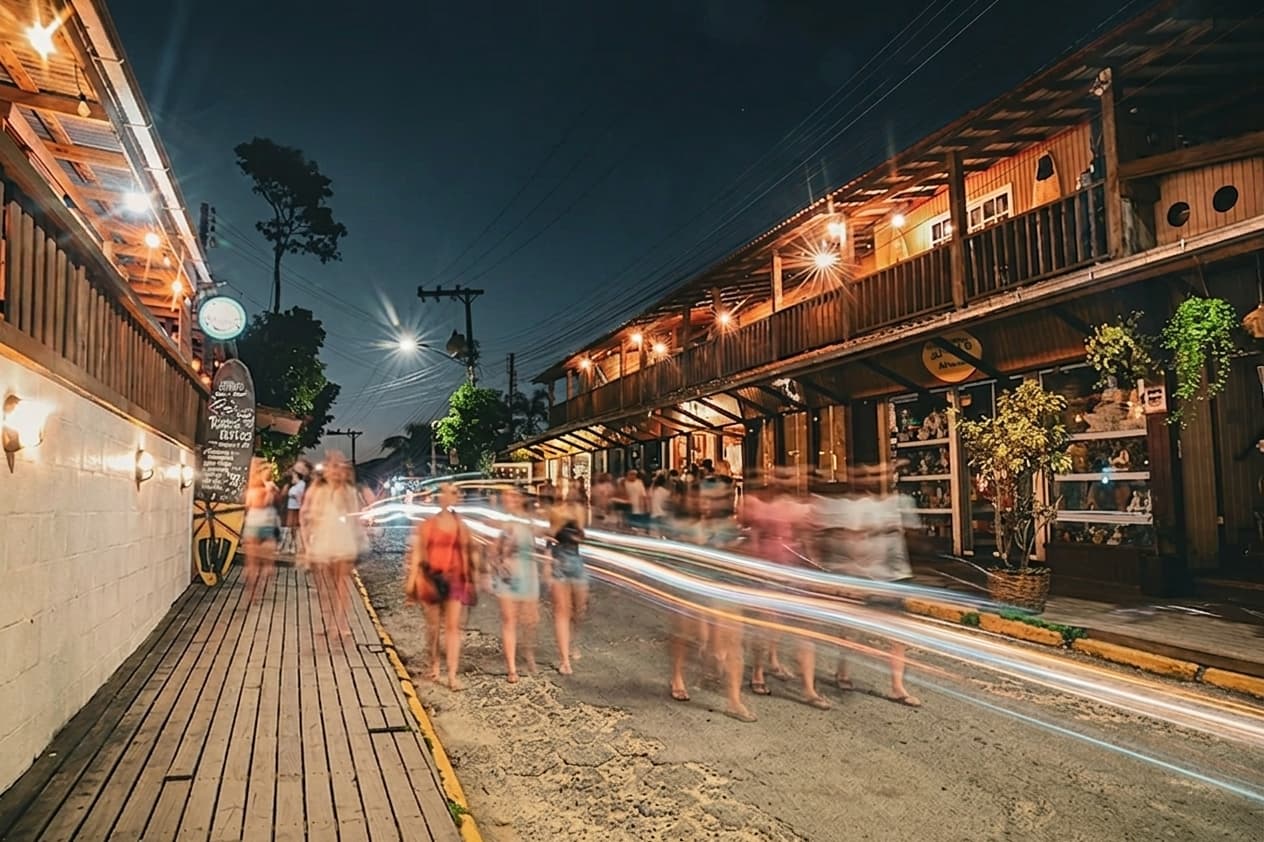
Summer in Ibiraquera is exuberant and unapologetic. The heat arrives fast, the beaches fill, and Praia do Rosa — the social heart of this coastline — becomes a complete destination: restaurants packed, nights that last, and an energy that photographs rarely capture in full.
The sea in summer is generally calm to moderate, with more accessible waves than in winter — which makes Rosa Sul the region's best spot for surf lessons and beginner sessions. On Lagoa de Ibiraquera, the northeast wind starts blowing consistently, and kiters and wing foilers appear on the water. For anyone wanting to learn kitesurfing, summer is a good window: forgiving conditions, instructors available, the lagoon alive with activity.
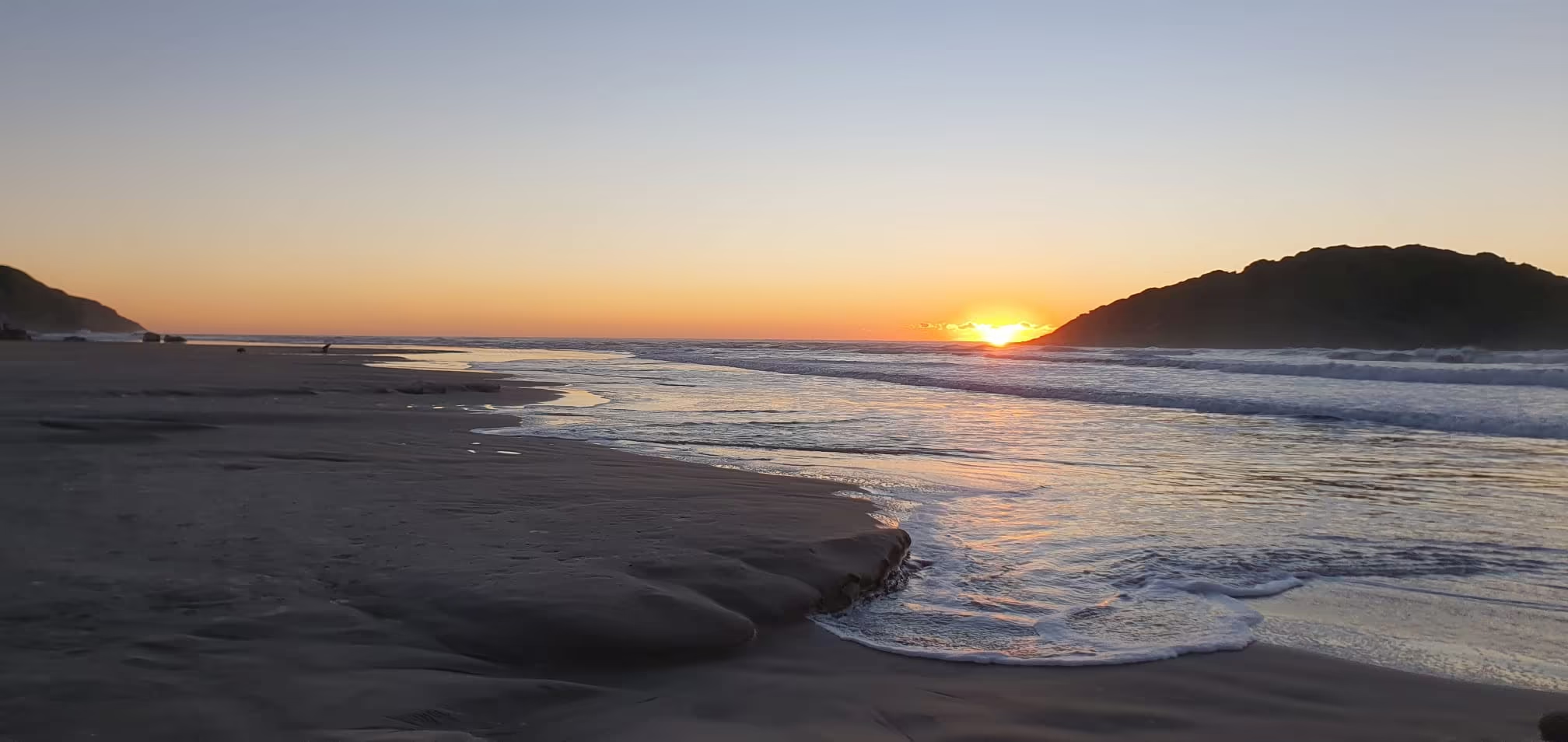
Praia do Luz, by contrast, stays surprisingly quiet even at the height of summer — foot access naturally filters the crowds. It's the escape for days when Rosa feels too busy. Setting out from Ibirahill at dawn, descending to Luz in fifteen minutes down the hillside, and having the beach almost to yourself in the summer heat — that is one of the most memorable things this coast offers.
Best for: Anyone wanting the full Brazilian summer experience, social life, varied restaurants, beginner surf and kite. Worth knowing: Higher prices, advance booking essential, Rosa can get busy on peak summer weekends.
March and April: When the Coast Breathes
March and April are transition months — and for a certain kind of traveller, they're the perfect months. The peak season energy dissipates quickly after Carnival, prices come down, and the coast recovers a more natural rhythm.
The weather remains good: the heat eases slightly, but temperatures stay pleasant (22–28°C). The sea starts receiving more consistent south swells, and wave quality improves progressively — for intermediate to advanced surfers, March and April can be better than summer.
The lagoon stays active for kitesurfing, particularly in March, with the northeast wind still present. April becomes patchier, but still offers good weekly windows.
Best for: Travellers who prefer fewer crowds, quality surf, more accessible prices, and still want warmth. Couples looking for privacy. Worth knowing: Some Rosa restaurants reduce their hours after Carnival. Summer is over, winter hasn't arrived — it's an in-between time.
The Tainha Season: May to July
Between May and July, Ibiraquera changes character in a way no other season replicates. The southern mullet arrives in shoals along this coastline and sets off one of Brazil's oldest fishing rituals: lookouts climb to the mirantes, fishermen wait in boats, and when the signal comes, nets go into the water in a choreography that the Azorean community brought here centuries ago.
This is not tourist spectacle — it is the real life of the people who live on this lagoon. Whoever is here during these weeks is witnessing something genuinely rare: a tradition that was not staged for visitors, that happens because it has to happen, at the rhythm of the tides and the shoals.
Winter itself is cool (June nights can drop to 12–13°C) and calls for layers. The sea carries solid, consistent south swell, making these months the favourites for surfers who want waves with force and character. Rosa Sul becomes nearly empty. Praia do Luz, on a good southeast swell, is at its best.
In July, the first southern right whales begin appearing offshore — which means this month is an overlap of two of the coast's most special moments: tainha and whales simultaneously.
Best for: Experienced surfers, lovers of local culture, those who want to witness an authentic ritual, nature photographers. Worth knowing: Cold, especially at night. Many establishments in Ibiraquera reduce hours or close entirely.
July to November: Whale Season
In July, the southern right whales arrive. And when they arrive, everything else becomes secondary.
This marine corridor — offshore from Imbituba, Ibiraquera, and Rosa — is one of the most important breeding sanctuaries for this species in the South Atlantic. The females come to give birth and nurse their calves in the warmer, protected waters of this coast, and they stay for months. July and August are the most emotionally charged months: newborn calves learning to breathe, watchful mothers, bonding behaviours rarely observed in other species. September and October bring peak density — full breaches out of the water, lobtailing, groups of animals interacting at the surface.
Land-based watching is frequently superior to boat trips: the cliffs above Praia do Luz, the slopes of Morro Elegante, the natural lookouts above Rosa Norte. In good conditions, whales are visible from the Ibirahill terrace. For a full guide on where and how to watch responsibly, see our dedicated article on whale watching in Ibiraquera and Praia do Rosa.
Best for: Whale watchers, nature lovers, photographers, travellers looking for experiences with real emotional impact. Worth knowing: July and August are cold — pack layers for the evenings.
September to November: The Best Time to Visit Ibiraquera
If pressed to identify a single window as the most balanced time of year to visit Ibiraquera, it would be September to November. It is the favourite period of those who know the region well — and there are concrete reasons for that.
The whales are still present in large numbers, displaying the most varied behaviours of the year. The sun returns with regularity. Temperatures climb gradually to comfortable levels (17–25°C by day). The northeast wind establishes itself consistently, turning the lagoon into one of the best kitesurfing environments in the southern hemisphere — 15–25 knots on multiple days per week. Beaches are far from summer crowd levels. Prices are shoulder-season.
It is a rare balance: nature at its peak, excellent water conditions, and enough space to enjoy all of it without sharing every metre of sand.
October is the month with the most simultaneous reasons to be in Ibiraquera: whales, kite, waves, local festivals in the region, pleasant temperatures. If you can only come once and your dates are flexible, aim for October.
Best for: Almost every traveller profile — this window works for families, couples, surfers, kiters, whale watchers, and anyone who wants quality without excess crowds.
Kitesurfing in Ibiraquera: The September–March Window
For kiters and wing foilers, the priority window is September to March, peaking in October–November when the northeast wind blows with greatest regularity and strength. Lagoa de Ibiraquera is flat, shallow, and obstacle-free downwind — one of the best learning environments in the southern hemisphere. The ocean at the Barra offers wave riding for intermediate to advanced riders.
For a complete guide to conditions, spots, and kite logistics at Ibiraquera, see our dedicated article: Kitesurfing Ibiraquera — Guide to Lagoon & Wave Riding.
Ibirahill in Every Season
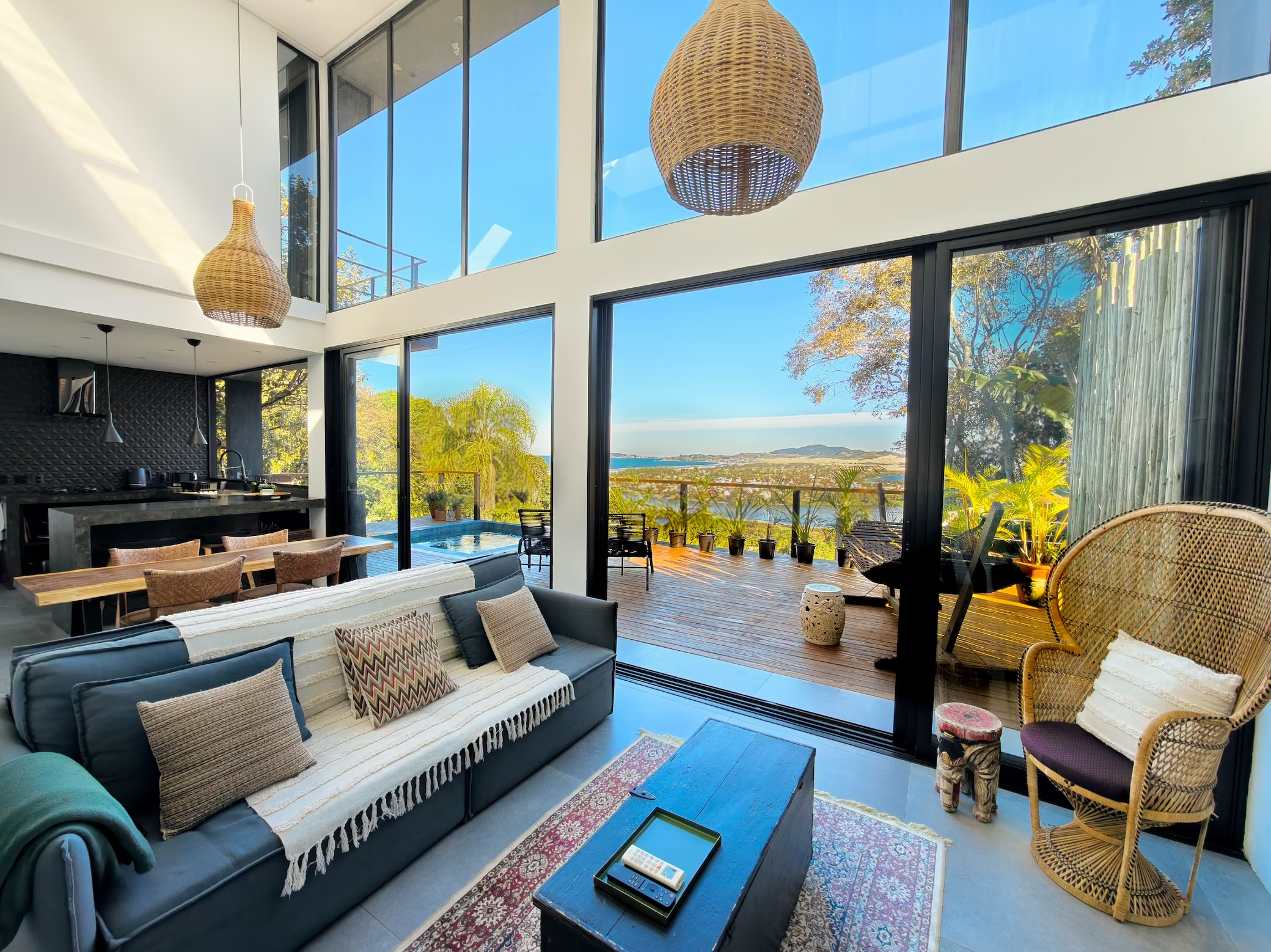
One of the reasons Ibirahill works in every month is its position: on Morro Elegante, between the lagoon and the ocean, fifteen minutes on foot from Praia do Luz and ten minutes by car from Praia do Rosa. It is not a property designed for one season — it is a base for a relationship with this coastline that changes shape through the year.
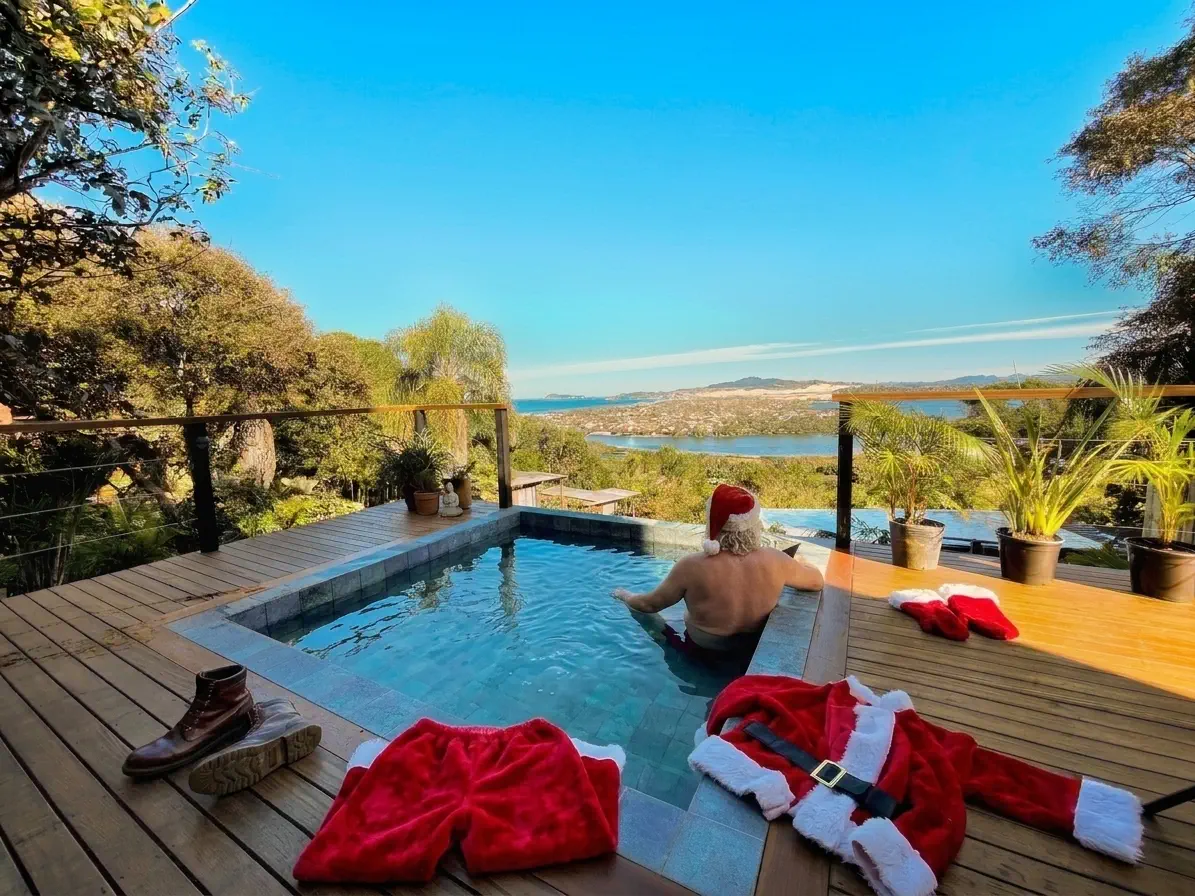
In summer, Casa Galeria and Casa Atelier catch the longest daylight hours, with the lagoon below and the Atlantic beyond. In winter, Casa Bajau — with its more sheltered lines and terrace facing the forest — becomes the ideal place to listen to the rain and wake up to whales.
There is no wrong time to be here. There is only the right time for what you want to live.
→ Explore our houses and check availability for whichever season calls you at ibirahill.com/casas. For questions and planning, get in touch.
→ Or see dates and rates and book direct — no intermediaries.
Read Also
- our complete Ibiraquera guide
- Whale Watching Near Praia do Rosa — Complete Guide 2026
- Kitesurfing Ibiraquera — The Ultimate Guide to Lagoon & Wave Riding in Southern Brazil
Frequently Asked Questions
Q: What is the best time of year to visit Ibiraquera? A: It depends what you're after. December to February is peak summer — warm ocean, active social scene at Rosa, accessible surf. July to November is whale season. September to November offers the best combination: whales, consistent kite wind, less crowded beaches, and comfortable temperatures. It's the sweet spot that those who know the region best tend to return to.
Q: What is winter like in Ibiraquera — is it worth visiting? A: Winter (June–August) is cool — nights can drop to 12°C, days sit between 15–20°C. But it has its own pull: south swell for surfers, the tainha season (May–July) with its ancient artisanal fishing rituals, and in July the first whales arrive. For anyone seeking authenticity and nature without the tourist season, winter is a legitimate and rewarding choice.
Q: Does Ibiraquera get very crowded in summer? A: Praia do Rosa gets busy on peak summer weekends (January–February). Praia do Luz stays quiet year-round — foot access naturally filters the movement. The lagoon is large enough not to feel crowded even in high season. Guests at Ibirahill always have more private alternatives within minutes.
Q: When can I see whales in Ibiraquera? A: July to November. September and October bring the highest density of animals. The cliffs above Praia do Luz, the Morro Elegante hillside, and the Ibirahill terrace are among the best land-based viewpoints in the region. For a full guide, see our whale watching article.
Q: What is the best time to kitesurf in Ibiraquera? A: September to March is the most consistent window, with the northeast thermal wind blowing reliably on the lagoon. October and November are often the strongest months, with 15–25 knot conditions on multiple days per week. The lagoon suits all levels; the ocean Barra is for intermediate to advanced riders. See the full guide at Kitesurfing in Ibiraquera.
Keep exploring
- The kitesurfers of Ibiraquera — thermal-wind season Nov–Mar.
- Things to do in Ibiraquera — activities through the year.
- Artisanal fishing and the mullet run — the season that shapes the coastal winter.
Frequently Asked Questions
Q: What is the best time of year to visit Praia do Rosa? A: It depends on your priorities. For beach weather, December to February delivers guaranteed warmth — but also peak prices and crowds. For quiet, scenery and value, June to September is the choice of those who know the region: whale sightings from the headland, near-empty beaches, and low-season rates.
Q: Is it cold in Ibiraquera in winter? A: The Santa Catarina winter in Ibiraquera is mild but cool — air temperatures of 12–20°C, with occasional cold fronts. Sea temperature drops to around 18°C. A jacket for evenings, light layers during the day. It is what keeps the beaches empty and the whales close.
Q: When is high season at Praia do Rosa? A: The main high season runs from mid-December through Carnival (February/March). July — Brazilian school winter break — is a second busy period, especially for families. Outside those windows the region runs on low season with fewer visitors and reduced prices.
Q: What is the sea temperature in Ibiraquera? A: Ocean temperature ranges from 17–20°C in winter (June–August) to 24–26°C in summer (December–February). Lagoa de Ibiraquera warms faster in summer and can reach 28°C.
Q: Is Ibiraquera worth visiting in March or April? A: Yes. Autumn (March–May) offers mild weather, a sea still warm from summer, progressively quieter beaches and low-season prices from mid-March. Surf is typically consistent and it is the best value window of the year.