Brazil's mullet fishermen: a 300-year coastal tradition
Quick answer
Artisanal fishing in Ibiraquera revolves around the mullet (Mugil liza) — a migratory fish that passes along Santa Catarina's coast from May to July — and represents one of the region's oldest and most contested traditions. The harvest is regulated by Brazil's environmental agency (Ibama), but the arrival of mullet schools still mobilizes dozens of fishermen to the shores of Ibiraquera Lagoon and Praia da Luz in scenes of ancestral technique and territorial rivalry. Ibiraquera is one of the few remaining places in Brazil where community-scale net fishing for mullet is still practiced.
In summary
- 🐟 Key species: Mullet (Mugil liza) — migratory, passes May–July
- 🗺️ Location: Ibiraquera Lagoon and Praia da Luz, Santa Catarina
- ⚖️ Regulation: Ibama controls quotas and fishing periods
- 👨👩👧 Tradition: community net fishing practiced across generations
- 📅 Viewing season: May to July
- 🚗 Access: Praia da Luz is 3 min from Ibiraquera village centre
- 🏨 Where to stay: Ibirahill — boutique nature stay in Ibiraquera, SC
By mid-May, the lagoon and the beach change ownership. The kites come down, the boards come out of the water, and the boats return to the sand. From May through July, the sea at Ibiraquera belongs to the fishermen — whether you like it or not. This is the tainha season, and it's also the place on this coast where the oldest tradition still in operation collides with everything that came after.
The fishermen of Ibiraquera are heirs to an eighteenth-century Azorean tradition. From May through July, they hold priority over the sea: watchers stationed on the clifftops signal with their arms when the mullet shoal arrives, and during those months surfing, kitesurfing and other water sports give way — not by municipal concession, but by a pact that pre-dates the town itself.
The rule no one voted on
There is no sign, no notice, no ordinance. The rule is old and operates by consensus: when the net goes in, the sea closes. Frustrated surfers, kitesurfers who travelled for the wind, visitors who can't understand why the perfect window is blocked — all of them meet the same boundary. The mullet has priority. And even on days when the shoal doesn't show, the sea stays reserved: the vigia is on the hill, the boats are ready, and the signal could come at any moment.
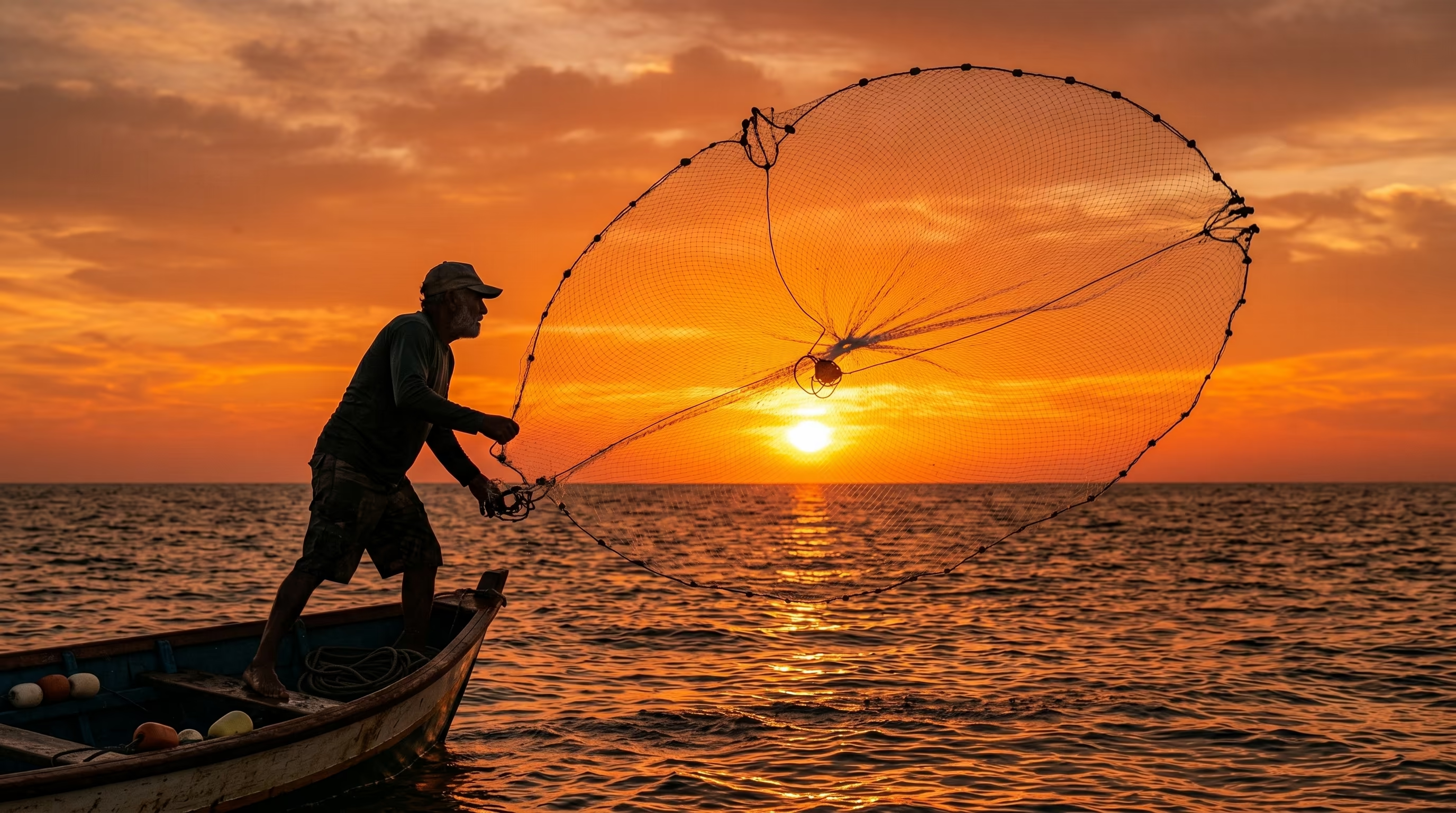
This is a living Azorean culture. The first colonists of this coast arrived from the Azores in the eighteenth century, and they brought a complete system with them: vocabulary, hierarchy, share of catch, gestures. The word vigia isn't a metaphor — it's a job. The arrastão da rede (the net haul) isn't folklore — it's a coordinated operation that takes five to eight men working in silence while the entire beach watches.
The conflict the brochures don't talk about
Here's the part the tourist guides leave out: this pact, for years, has not been peaceful. Real conflicts have happened. There are documented incidents of nets cut by boards, of arguments on the sand, of threats in both directions. The tension is understandable — if you've travelled six hours for a swell or paid for a stay to sail the lagoon, being told "the sea is closed" for two months feels arbitrary.
This is where the story needs honesty. There's no single truth. The legitimate question — why can't the fishermen fish while the surfers surf? — has a technical answer (the nets are long, fragile, and occupy the same arc of water where the wave forms) and a cultural answer (the tainha haul is a choreographed community event, and other users break the operation). But it also has a less comfortable answer: tradition won not because it was voted on, but because it arrived first. The fishermen have been here for seven generations. The kitesurfers, for twenty years.
This is not a fair pact in the modern sense. It's a historical pact. The distinction matters.
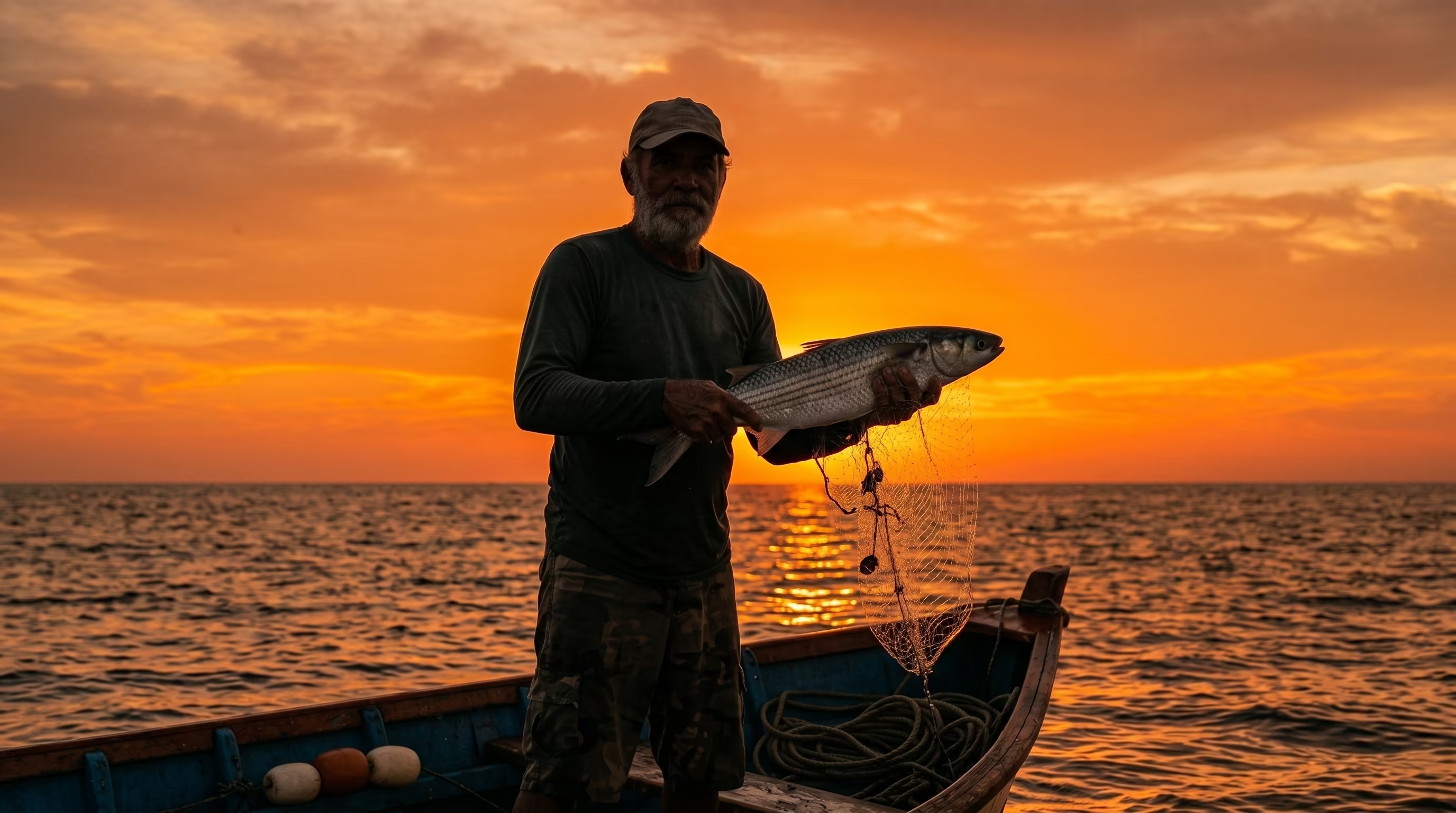
The beach changes identity
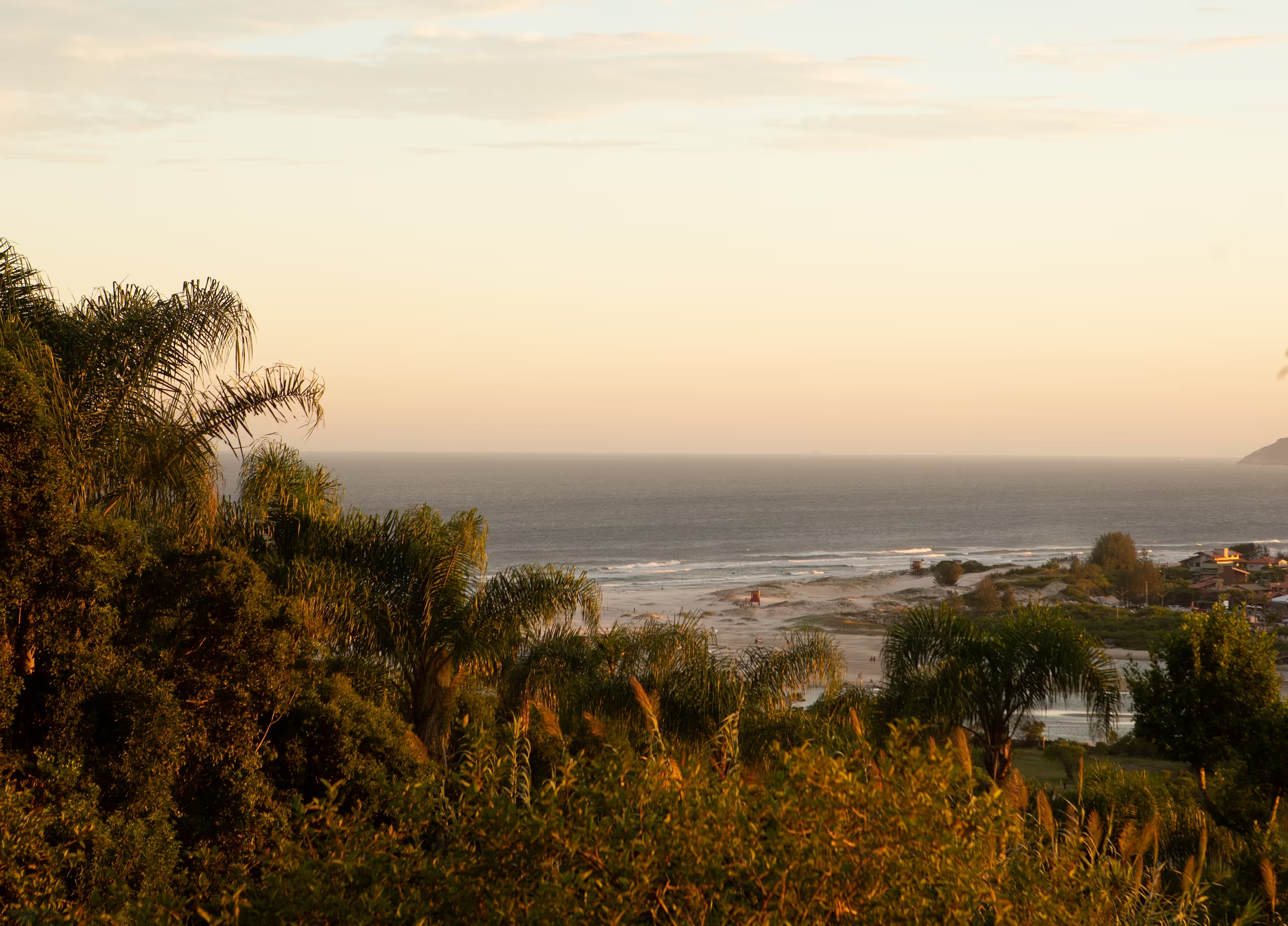
Visually, Praia do Luz and the ocean side of the Ibiraquera lagoon become a different place during these months. The boats line up on the sand. The nets dry in the sun. The fishermen mend tears, adjust weights, talk quietly. The smell of salt grows stronger. And the landscape — without crowds, without music, without kites in the sky — takes on a stark beauty that doesn't exist in summer. Winter in Ibiraquera is cinematic precisely because the tainha season empties it out.
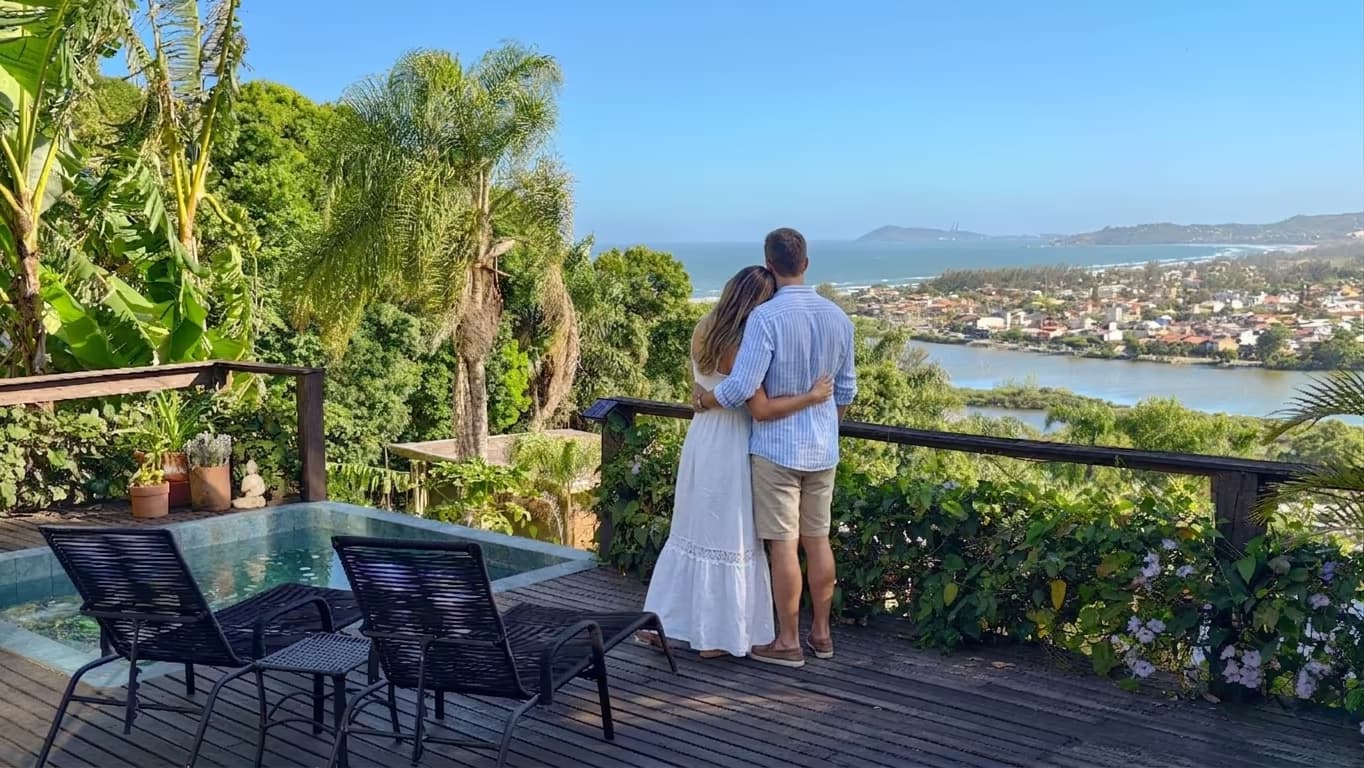
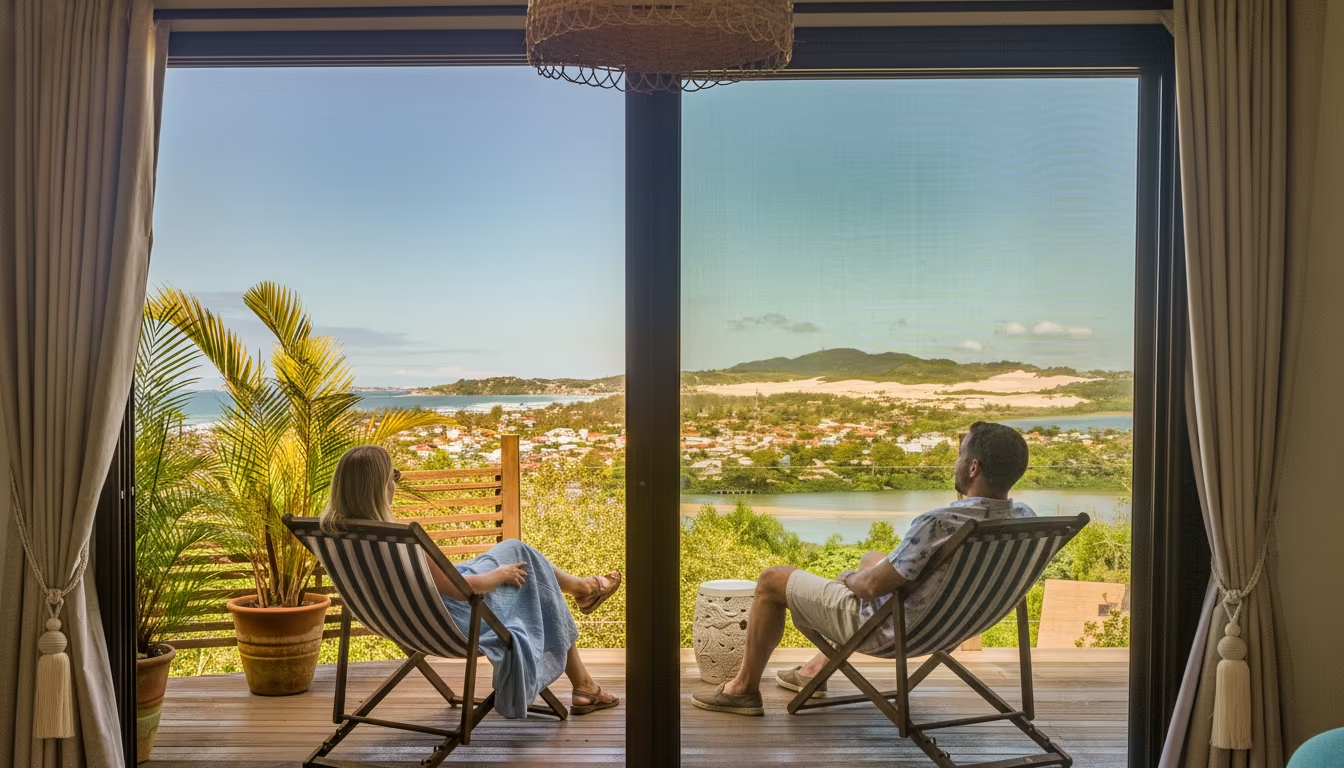
Guests staying at Casa Galeria during this stretch can read the rhythm from the terrace: the vigias on the hills, the boats launching within seconds when the signal comes, the collective hush of the twenty or thirty people who simply stop to watch.
The food that comes after the net
When the big haul arrives — when the nets come up full and there are three hundred, six hundred, a thousand kilos of fish on the sand — the effect ripples through the community within hours. Local fishmongers sell fresh before midday. The small markets know. Ibirahill guests get a message from the local chefs. Grilled mullet, mullet roasted whole in its scales (an Azorean technique), smoked roe, artisanal bottarga, preserves in olive oil — the entire cuisine that grows out of this season is an extension of the fishermen's work.
The grill becomes central. The three Ibirahill houses — Casa Galeria, Casa Ateliê, Casa Bajau — all have outdoor grills, and no evening summarises the region better than a fresh mullet from the Peixaria do Sena, grilled at home, with coarse beach salt, garden chives, and the right wine. For those who prefer to eat out, the Restaurante Tartaruga — feet-in-the-sand, run by locals and fishermen — serves the fish in its most direct form, and the Refúgio do Pescador reinterprets the tainha in a contemporary register. For the full list of markets, fishmongers and restaurants that live off this run, see our guide.
The festivals that mark the sea's calendar
The tainha doesn't arrive alone. It arrives inside an entire cultural calendar that structures the year on this coast — and every port, every beach, every village has its own cycle of festivals that blends folk Catholicism, Azorean inheritance and harvest celebration. The main ones:
-
Festival I Love Tainha (2-3 May 2026, Florianópolis): the event that symbolically opens the season. Held on the Beira-Mar Continental (Estreito) from 11am to 9pm, free admission, it's a gastronomic and cultural celebration entirely dedicated to the tainha. Music programme with Gente da Terra, Daza, Iriê and John Bala (Saturday) and Quinteto S.A, Luiz Meira and Marelua (Sunday), plus a samba-school bateria, boi-de-mamão folklore, a children's area, workshops and local food. Organised by Associação Música SC, supported by the state PIC cultural programme. From Ibiraquera it's about an hour and a half by car to the mainland — worth the detour to grasp the cultural weight of the tainha before watching the nets go in at home.
-
Festa de São Pedro Pescador (29 June): the patron saint of fishermen. A maritime procession with the boats decorated, mass on the beach, a community lunch with fresh fish. This is the symbolic moment when the tainha season is recognised in the community's religious calendar.
-
Festa do Divino Espírito Santo: a centuries-old Azorean tradition, celebrated on different dates by the Imbituba, Garopaba and Laguna communities. Coronation of the Emperor, distribution of bread and meat, terno de folia music groups.
-
Festa de Nossa Senhora dos Navegantes (2 February): a procession of decorated boats along the coast, blessing the fleet before the summer season.
-
Boi-de-Mamão and Terno de Reis: a cultural cycle that travels through the fishermen's houses between Christmas and Carnival, with music, masks and blessings asked for the coming fishing year.
Anyone who arrives in winter and only sees a closed sea misses half of what's happening. The other half — the communal, the religious, the celebratory — is on land, in the small villages along the coast, and it's part of the same organism.
How to visit with respect
The tainha season isn't a programmed spectacle. There's no schedule, no ticket. But it can be observed up close if you know where to look: from the top of Morro Elegante, you can see both the vigias on the high points and the entire coastline down to southern Imbituba. When the vigia's arms go up, you can follow the whole operation — from signal to net launch to closing to haul — in real time. For most guests, it's the moment they understand that this isn't entertainment. It's work, livelihood, continuity.
To plan a visit around the tainha, the whales, or the community festivals, the month-by-month Ibiraquera guide lays out the full calendar. To understand how each beach relates to the sea differently, see the three-beach comparison. And for the broader context, the complete guide to Ibiraquera covers the rest.
→ To time a stay with the tainha season and the June festivals, book one of the three Ibirahill houses and read the coast at its most authentic rhythm.
Frequently Asked Questions
Q: When is tainha season in Ibiraquera? A: Tainha season in Ibiraquera runs from mid-May through July, depending on the shoal. There's no exact date: the fishermen rely on vigias on the clifftops who watch the sea every day and signal when the shoal arrives. The run typically lasts between six and ten weeks.
Q: Can I surf or kitesurf during tainha season? A: No. During tainha season — generally May, June and July — the ocean beach and the lagoon side of Ibiraquera close to water sports. The fishermen hold priority by Azorean tradition, and even on days when the shoal doesn't appear the sea remains reserved, because the signal can come at any moment.
Q: Why is there a conflict between fishermen and surfers in Ibiraquera? A: The conflict arises because the nets occupy the same arc of water where waves break and kitesurfers ride. For the fishermen, the sport interrupts a coordinated operation that has sustained the community for seven generations. For the sportspeople, the closure feels arbitrary. The tradition won by seniority, not by modern consensus.
Q: Where can I eat fresh tainha in Ibiraquera after the run? A: The best places are Peixaria do Sena (fresh fish to cook at home), Restaurante Tartaruga (feet-in-the-sand, run by fishermen) and Refúgio do Pescador (contemporary version). Ibirahill guests typically grill the tainha on their own house's barbecue. See the restaurant guide for the full list.
Q: Which fishermen's festivals happen on the Ibiraquera coast? A: The Festival I Love Tainha (2-3 May 2026, in Florianópolis) symbolically opens the season. After that come the Festa de São Pedro Pescador (29 June), the Festa do Divino Espírito Santo (variable dates), the Festa de Nossa Senhora dos Navegantes (2 February), and the cycle of Boi-de-Mamão and Terno de Reis between Christmas and Carnival. Each village along the Imbituba and Garopaba coast keeps its own calendar.
Founder's Perspective
I've seen the vigia's arm signal twice. The second time, last May, there were twenty people around me. Nobody had agreed to be there. When the net began to close, a man from the community I didn't know said quietly, behind me: "isso aqui é mais antigo que tudo." This here is older than everything.
I've come to understand that sentence with some discomfort. Because it's true, but it isn't simple. It's true that the tainha fishery is older than tourism, older than kitesurfing, older than the municipality of Imbituba itself. But it's also true that the way the pact holds — without written regulation, by consensus and occasionally by confrontation — isn't elegant. Real conflicts have happened. People have been hurt, nets have been cut, entire days have been lost to arguments nobody wanted to have.
I understand the frustration of someone who arrives here, pays for a full stay, and discovers the sea is closed. It would be unreasonable to pretend tradition resolves that discomfort. But tradition also doesn't ask for permission, and nor should it. Seven generations of fishermen built the economy of this coast before there was a hotel, a restaurant or a brand. The mullet that comes out of the net in June is the same one that fills the grill in July, that stocks the fishmonger in August, that holds in the cured roe through December. Take away the tainha and the rest goes with it.
Our part, at Ibirahill, is simple: tell guests early. Anyone arriving between May and July knows — before they get here — that the beach has another tenant. In return, they get something few places in Brazil still offer: watching, in real time, a three-hundred-year-old Azorean tradition still running. No staging. No ticket. No app.
For me, that's the part of this coast worth defending. Even when the defence is uncomfortable.