Where is Ibiraquera? Complete local guide — beach, lagoon & forest
Quick answer
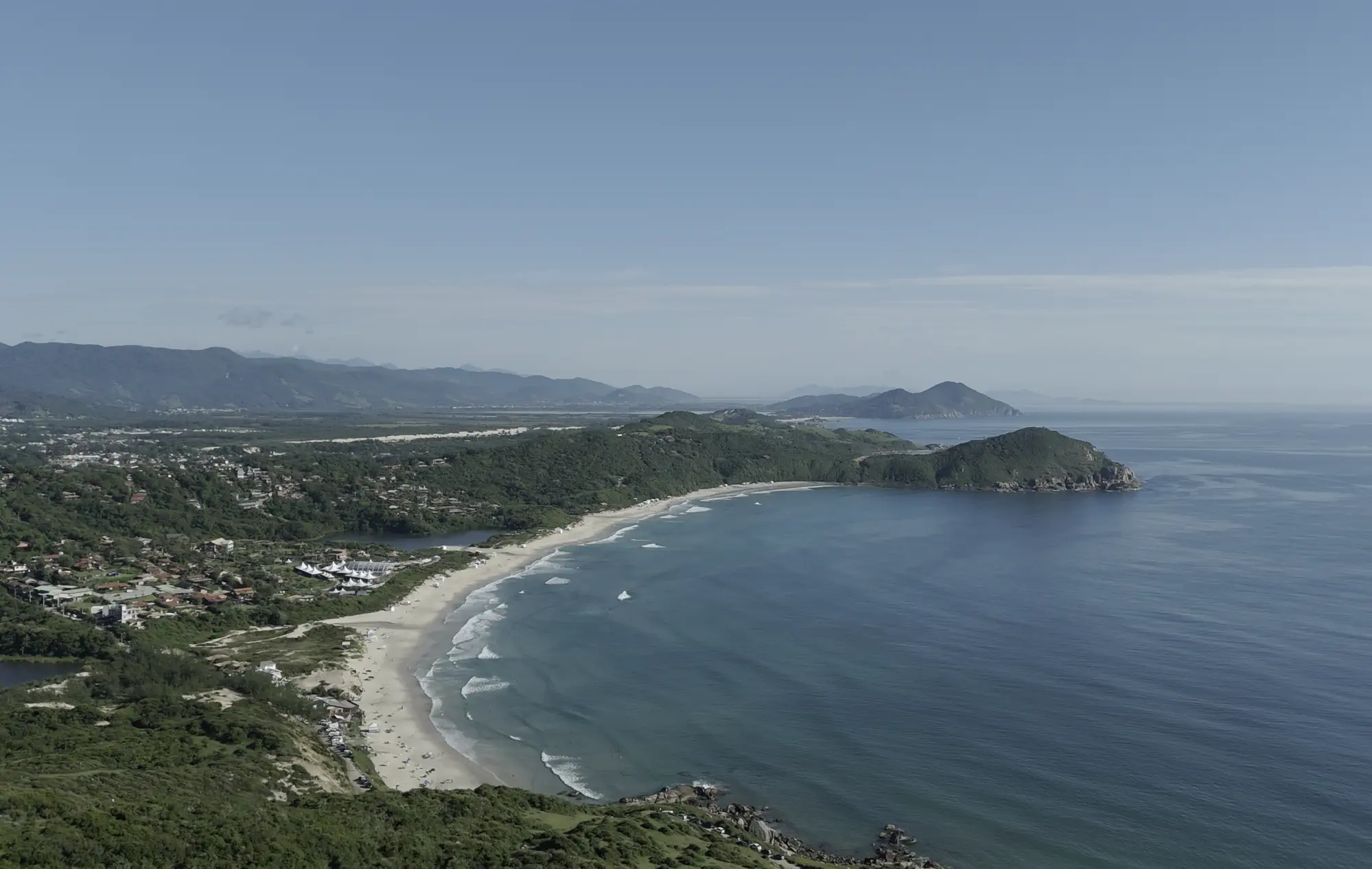
Ibiraquera is a coastal neighbourhood in northern Imbituba, on Santa Catarina’s south coast. The name also identifies the lagoon and a wider area of communities and beaches. From north to south, the coast runs Praia do Rosa, Praia do Luz, then Barra de Ibiraquera. Lagoa de Ibiraquera lies inland, covering approximately 8 km² with several access points. The region is part of the APA da Baleia Franca, a federal environmental protection area.
In summary
- 🗺️ Location: Ibiraquera, northern Imbituba, Santa Catarina
- 🌊 Lagoon: approximately 8 km²; choose the entry point and activity for the conditions
- 🏖️ Coastal order: Rosa, Luz, then Barra de Ibiraquera, north to south
- 🌿 Environment: APA da Baleia Franca, with hillside forest and restinga patches
- 🐋 Whales: July to November is the main planning window
- 🚗 Access: BR-101 south from Florianópolis; plan the route to your final destination
- 🏨 Where to stay: Ibirahill, on Morro do Elegante, in Ibiraquera
At a glance
- 📍 Location: northern Imbituba, SC
- 🌊 Lagoon: approximately 8 km², with depth and conditions varying between access points
- 🏖️ Beaches: Luz and Barra de Ibiraquera; services and sea conditions change
- 🌿 Ecosystem: APA da Baleia Franca, hillside forest and restinga
- 🐋 Whales: July to November; peak generally in September, without guaranteed sightings
- 📅 Times to visit: September to November or March to May, depending on your interests
- 🏡 Stay: Ibirahill’s three houses on Morro do Elegante, about 3 min by car or 15 min on foot from Luz
Introduction
There's a stretch of coastline in the south of Brazil that most travelers speed past on the BR-101, eyes fixed on Florianópolis or the well-worn path to Praia do Rosa. But if you know to turn off — to follow the sandy tracks down toward the Atlantic Forest and the shimmer of a vast inland lagoon — you'll find Ibiraquera.
It's not hidden, exactly. The surfers and kiters have known about it for decades. The fishermen have been here for centuries. But Ibiraquera has somehow managed to remain one of the most genuinely unspoiled corners of Santa Catarina: a place where the lagoon is so still in the mornings it looks like hammered bronze, where the ocean beach follows the coast, and where the pace of life is set not by a calendar, but by wind, tide, and the slow arc of the sun over Morro Elegante.
This is the guide we wished existed when we first arrived. Everything you need to know about one of southern Brazil's most extraordinary places.
Where Is Ibiraquera?
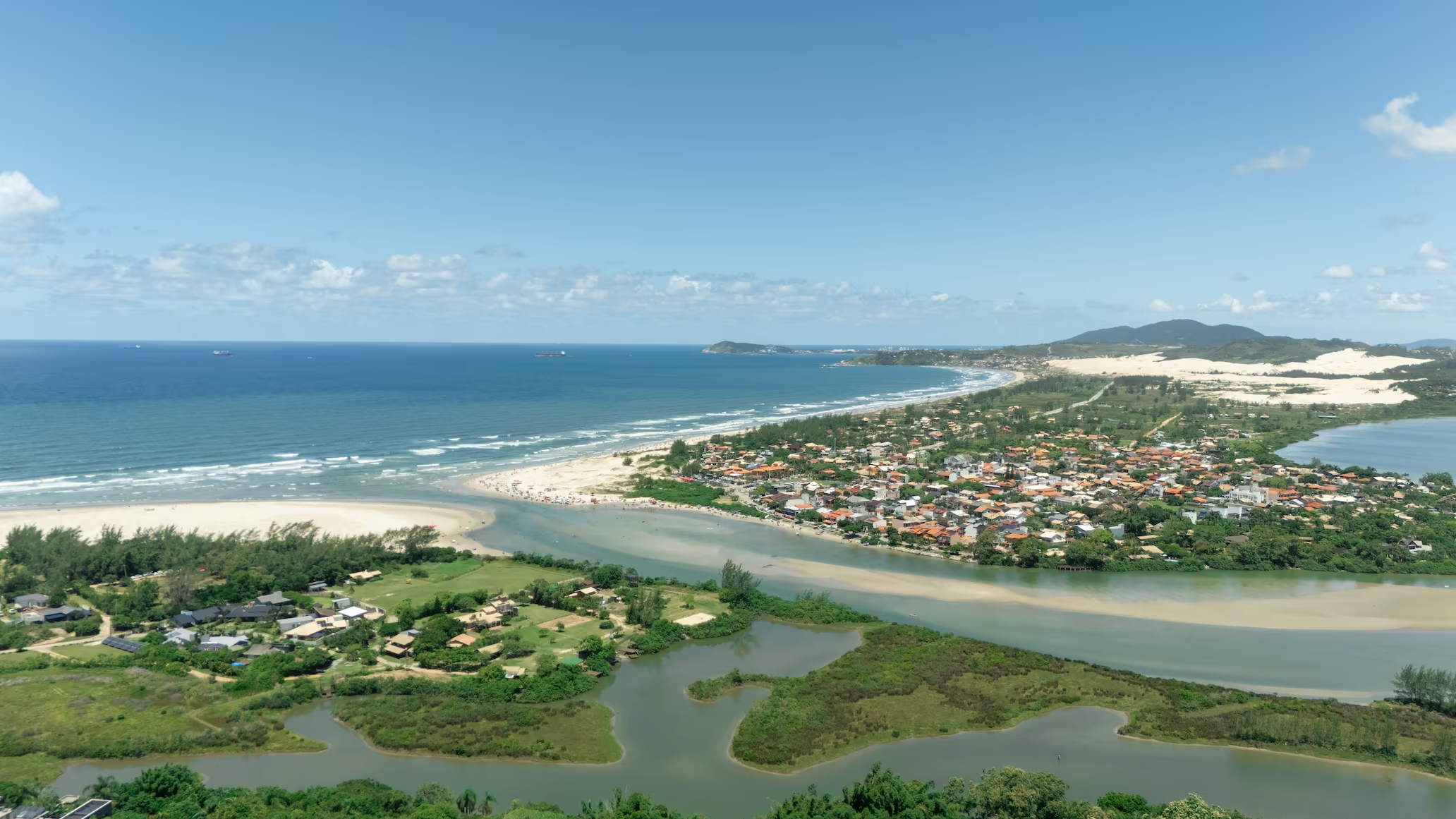
Ibiraquera belongs to Imbituba. It is a coastal locality around Lagoa de Ibiraquera, with different banks, communities and access points. The lagoon exchanges water with the Atlantic at Barra de Ibiraquera, depending on the inlet’s state. Most of the system is in Imbituba, and its northern part reaches Garopaba.
The region sits within a protected environmental area (APA) that encompasses the Southern Right Whale's breeding corridor — which explains why development here has remained pleasingly restrained. Nature, not concrete, is still the dominant force.
The Lagoon: The Heart of Everything
If Ibiraquera has a soul, it lives in its lagoon.
Lagoa de Ibiraquera has four connected sections: Lagoa de Cima, Lagoa do Meio, Lagoa de Baixo and Lagoa do Saco. At each bank, assess wind, depth and other water users. Ilha da Batuta lies offshore, facing the Luz and Ibiraquera coast; it is not inside the lagoon.
The lagoon has shallow stretches, but no single depth or condition. Wind, rain and an open Barra change swimming and paddling conditions. Choose the spot with local guidance; stay close to children. Clear water does not establish bathing suitability: check IMA’s report for the chosen stretch.
At dawn, on windless mornings, the lagoon is an almost meditative experience. Bring a paddleboard and you'll feel like you're moving across a mirror.
The Ocean Beach
The ocean side of Ibiraquera offers a very different kind of beauty.
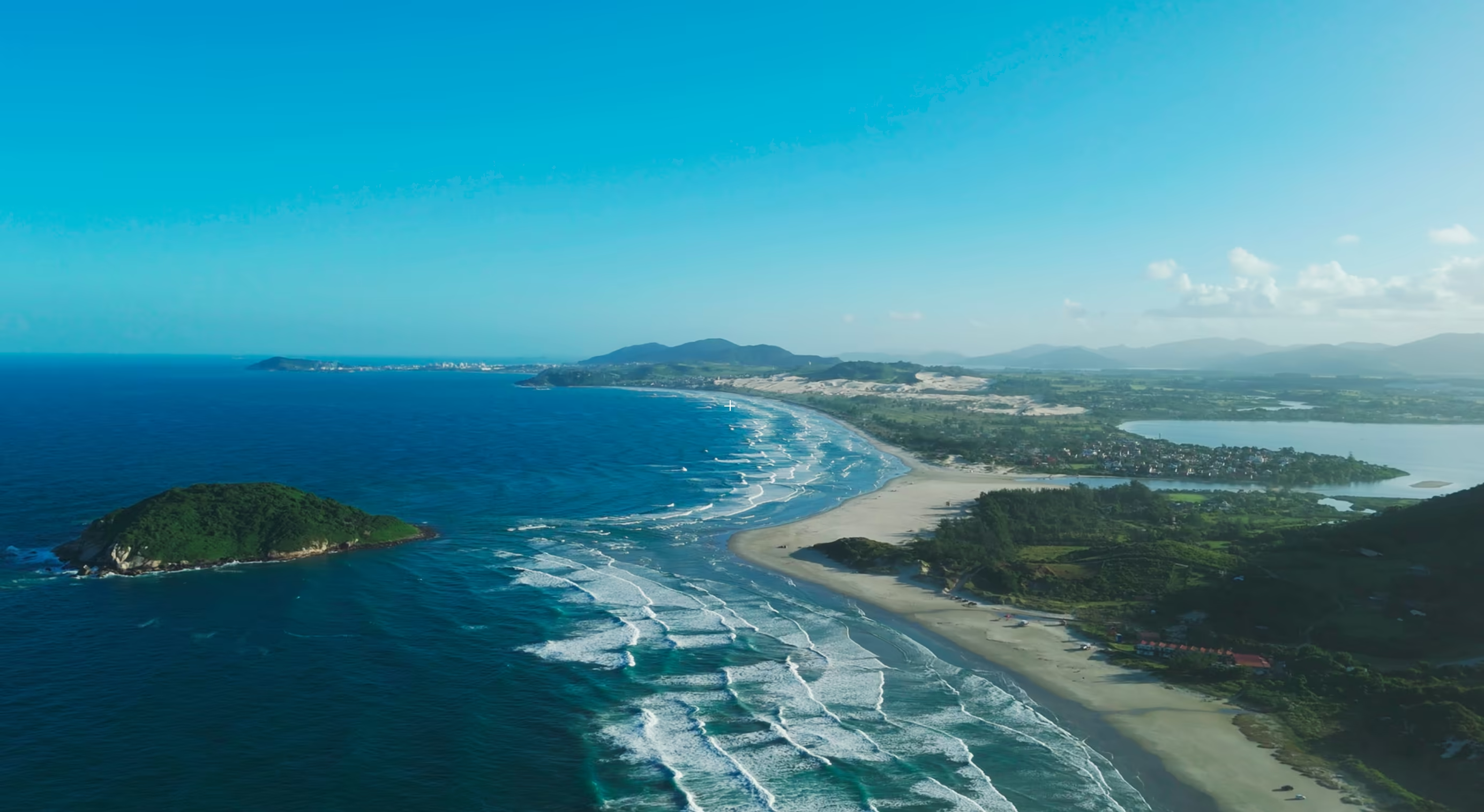
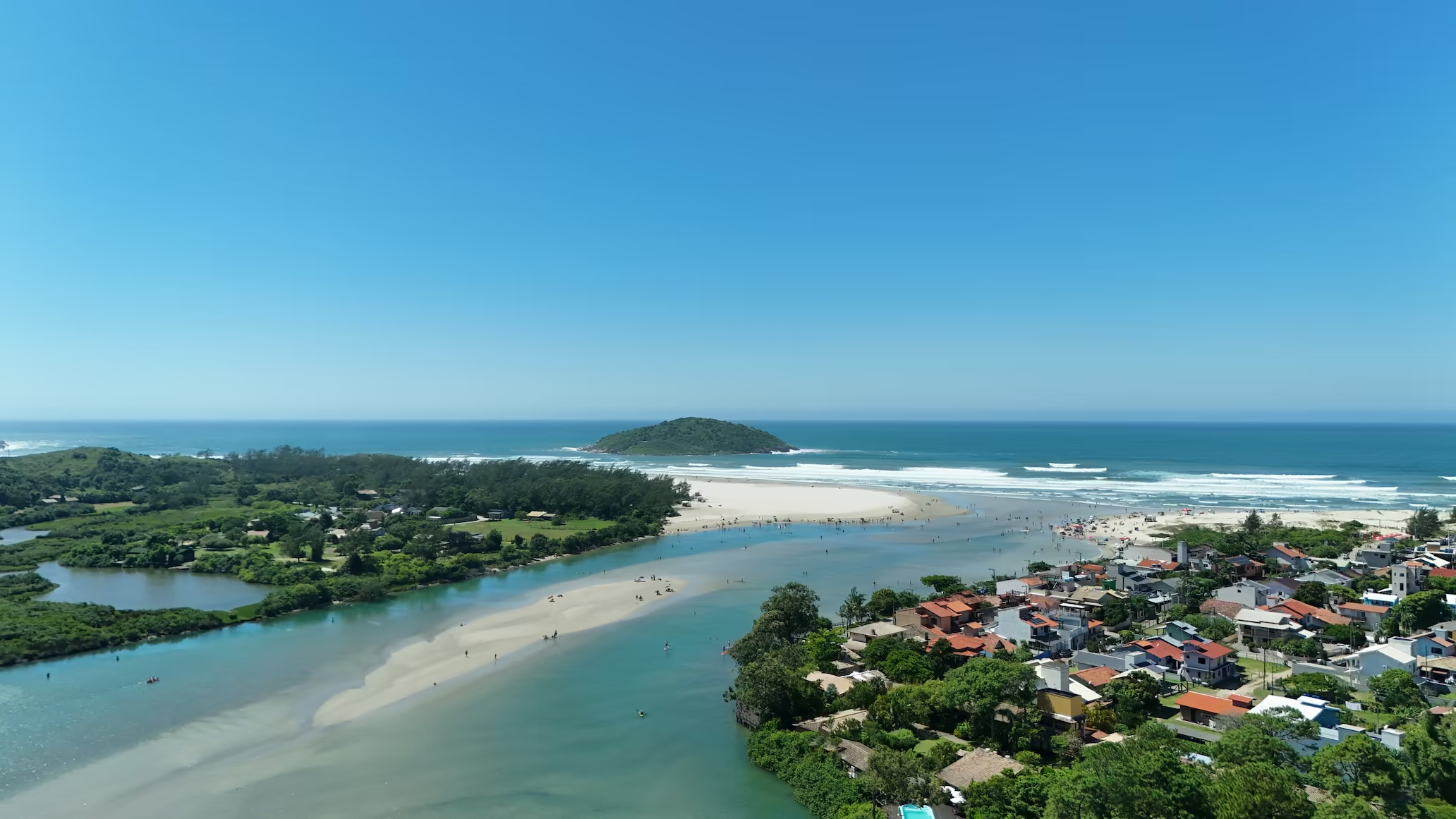
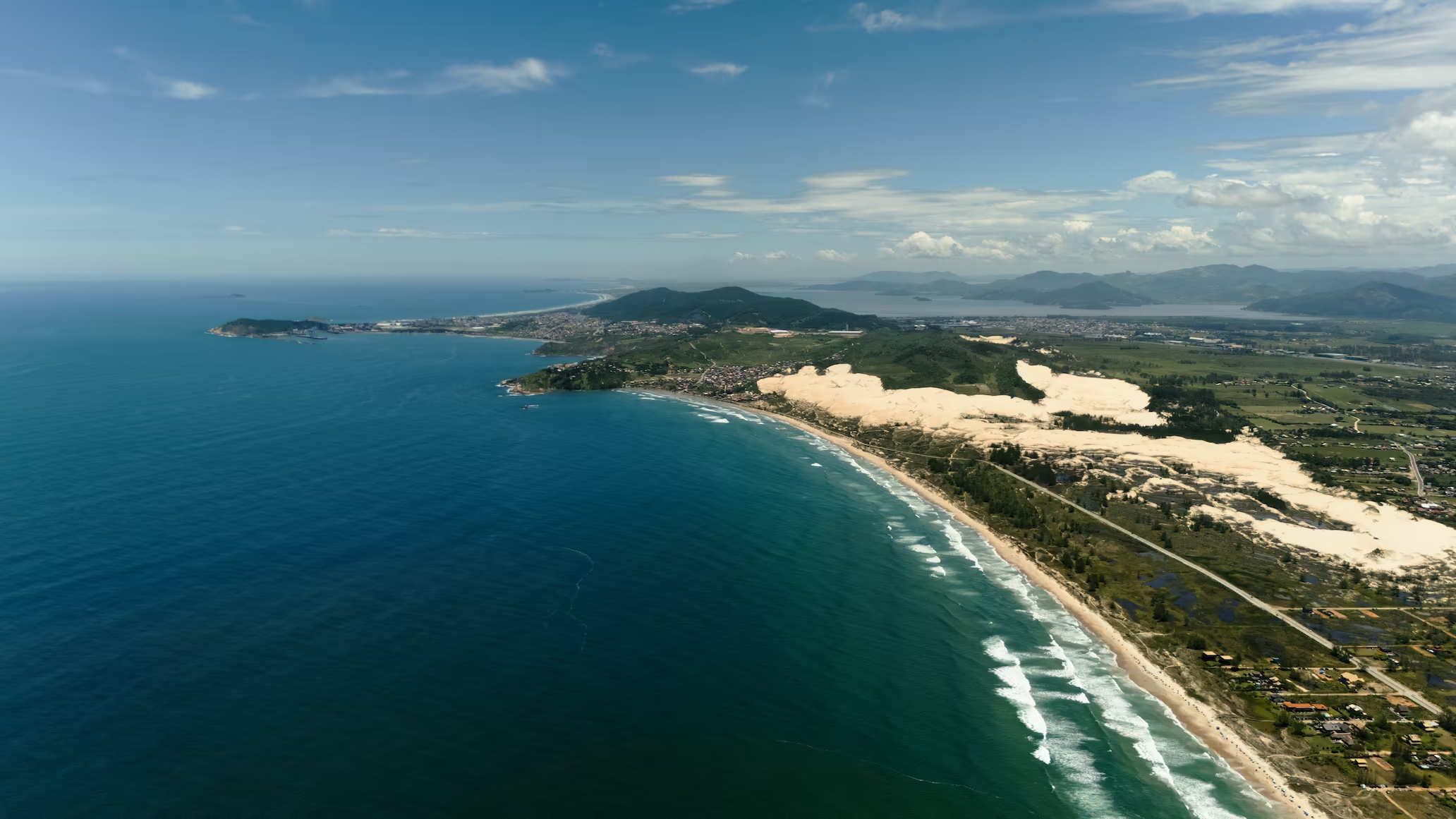
Praia da Barra de Ibiraquera faces the Atlantic, beside the lagoon inlet. Waves and currents change with swell, wind and sandbanks. For swimming, follow signs and speak with lifeguards when they are at the spot. Ilha da Batuta lies offshore and shelters birds and nests.
At Barra, beach and lagoon share the landscape but have different access and conditions. When the inlet is open, do not plan to wade across: use the road access to reach the other side.
Things to Do in Ibiraquera
Kitesurfing & Watersports
Ibiraquera brings together lagoon and open ocean, a combination known to kitesurfers. Choose a first-session spot with a school: depth, wind, currents and other water users matter. The ocean at Barra needs its own assessment, even for someone already riding on the lagoon.
Spring and summer usually offer more northeast-wind opportunities, broadly September to March. The wind decides the session; check the forecast and school before choosing the day. During mullet season, also check the signs and agreements for that stretch.
For SUP, kayaking, windsurfing or wingfoiling, ask local operators about lessons, equipment and launch points. For wingfoiling, check that there is room and enough depth for the mast.
Hiking the Coastal Trails
Ibiraquera is a gateway to some of the most beautiful coastal walking in Santa Catarina. Two key trails depart from the area:
Ibirahill → Praia do Luz: The hosts allow about 15 minutes on foot or three minutes by car. Ibiraquera is a wide locality; the route changes with the starting point. Ask for the route to the public access and wear suitable shoes.
Praia do Luz → Rosa Sul, via the Luz lookout: The trail starts on Luz’s northern headland, passes the lookout and reaches Rosa Sul. The hosts allow about 25 minutes each way, plus stops. Plan the return and check footing. Caminho do Rei is a historic regional name and should not automatically be used for this particular route.
Whale Watching
From July to November, southern right whales come from colder feeding areas to calve and nurse in the bays of Brazil’s south coast. Imbituba has been the National Southern Right Whale Capital since 2010, under federal law, and is home to Projeto Baleia Franca.
August and September usually bring more animals, with the peak generally in September. Whales are frequently seen from Ibirahill’s terraces in season and can be watched from Luz’s headlands. For a boat trip, confirm the operator’s current ICMBio authorisation, departure point and season rules.
Fishing Culture & the Tainha Season
Every May to July, the region undergoes a quiet transformation. The tainha (mullet) season arrives — and with it, the ancient art of artisanal fishing that has defined coastal communities in Santa Catarina for generations. Lookout points above the beach are manned by volunteers who spot the shoals from the clifftops and signal the fishermen below by hand. Nets are thrown. Authorised dates follow the rules for the fishing method. It's a tradition with deep Azorean roots that feels genuinely unchanged by time.
Witnessing the tainha harvest — or simply buying the day's catch directly from a fisherman at the Barra — is one of those travel experiences that no guidebook can adequately prepare you for.
Sunset at the Lagoon
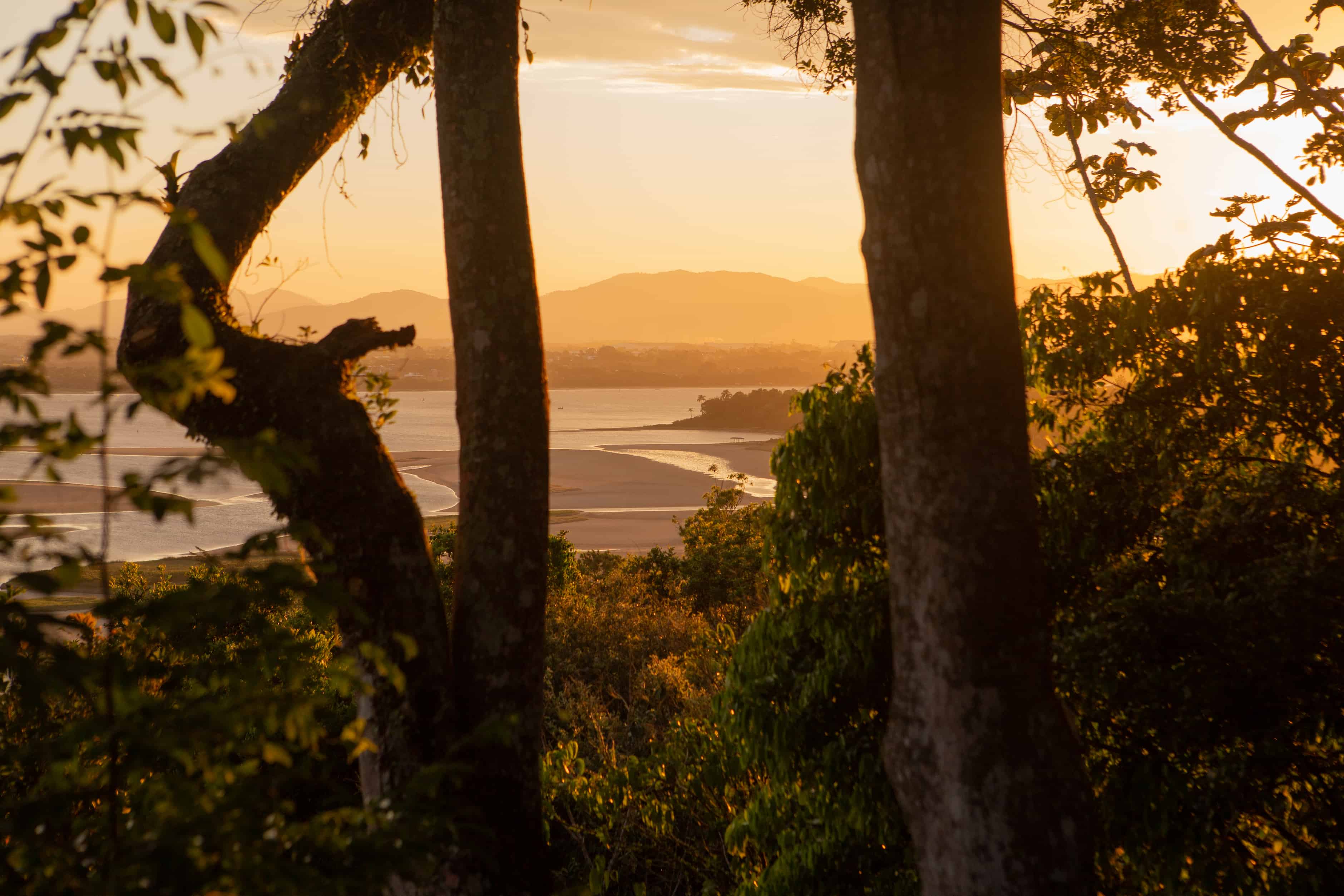
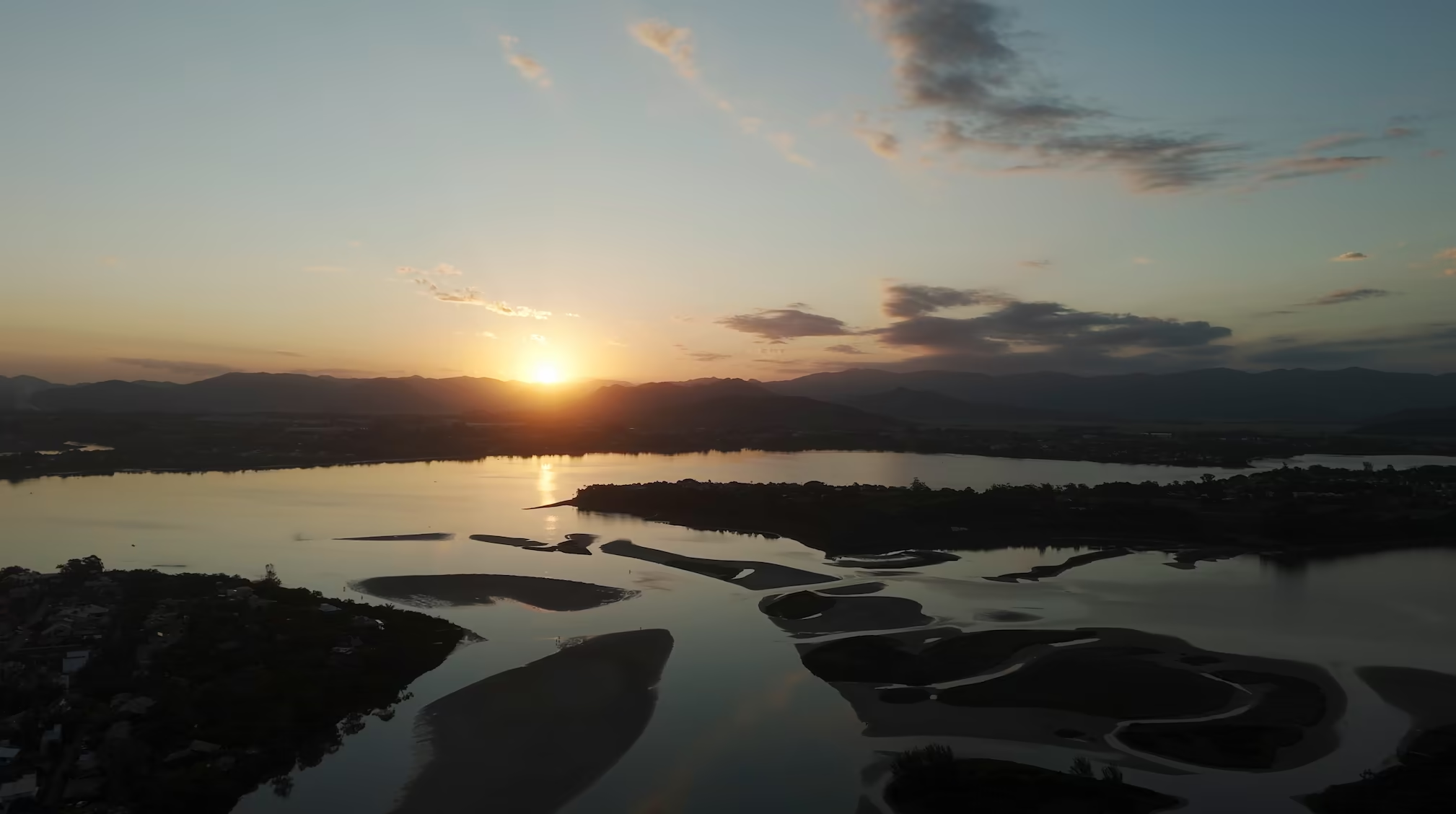
It almost goes without saying, but the sunsets over Lagoa de Ibiraquera are extraordinary. The western hillsides catch the last of the light while the lagoon turns the colour of old copper. In summer, the sky goes through a full spectrum — orange, pink, violet — before the first stars appear. The light and water change as the birds begin to settle.
Where to Eat in Barra da Ibiraquera
The food culture in Ibiraquera is built around what the lagoon and the ocean provide. Expect fresh fish, grilled shrimp, and oysters as the backbone of most menus, with a growing number of chef-driven restaurants elevating local ingredients into something more ambitious.
Names to know include Zen Bistro, by the lagoon, and Restaurante Tartaruga, for fish and seafood. Local services and schedules change with the season; check the guide and confirm your table directly before setting out.
Bring water for beach outings. At Luz, services are limited and some are seasonal.
The Atlantic Forest
It would be easy to focus entirely on the water and miss what lives on the hillsides. The Atlantic Forest has lost much of its original cover; here, hillside forest and restinga patches shelter wildlife and connect coastal habitats.
On walks, notice the native trees and watch for birds in the canopy. Species and encounters change with habitat and season. In the cooler months, the forest stays green and damp between the fronts passing along the coast.
How to Get to Ibiraquera
By car: From Florianópolis Airport to Praia do Rosa, the hosts’ reference is about 99 km and 1h30, taking BR-101 south. Traffic and the final destination change the journey. For Ibirahill, plan the route to the property entrance; local access includes unpaved stretches.
Without a car: Check current bus schedules and arrange the final transfer to your accommodation in advance. A car can make it easier to visit several beaches in one day.
When to Visit Ibiraquera
Summer (December–February): The warmest, busiest season, with long days, rain and changing sea conditions. Check conditions before swimming and the schedules of places you want to visit. Plan accommodation ahead for holidays and popular dates.
Shoulder season (March–May / September–November): Our favourite time to explore the area at a quieter pace. September is within the main whale-planning window, usually July to November. Spring and summer also offer northeast-wind opportunities, according to the forecast. Holidays can change visitor numbers.
Winter (June–August): Cooler days, fronts bringing wind and rain, and clear days between them. Mullet season usually mobilises the coast between May and July, subject to authorisations; July begins the main whale-planning window. Check daily conditions for paddling and trails.
The Spirit of the Place
Beyond the activities, the food, and the geography, Ibiraquera has something harder to name — a quality of presence, a slowness that isn't laziness but something more like depth. Conversations last longer here. Meals stretch into evenings. You notice the birds. You watch the light change across the lagoon.
The people who have built lives here — the fishermen, the restaurateurs, the small guesthouse owners, the kite instructors — tend to have arrived from somewhere faster and chosen, consciously, to stay. That decision is written into the texture of the place.
For travellers who arrive from São Paulo, from Rio, from London or Buenos Aires, the question Ibiraquera asks is a simple one: what if you slowed down?
Ibirahill is on Morro do Elegante, in Ibiraquera, with the lagoon and sea in the landscape. Our three houses are independent. From the entrance, the reference for Luz is about three minutes by car or 15 minutes on foot; for Rosa, about ten minutes by car.
→ Explore our houses and find the one that fits how you want to move through this place.
→ Or check availability — live dates, houses, and rates.
Quick Reference: Ibiraquera at a Glance
Location: Imbituba, Santa Catarina, Brazil Arrival: BR-101 south from Florianópolis; final route according to your accommodation Best Months: December–February (peak/summer), September–November (shoulder/whale season) Don't Miss: Lagoon sunset, trail via the Luz lookout to Rosa Sul, tainha season (May–July), whale watching (July–November) Eat: check the guide and confirm schedules; Zen Bistro and Restaurante Tartaruga are local options Stay: Ibirahill — three private houses on Morro Elegante
Written by the Ibirahill team. We live here — and we're happy to answer any questions about the region via Whatsapp or directly by email.
Frequently Asked Questions
Q: What are the best things to do in Ibiraquera? A: The standout activities are kitesurfing and wing foiling on the lagoon, surfing at the Barra and Praia do Rosa, coastal hiking through the Atlantic Forest, whale watching from July to November, witnessing the artisanal tainha (mullet) fishing from May to July, and early morning paddleboarding on the still lagoon. It's a destination built around water, nature, and culture — not passive sunbathing.
Q: How far is Ibiraquera from Florianópolis? A: The route depends on your exact starting point and destination. The hosts’ reference from FLN to Praia do Rosa is about 99 km and 1h30 by car, taking BR-101 south, with traffic variation. Without a car, check the bus and arrange the final transfer in advance.
Q: When is the best time to visit Ibiraquera? A: It depends what you're looking for. December to February is peak summer — warm ocean, active social scene at Rosa, accessible surf. July to November is whale season. September to November offers the best combination: whales, kite opportunities according to the wind, less crowded beaches, and comfortable temperatures. For a full month-by-month breakdown, see our guide to the best time to visit.
Q: Where should I stay in Ibiraquera? A: Three distinct zones: at the Barra (ocean access, summer buzz), on the lagoon edge (calm water, extraordinary sunsets), or on Morro Elegante (panoramic views, silence, Atlantic Forest). Ibirahill offers three private houses on the hillside — Casa Galeria, Casa Atelier, and Casa Bajau — fifteen minutes on foot from Praia do Luz. See all options at ibirahill.com/casas.
Q: Is Ibiraquera good for families with children? A: The area offers walks, beach, lagoon and family activities. No water spot guarantees safe swimming for every age. Choose the stretch with local guidance, check the sea and supervise children closely. For lessons, the school assesses age, experience and conditions.
Keep exploring
- Honeymoon on Praia do Rosa — 5-day itinerary for couples.
- Charming inn on Praia do Rosa — boutique stays in the region.
- Praia do Rosa in the off-season — when the beach returns to itself.
- Atlantic forest in Ibiraquera — biome, trails, wildlife.
- Birdwatching guide — birds of the forest, restinga and lagoon.
Stay on Praia do Rosa? At Ibirahill, on Morro Elegante (Ibiraquera), three private houses about 10 minutes by car from Praia do Rosa and 3 minutes by car from Praia do Luz. See the boutique retreat in Ibiraquera, 10 min by car from Praia do Rosa — rates and availability direct with the host.