Whales in Praia do Rosa & Imbituba: when and where
Quick answer
For a southern right whale (Eubalaena australis) trip to Ibiraquera, Imbituba and Praia do Rosa, plan around July to November. August and September usually bring more animals, with the peak generally in September. The area is part of an important breeding ground for the species. You can watch from land, on headlands and beaches, without trying to approach the animals.
In summary
- Planning window: July to November, with the peak generally in September
- Where to look: Praia do Luz, Praia de Ibiraquera, Rosa and Ribanceira
- Access: varies by point; Mirante do Luz includes a walk
- Boat: not required for watching from land
- Species: southern right whale (Eubalaena australis)
- Respect: do not chase or deliberately approach; excursions and drones follow current Ibama and ICMBio rules
- Accommodation: Ibirahill, in Ibiraquera, about 3 minutes by car or 15 minutes on foot from Praia do Luz
"It isn't a spectacle. It's an encounter. And the difference changes everything."
Introduction
There is a moment in the Santa Catarina winter when the scale of this coastline shifts. The sea is colder, the beaches emptier, the afternoon light lower and more golden. And then, mid-thought, something surfaces — slow, massive, absolutely real — and your sense of where you are is transformed entirely.
Southern right whales arrive on this stretch of Brazil’s south coast each year. They come from colder feeding areas to calve and nurse in the coastal bays. Imbituba, Ibiraquera and Praia do Rosa form part of this important breeding area. Imbituba received the title of National Capital of the Southern Right Whale under Federal Law 12.282 of 2010.
From July to November, you can follow whales along this coast from land. Sometimes from a terrace. On other days, during a walk to a point overlooking the sea. The encounter depends on the animals, visibility and the time you spend looking.
This is the definitive guide to making the most of that experience.
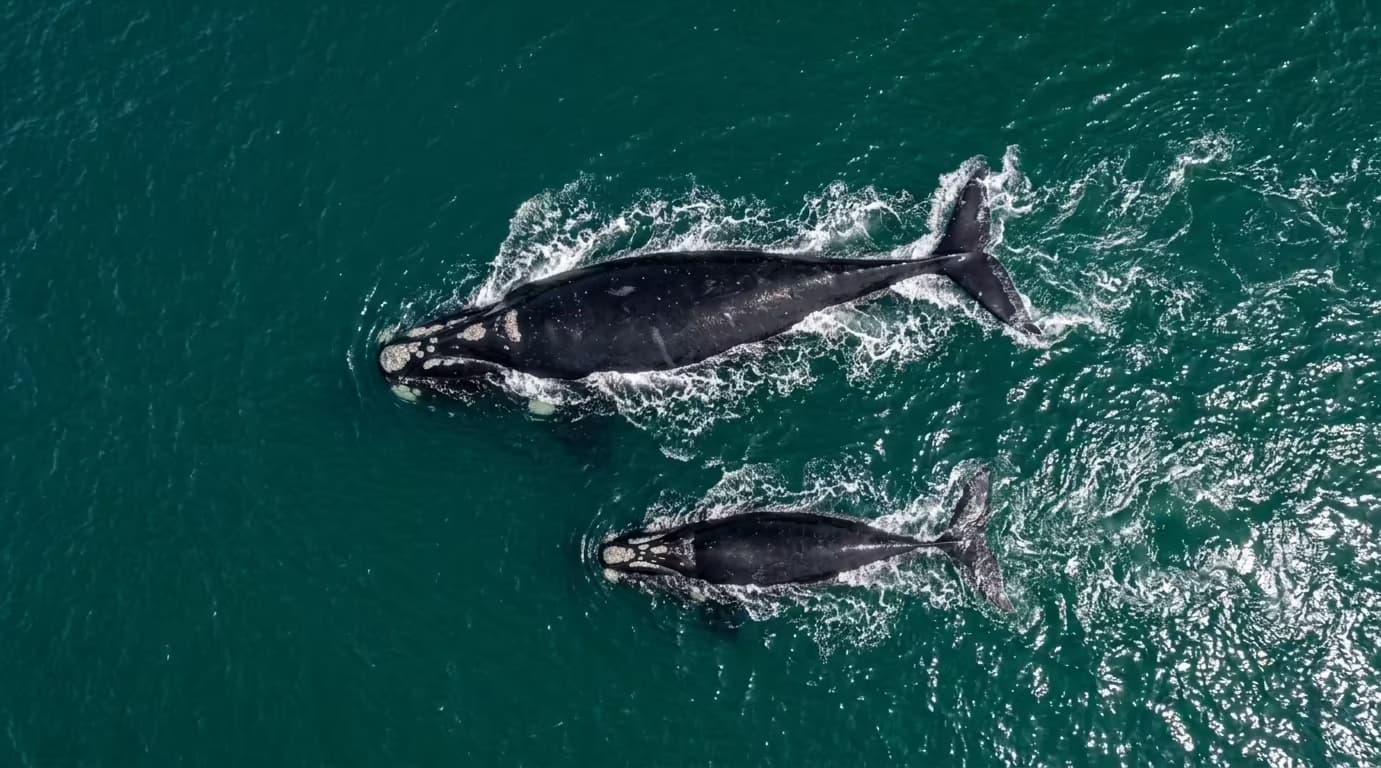
The Southern Right Whale: Who Arrives in Winter
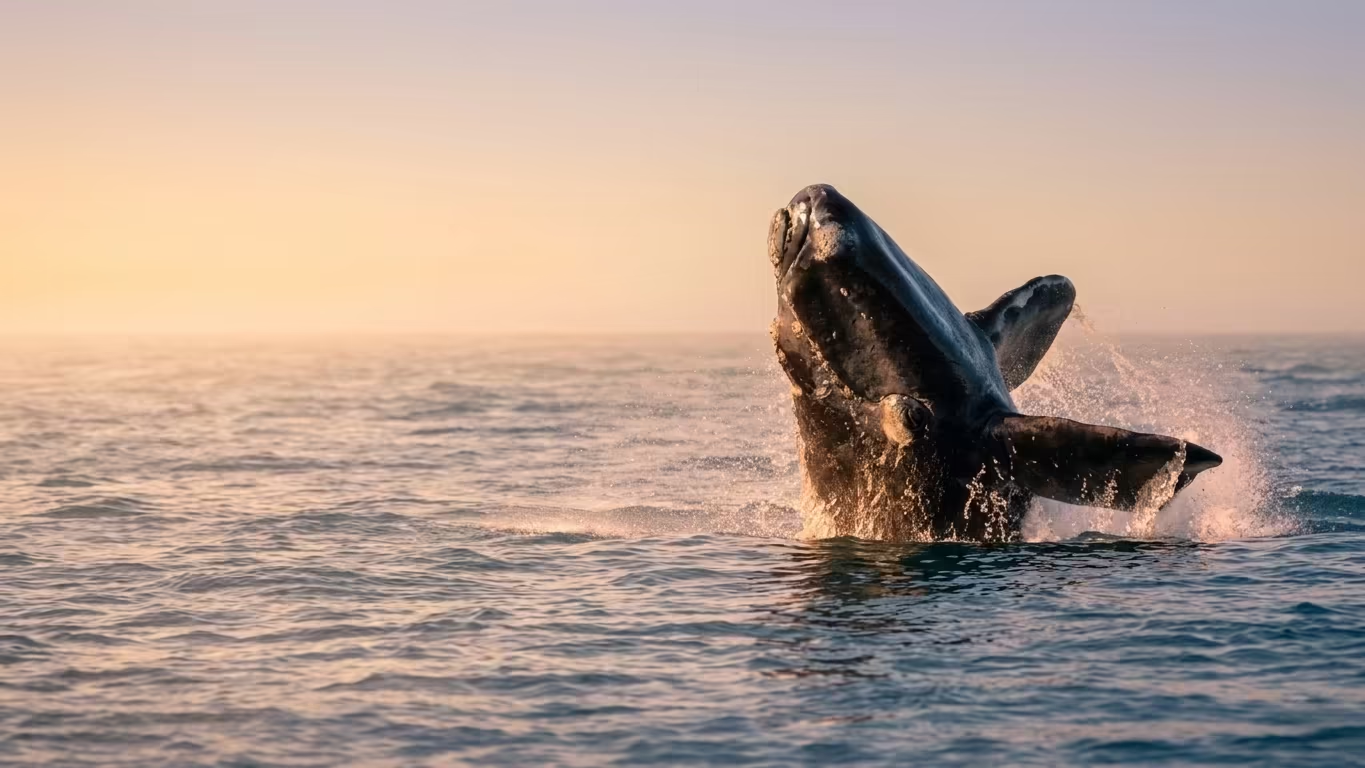
The southern right whale (Eubalaena australis) is one of the largest mammals on the planet — an adult can reach 17 metres and 80 tonnes. It is also, behaviourally, one of the most observable species: it swims slowly, spends long periods at the surface, has no dorsal fin (which makes its silhouette unmistakable), and displays a genuine curiosity about its surroundings.
The name “right whale” comes from the whaling era: it was considered the right whale to hunt because it was slow and floated after death. Whaling pushed the species close to extinction. International protection began in 1935, but illegal hunting continued on the Santa Catarina coast until 1973.
Researchers follow the population’s recovery and identify animals through their head callosity patterns, different in each whale. Long-term work by ProFRANCA helps recognise individuals returning to this coast and understand the season.
That is what makes this encounter different from any aquarium or documentary.
July to November: The Watching Window
For planning a trip, the reference is July to November. Sightings occur before and after that window. The peak and presence in each bay change from year to year:
July and August are already part of the usual watching window. Mothers and calves may appear in the bays; each day brings different movement.
September usually brings more animals and the season’s peak. Watching continues in October, varying by day and bay. Breaches, tail-slapping and interactions can happen without a fixed calendar.
November is the end of the main planning window. Animal presence varies, so follow sighting reports and conditions before choosing an outing.
The best conditions for watching are a calm sea day, without strong wind, with good visibility. Mornings and late afternoons tend to offer the best light. Days with rough swell reduce the visibility of animals at the surface — not necessarily because they're not there, but because distinguishing them among the waves becomes harder.
| Period | What to consider |
|---|---|
| Before July | Occasional sightings occur outside the main travel window |
| July | The season usually becomes more established along the coast |
| August | A useful window for planning observation |
| September | The peak is generally in this month |
| October | Watching continues, varying between bays and days |
| November | End of the main planning window |
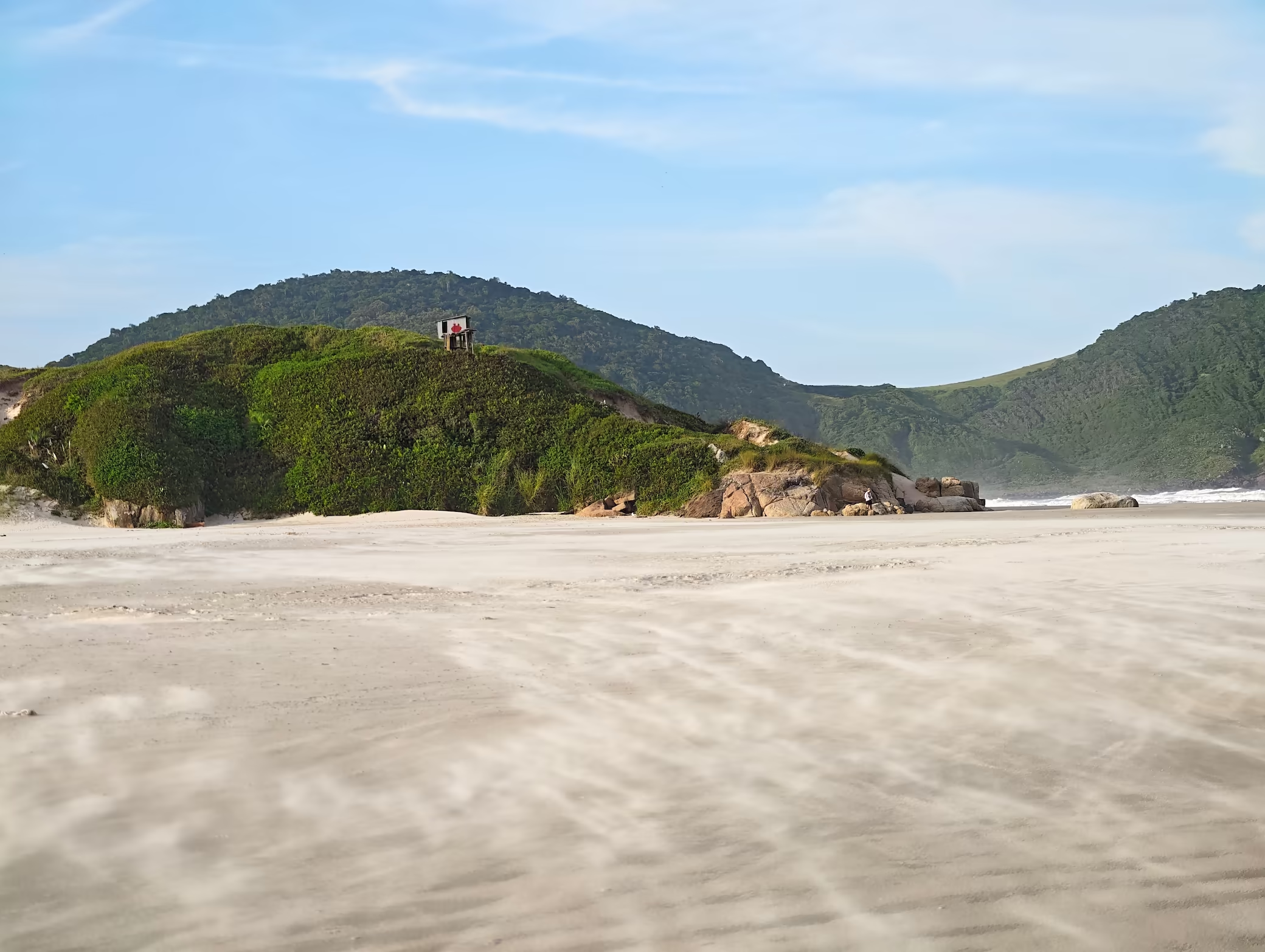
The Best Land-Based Viewpoints
Land-based watching is, in most cases, the most satisfying — and most responsible — way to observe the whales in this region. The coastline has a series of elevated positions that provide a broad view of the marine corridor, with time to follow movements without disturbing the animals.
Praia do Luz — Cliffs and Headlands
Praia do Luz is one of the places we recommend for watching the sea. Hillsides and headlands give an elevated view, depending on the access you choose. Beach services are limited and some are seasonal; bring water and check what is operating. When a whale comes into view, allow time to follow its movement.
Praia do Luz has road access and walking routes. From Ibirahill, allow about 15 minutes on foot or 3 minutes by car. The trail from Rosa Sul via Mirante do Luz takes about 25 minutes each way as the hosts’ reference, plus stops. Check path conditions and plan the return.
The Dunes Between Luz and Ibiraquera
The dunes between Luz and Ibiraquera are also part of the coast’s viewing landscape. Choose a permitted access point without making a new path or occupying fishermen’s working positions.
Praia da Ribanceira and Praia dos Amores
Dunes and headlands at Ribanceira offer another perspective on the sea. Check access to your chosen point and watch from land.
Praia dos Amores offers another view from the rocky coast. Check the route and conditions, and observe without seeking a closer encounter with the animals.
Rosa Norte — Hillsides Above the Bay
The hills above Rosa Norte offer a direct view over the cove, where whales frequently enter. There are trails and natural lookout points accessible from the village. The advantage is proximity to infrastructure — easy to combine a morning of whale watching with lunch in Rosa.
Morro Elegante Hillside and the Ibirahill Terrace
In season, southern right whales are frequently spotted from Ibirahill’s terraces. Animal presence and visibility change from day to day. Bring your own binoculars or ask the hosts about availability rather than relying on a guaranteed loan.
Boat Tour or Land?
For a boat outing, confirm the operator’s current authorisation and seasonal conditions. Arrange the departure point and tour type before planning the day. Land-based watching remains a complete option.
Boats and drones follow current Ibama, ICMBio and APA da Baleia Franca rules. Before an outing, confirm the operator’s authorisation and current observation protocol. Do not chase or deliberately approach animals.
Land-based watching, from an elevated position, frequently provides a more complete perspective: you see the animal in context, follow its movement over minutes, understand the scale of the bay and the corridor. There are no emissions, no engine noise, no disturbance.
Avistamento da Baleia Franca in the guide describes the activity and viewing points; it is not a boat operator. Ao Sul Natural Turismo offers land-based tours. Arrange the outing type, meeting point and available dates directly.
How to Watch Responsibly
Southern right whales are in their most vulnerable reproductive phase when they are on this coast. That vulnerability is what makes the encounter so moving — and respect for it is what separates a memorable sighting from a disturbance with real consequences.
A few simple principles:
On land: Keep quiet at observation points. Don't shout or make noise when animals surface. If you have children with you, brief them beforehand.
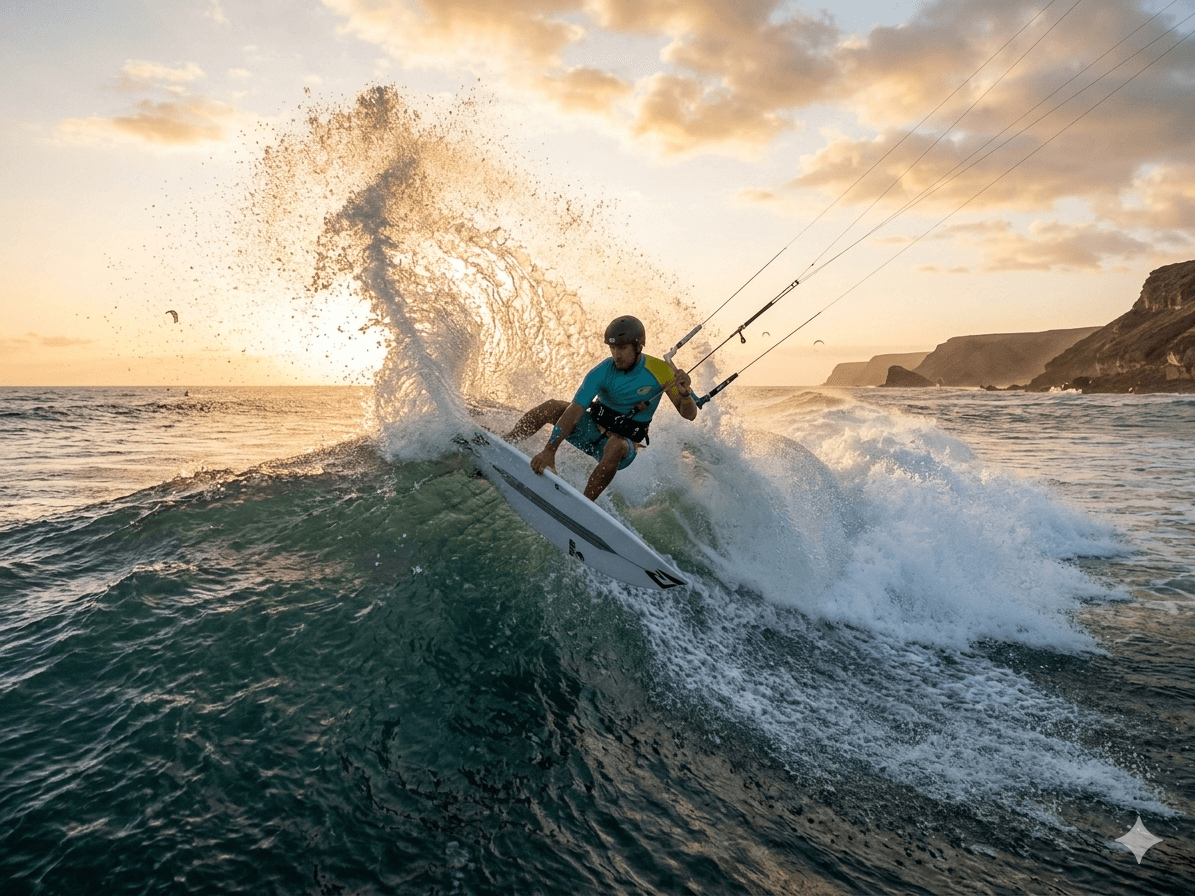
In the water: Don't swim or kitesurf deliberately toward sighted animals. A southern right whale is not aggressive, but it is enormous — and a female with a calf is, understandably, protective.
With a camera: for drone images, check current Ibama, ICMBio and APA da Baleia Franca rules. A photograph does not justify chasing or seeking closer contact with the animals.
The encounter does not need to be forced. Allow time to look, and accept the days when whales do not appear in your field of view.
Ibirahill and the Whales
Ibirahill stands on Morro do Elegante in Ibiraquera, with sea and lagoon in the landscape. In season, whale sightings from the terraces are frequent. In good conditions, a morning of watching can begin with coffee on the veranda.
Praia do Luz is about 15 minutes on foot or 3 minutes by car from Ibirahill. For other points along the coast, arrange your chosen route and access. A few days here let you follow changes in light, weather and animal presence.
→ Explore our houses and check availability for the July–November season at ibirahill.com/casas. For questions and planning, get in touch.
Read Also
- The Complete Guide to Ibiraquera, Brazil — Beaches, Lagoon & Hidden Paradise
- Praia do Luz, Imbituba: The Beach That Still Belongs to Itself
- Best Time to Visit Ibiraquera: Month-by-Month Guide
- 10 Hidden Beaches Near Imbituba, Brazil: A Local's Guide
Frequently Asked Questions
Q: What months can I see whales in Ibiraquera and Praia do Rosa? A: For planning a trip, July to November. August and September usually bring more animals, with the peak generally in September. Sightings occur outside that window and every season changes.
Q: Is a sighting guaranteed during the season? A: No. Animal presence and visibility change. Calm seas and light winds can help watching, but do not guarantee an encounter.
Q: Where can I watch whales in this region? A: Praia do Luz, Rosa and Ribanceira are places to look from land. From Ibirahill to Praia do Luz, allow about 15 minutes on foot or 3 minutes by car. Choose an identified access point for each outing.
Q: Are boat excursions worth it? A: For a boat trip, confirm which operators ICMBio has authorised for the season, their departure point and current rules. Land-based watching lets you follow the sea without a boat.
Q: Can I see whales from Ibirahill? A: Yes. In season, southern right whales are frequently spotted from the terraces. That does not guarantee a sighting at every house or on every stay. Praia do Luz is close too: about 15 minutes on foot or 3 minutes by car.
Keep exploring
- Praia do Rosa in the off-season — whale season overlaps the quietest window of the year.
- Atlantic forest in Ibiraquera & Praia do Rosa — the biome that shelters the bay.
- Birdwatching guide — another observation worth combining with whale season.
A stay near Praia do Rosa? Ibirahill has three houses on Morro do Elegante in Ibiraquera, about 3 minutes by car or 15 minutes on foot from Praia do Luz. Explore the houses in Ibiraquera and check the terms for your dates.
Frequently Asked Questions
Q: When is whale season at Praia do Rosa? A: For planning, July to November, with the peak generally in September. Sightings may occur before and after that window; it does not fix every animal’s arrival and departure.
Q: Where can you see whales near Praia do Rosa? A: At Rosa, Praia do Luz and Ribanceira, among other local points. The federal protected area is APA da Baleia Franca. Choose an identified access point; lookouts and headlands may include a walk and are not all 2–5 minutes from Ibirahill.
Q: Can you take a whale-watching boat trip near Praia do Rosa? A: Confirm authorised operators for the season and current rules before booking. You can also watch from headland and beach, without a boat outing.
Q: What species appears in Imbituba and Ibiraquera? A: The southern right whale (Eubalaena australis). Adults can reach considerable size. They come from colder feeding areas to calve and nurse in the bays of Brazil’s south coast.
Q: Does whale season coincide with the low tourist season? A: Part of the July–November window lies outside the summer peak. Holidays, events and school breaks change visitor numbers; choose dates and check stay terms without expecting a fixed discount.