Kitesurf Ibiraquera: lagoon & wave guide
Quick answer
Ibiraquera brings together Lagoa de Ibiraquera, with spots used for learning and practice, and Barra de Ibiraquera, on the open sea. Choosing a session depends on wind, depth and experience. Local schools help assess the spot and arrange lessons or equipment. Ibirahill stands on Morro do Elegante in Ibiraquera, near Praia do Luz.
"Two bodies of water. Two completely different rides. One extraordinary place."
Introduction
Ask any experienced kiter what makes a destination genuinely exceptional — not just good, but exceptional — and the answer almost always involves variety. One spot for learning, one for freestyle, another for waves. Usually those spots require a car, a flight, or at minimum a few hours between sessions.
Here, lagoon and ocean share one landscape, separated by a strip of sand at Barra. They ask for two different readings of the water. A trip can include lagoon and ocean sessions when conditions and experience allow. That proximity is part of the pleasure of riding in this corner of Santa Catarina.
This is the complete guide to kitesurfing in Ibiraquera — conditions, seasons, skill levels, and everything you need to plan a trip.
The Two Spots: An Overview
Ibiraquera's kitesurfing landscape is defined by its dual geography: Lagoa de Ibiraquera (the lagoon) on one side, and Barra de Ibiraquera (the ocean beach) on the other. They share a wind window and a shoreline, but they are completely different experiences.
Understanding which spot is right for you — and when — is the first step to making the most of your time here.
The lagoon: choosing a stretch for learning
At Lagoa de Ibiraquera, a school can choose the stretch and exercise for the student and conditions. What needs to be assessed:
Depth: it changes between stretches and with lagoon conditions. Do not count on waist-deep water or an instructor reaching a student on foot anywhere. Assess access and the lesson area before setting up.
Surface: the lagoon differs from the open sea, but wind can create chop and currents vary by stretch. Flat water is a condition of the day, not a guarantee across the lagoon.
Wind: northeast winds are important in the season. Strength, gusts and direction need to be read at the spot. The forecast guides planning; the school assesses whether a session is suitable.
Space and obstacles: check other water users, nets, the bank and entry and exit areas. A spot’s name does not guarantee an absence of obstacles.
The lagoon has four connected sections: Lagoa de Cima, Lagoa do Meio, Lagoa de Baixo and Lagoa do Saco. Conditions vary between access points and with wind, rain and the inlet’s state. Choose access with the school rather than assigning a fixed skill level to each section.
The Barra: Ocean Waves for Those Ready
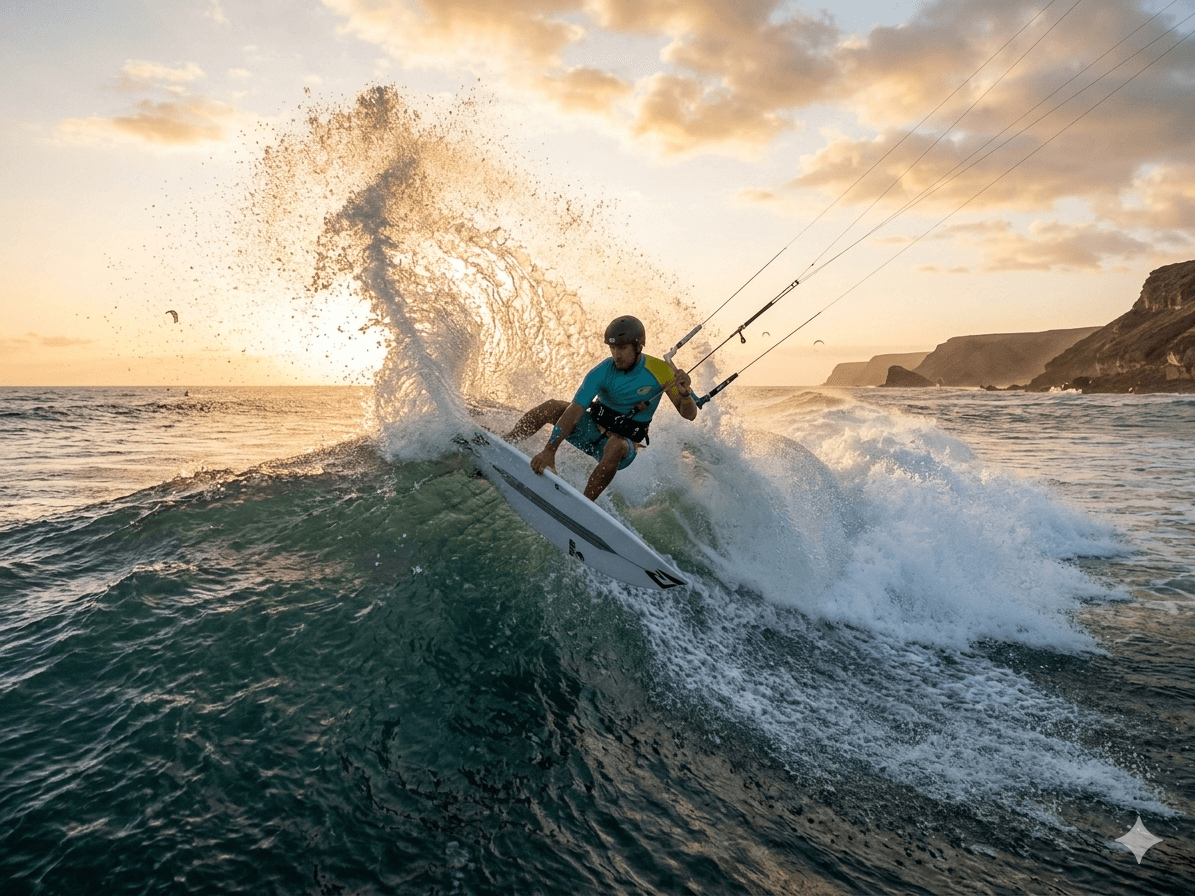
The Barra de Ibiraquera ocean break occupies a different tier of the kiting experience entirely. This is not a learning spot — it's where riders who have their flat-water skills consolidated come to discover what those skills are actually for.
Barra is an open-ocean spot, with a sand bottom and waves that change with swell and sandbanks. There is no fixed distance to the break or guaranteed flat-water lane between beach and waves.
A strong swell can require considerable experience. Wave shape and direction change with banks and swell; do not treat Barra as a permanent right-hand point break.
The nearby lagoon makes it possible to know both environments on one trip. Each ocean entry needs another assessment of wind, waves and return, even after a lagoon session.
Required skill level for the ocean: Intermediate minimum. Riders should be confident with water relaunches, have solid upwind skills, and understand how to read surf conditions before attempting the Barra on any significant swell.
Wind: When and What to Expect
Northeast winds play an important part in riding at Ibiraquera. Strength and direction vary with weather systems and the chosen stretch. Use the calendar for planning, then check the forecast and spot:
September to March: the main window given by local schools, running through spring and summer. It is a travel reference, without a guarantee of daily wind or a fixed knot range.
December to February: summer brings more people to the area. Arrange lessons and equipment ahead and check other water users before going out.
April to August: conditions are more variable. Cold fronts can bring demanding wind and sea conditions; there is no promised number of weekly sessions.
July: it can be part of a sea-and-whale trip, but is not guaranteed to be the best riding month. Sessions depend on swell, wind and local guidance.
Wind angle changes with the stretch of beach. Ask a local instructor to assess entry, exit and the return route before moving from lagoon to ocean.
Getting Started: Lessons and Schools
There are schools around the lagoon and Barra. Choose the first lesson for wind, depth, space and the student’s experience. Progress develops through sessions, without a promised number of hours to independence.
For those already at an intermediate level who want to develop ocean riding skills, private coaching with a local instructor who knows the Barra's specific rhythms is strongly recommended before tackling it independently. The break has its own character and the local knowledge makes a material difference.
[[guide:escola-ktavento---kitesurf-school]]
Beyond Kiting: Wing Foiling, Windsurf & Paddle
Wingfoiling and wingsurfing are also practised on the lagoon. For foiling, check space and enough depth for the mast; very shallow water is not an automatic advantage. When conditions allow, riding close to the landscape is part of the pleasure.
Windsurfing has a long history at Ibiraquera; the lagoon has always been one of the region's key windsurf spots, and the community — while smaller than the kite scene today — remains active.
Stand-up paddleboarding and kayaking offer another way to know the lagoon. Choose light winds, arrange the launch point and ask the operator for guidance for your level. Early-morning light can accompany a quieter paddle when conditions allow.
Practical Information
Getting there: from Florianópolis Airport to Praia do Rosa, the hosts’ reference is about 99 km and 1h30 by car, taking BR-101 south. Traffic changes the time. For Ibirahill, follow the route to the property entrance. Confirm lessons and equipment before travelling.
What to bring: water, sunscreen and footwear for access paths. Choose a rash guard or wetsuit for the water conditions and school’s advice, rather than the month alone.
The session window: check the forecast and spot conditions with the school. One morning may suit paddling and another call for postponing. Arrange the time for the activity and day’s weather.
Staying put: time away from the water matters too. On Morro do Elegante in Ibiraquera, the landscape lets you follow movement on the lagoon and sea. To get on the water, choose the access recommended for that session.
Casa Bajau at Ibirahill gives you a base on Morro do Elegante, with a veranda, 180° view and fire pit. Praia do Luz is about 15 minutes on foot or 3 minutes by car from Ibirahill. For restaurants and activities, start with Guia Ibira.
→ Talk with the hosts about the houses and ask for local-school recommendations before your trip.
A Final Word on What Makes This Place Different
Ibiraquera will never be Jericoacoara or Cumbuco — the big northeastern Brazil kite destinations with their trade winds and their organised kite infrastructure and their permanent communities of international riders. It is quieter, more discreet, more integrated into a landscape that has multiple things going on beyond the kite beach.
That proximity leaves room for more than the session: lunch near Barra, a walk when the access allows, and time to watch the sun go down over the lagoon from a hillside terrace.
The kiting is genuinely world-class. But at Ibiraquera, it's one layer of something richer.
Read Also
- The Complete Guide to Ibiraquera, Brazil — Beaches, Lagoon & Hidden Paradise
- Praia do Rosa vs. Praia do Luz vs. Ibiraquera — The Definitive Beach Comparison
- Best Time to Visit Ibiraquera: Month-by-Month Guide
Surfing Praia do Rosa: a local guide by skill level
Praia do Rosa offers different surf conditions through the year. Swell, wind and sandbanks need to be assessed that day. Ibirahill is in Ibiraquera, near Praia do Luz; the journey to Rosa depends on your chosen access point.
Rosa Norte: heavy waves for advanced surfers
Rosa Norte has a sand bottom beside the headland and can receive powerful waves. On big days, entry requires experience and an assessment of currents. If you are learning, ask a local school to choose the spot.
Rosa Sul: lessons chosen for the conditions
Rosa Sul has a sand bottom and hosts lessons when sea conditions suit them. Choose a school and arrange the spot, time and price directly. No month guarantees small waves for beginners.
When to surf Praia do Rosa: best months
- Winter: cold fronts and swells can make the sea demanding; assess the forecast and local conditions.
- Autumn: can bring good sessions, depending on the day’s swell and wind.
- Spring: beginner lessons depend on the school choosing the spot.
- Summer: more visitors call for attention to access and other surfers.
Surf vs kitesurf: how to combine both in Praia do Rosa and Ibiraquera
Praia do Rosa and Lagoa de Ibiraquera make it possible to combine surf and kite on one trip. Each activity needs its own access and assessment of the day. When staying in Ibiraquera, Praia do Luz is close too: about 3 minutes by car or 15 minutes on foot from Ibirahill.
Frequently Asked Questions
Q: Is Ibiraquera good for beginner kitesurfers? A: Local schools choose lagoon spots for lessons. Wind, depth and other water users determine the session. Start with an instructor without counting on standing depth or an absence of obstacles throughout the lagoon.
Q: What is the best time of year to kitesurf in Ibiraquera? A: September to March is the main window given by local schools. It helps plan a trip, but wind strength and days vary. Check the forecast and conditions with the school.
Q: Can I rent kite equipment at Ibiraquera? A: Ask the school directly about availability, sizes and terms. Guia Ibira gives the hosts’ recommendations; arrange rentals before travelling.
Q: Is the lagoon or the ocean better for kitesurfing? A: They are different environments. On the lagoon, the school chooses a stretch for the activity and skill level. At Barra, waves, wind and return require an open-sea assessment. Lagoon experience does not replace guidance before entering the ocean.
Q: What other watersports are practised at Ibiraquera? A: Windsurfing, wingfoiling, SUP and kayaking are also part of time on the water. Arrange the activity with the operator for your level, wind and depth; for foiling, check space for the mast.
Keep exploring
- The kitesurfers of Ibiraquera — the Lagoa's kite community, year-round.
- Things to do in Ibiraquera — activities beyond kite.
- Beaches of Imbituba — the neighboring beaches worth the detour.