The art of slow travel: why Ibiraquera is the anti-resort
Quick answer
Slow travel is a way of traveling in which the goal is to understand a place, not merely visit it. In practice: staying more days at the same destination, integrating into the local rhythm, learning how the light shifts at 7 am, having a favorite coffee spot, knowing the state of the sea before leaving the house. It is not traveling slowly out of laziness — it is traveling slowly to arrive somewhere deeper.
In summary
- 🗺️ Location: Ibiraquera, Imbituba, on Santa Catarina’s south coast
- 🌊 Highlights: approximately 8 km² lagoon, Praia do Luz (3 min by car), Praia do Rosa (10 min by car), Atlantic Forest
- 🐋 Bonus: whale-watching season July–November (southern right whale)
- 🕐 Ideal stay: 4–7 days minimum to settle into the local rhythm
- 💚 Philosophy: slow living, with time to get to know the place
- 🚗 Access: BR-101 south; plan the route to Ibirahill’s entrance
- 🏨 Where to stay: Ibirahill — boutique nature stay in Ibiraquera, SC · where to stay in Ibiraquera
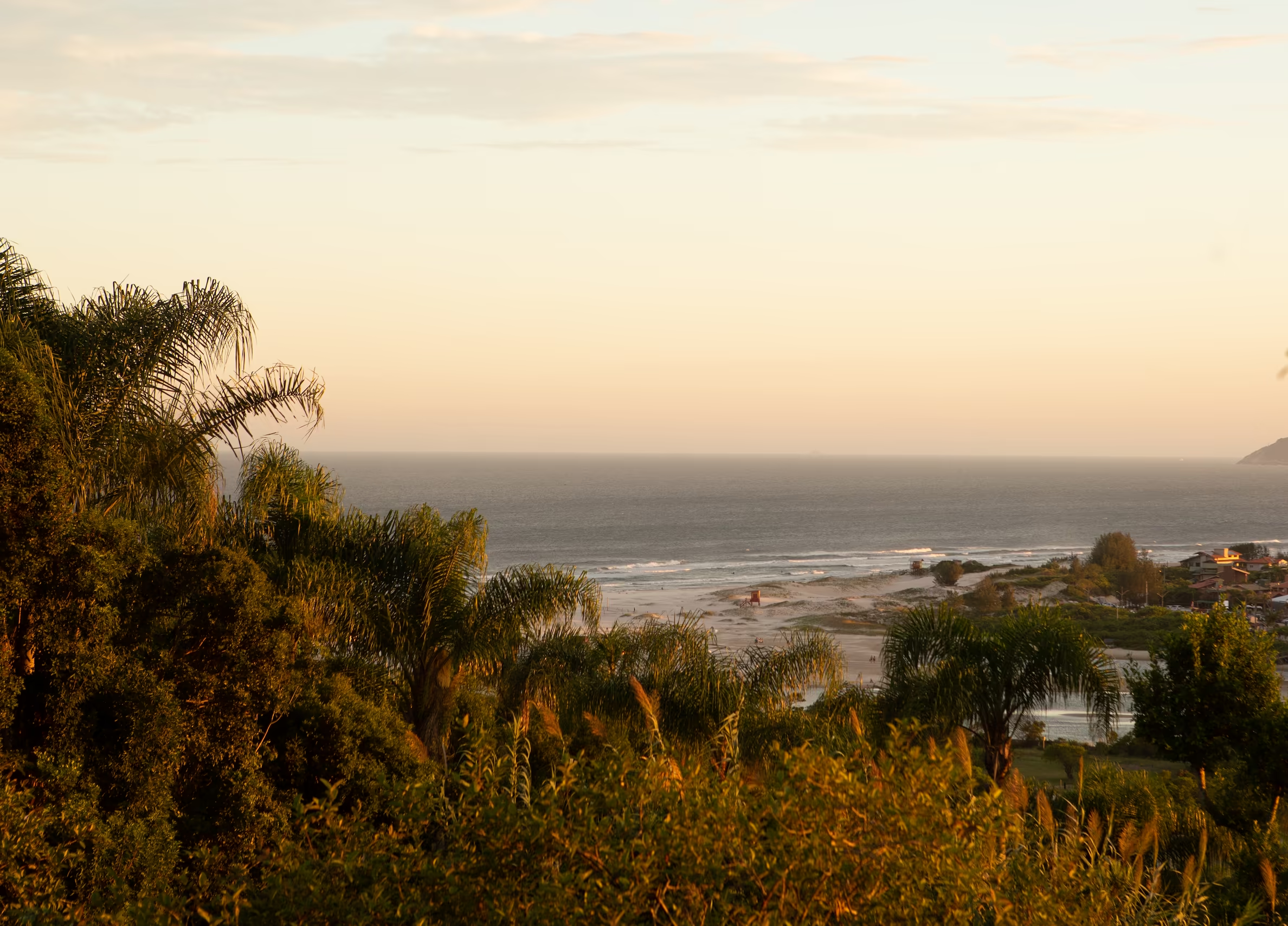
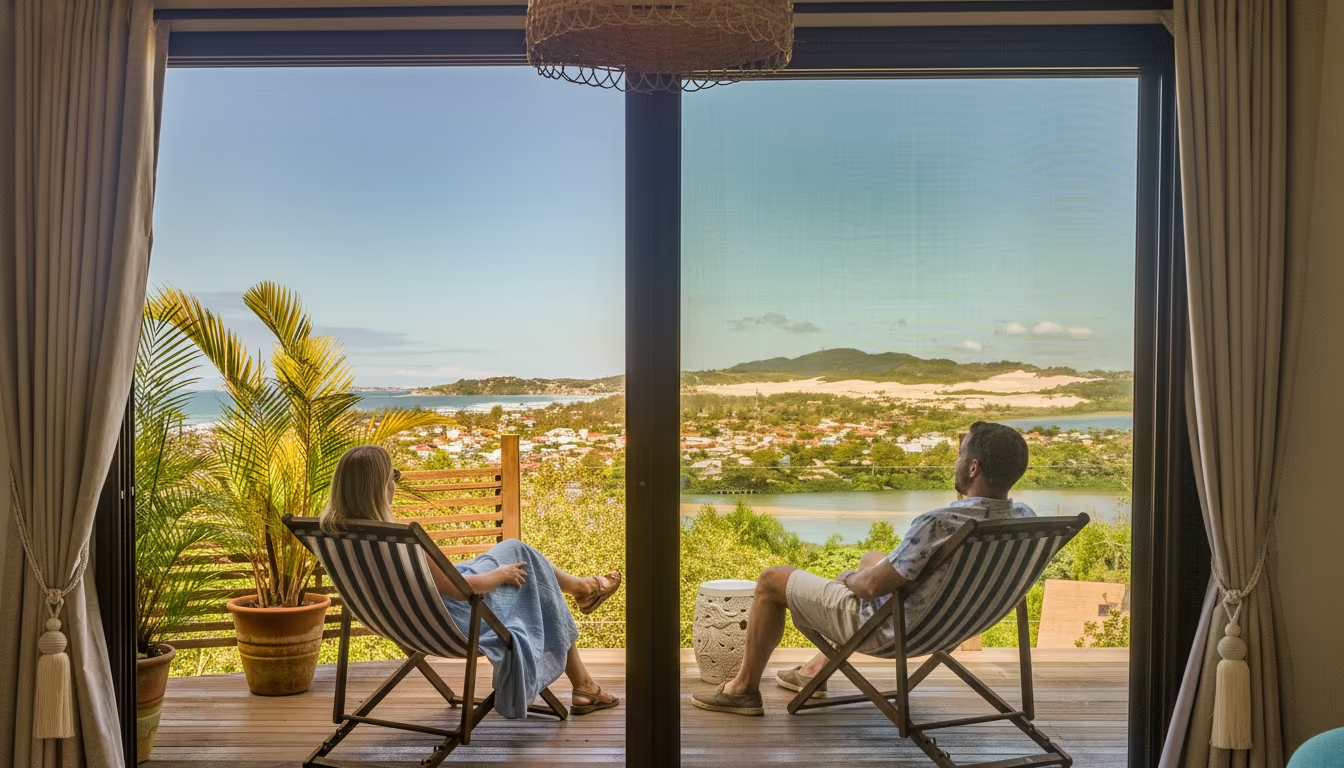
Ibiraquera, on Santa Catarina’s south coast, brings together an approximately 8 km² lagoon, Praia do Luz, Atlantic Forest patches and a community of artisanal fishermen and kitesurfers. A stay at Ibirahill does not need a resort programme. The area has a life of its own, and its rhythm changes with the wind, sea and seasons.
At a glance
- 📍 Location: Ibiraquera, Imbituba, SC
- 🌊 Lagoon: approximately 8 km², with kite, SUP and swimming spots chosen for the conditions
- 🏖️ Beach: Praia do Luz, about 15 min on foot or 3 min by car from Ibirahill; limited, seasonal services
- 🌿 Nature: native Atlantic Forest, trails, endemic fauna, whales (Jul–Nov)
- 🐋 Traditions: mullet season (May–Jul, subject to each method’s authorisations); whale watching (Jul–Nov)
- 🏡 Base: Ibirahill — boutique retreat on Morro Elegante, no formal reception, no scheduled itinerary
What the anti-resort means in practice
The word "resort" carries a set of promises: services on demand, programmed entertainment, everything resolved, no friction. It is a legitimate form of holiday. But it is one that insulates the traveler from the place they are in.
At Ibirahill, we prefer to leave room for the place:
- No resort programme. The day can begin in the house kitchen and continue out into the area.
- Lagoa de Ibiraquera: approximately 8 km², changing evening light, fishermen and kitesurfers sharing the landscape.
- Praia do Luz: about 15 minutes on foot or three minutes by car from Ibirahill. The walk can be part of the outing.
- A fish market where yesterday's catch is on the counter today.
- A community — in Rosa, at the Barra, in the Centrinho — that has its own life and was not built for tourists.
That mild friction — the small effort required to find something — is exactly what transforms a trip into an experience that stays with you. Total comfort, paradoxically, erases memory.
What Ibiraquera has that few places have
Around Ibiraquera, different landscapes and activities make room for different days:
| Element | Detail |
|---|---|
| Coastal lagoon | approximately 8 km², with kite, SUP and swimming spots chosen for the conditions |
| Ocean beach | Praia do Luz and Barra de Ibiraquera; the sea changes with swell and wind |
| Atlantic Forest | Morro Elegante hillsides — trails, birds, silence |
| Fishing community | Active artisanal fishing — tainha (Jun–Jul), shrimp, daily catch |
| Whale migration | Southern right whale, Jul–Nov — visible from the coast and terraces |
| Creative cuisine | Restaurants at the Barra and Praia do Rosa, 10 min by car |
| Urban proximity | Florianópolis Airport; check the flight and plan the final transfer |
Ibiraquera's rhythm
A few extra days change your relationship with Ibiraquera. There is time to repeat a walk, return to the same table and notice the changing light. The rhythm of the place begins to feel familiar.
The day starts early and for good reasons: the swell, the kite, the walk down to Praia do Luz with the sun still low. Mid-morning has tea and quiet. Lunch has time. The afternoon has concentration or contemplation. Dusk has the lagoon turned gold. The evening — if Rosa calls — has dinner and conversation. If not, early bed and the sound of the Atlantic Forest.
It is not emptiness. It is a different kind of density — the kind that the world's best slow travel destinations protect as their most precious asset.
Why southern Santa Catarina for slow travel
On Santa Catarina’s south coast, staying in one base for longer lets you get to know the coast gradually. Choose the flight and route that suit your trip, then leave space between outings.
- Walk to Luz when the weather suits.
- Choose a table at Barra or Rosa and check the schedule before setting out.
- Alternate outings with an afternoon at the house.
- Let the sea and wind forecast help shape the plan.
The trip leaves room for curiosity and for staying a little longer.
Praia do Luz and the time for a walk
No place on this coast embodies slow travel philosophy better than Praia do Luz.
From Ibirahill, allow about 15 minutes on foot or three minutes by car to Praia do Luz. The beach has access along a dirt road. Services are limited and some are seasonal; bring water and check what is operating. Mobile reception varies by carrier and location.
Atlantic Forest patches follow the hillsides. Ilha da Batuta lies offshore and shelters birds and nests. Sea lions may appear on the rocks; waves change with swell, wind and sandbanks.
On the walk, the beach arrives gradually. That time of approach can be part of slow travel too.
Connection with local traditions
Artisanal mullet season (May–July)
From May to July, the tainha (mullet) arrives on the Santa Catarina coast — and with it, the Azorean tradition that has defined Ibiraquera's fishing communities for generations. Lookout watchers position themselves on the clifftop mirantes to spot the shoals; they signal the fishermen below with gestures. Nets are cast at the right moment. It is a genuine community event, not staged for tourists.
Witnessing the tainha harvest — or simply buying the day's catch directly from a fisherman at the Barra — is one of the most authentic slow travel experiences on the Brazilian coast.
Whale watching (July–November)
From July to November, southern right whales come from colder feeding areas to calve and nurse in the bays of Brazil’s south coast. Imbituba is the National Southern Right Whale Capital. Whales are frequently seen from Ibirahill’s terraces in season and can be watched from Luz’s headlands; no day guarantees a sighting.
How long to stay
In slow travel, the length of the stay is not a detail — it is the most important decision of the trip.
- 3 days: enough to see the place.
- 1 week: enough to begin understanding it.
- 2 weeks: when guests start having their own references — the favorite café, the right time to arrive at Praia do Luz, the lagoon sunset as a daily ritual.
Staying long enough to recognise a place has its own value: a favourite café, a repeated walk, the light you look forward to in the late afternoon.
Ibirahill’s houses have full kitchens, making it easier to prepare meals and keep a routine during a longer stay. Choose a house and dates to see the stay price.
Ibirahill as a slow travel base
The three Ibirahill houses — Casa Galeria, Casa Atelier, and Casa Bajau — were built on Morro Elegante in Ibiraquera with the intention of placing guests in the deepest possible relationship with this landscape.
Each house has:
- A full kitchen
- Fibre Wi-Fi
- Its own outdoor space
- A secluded position on the hill, with quiet we look after
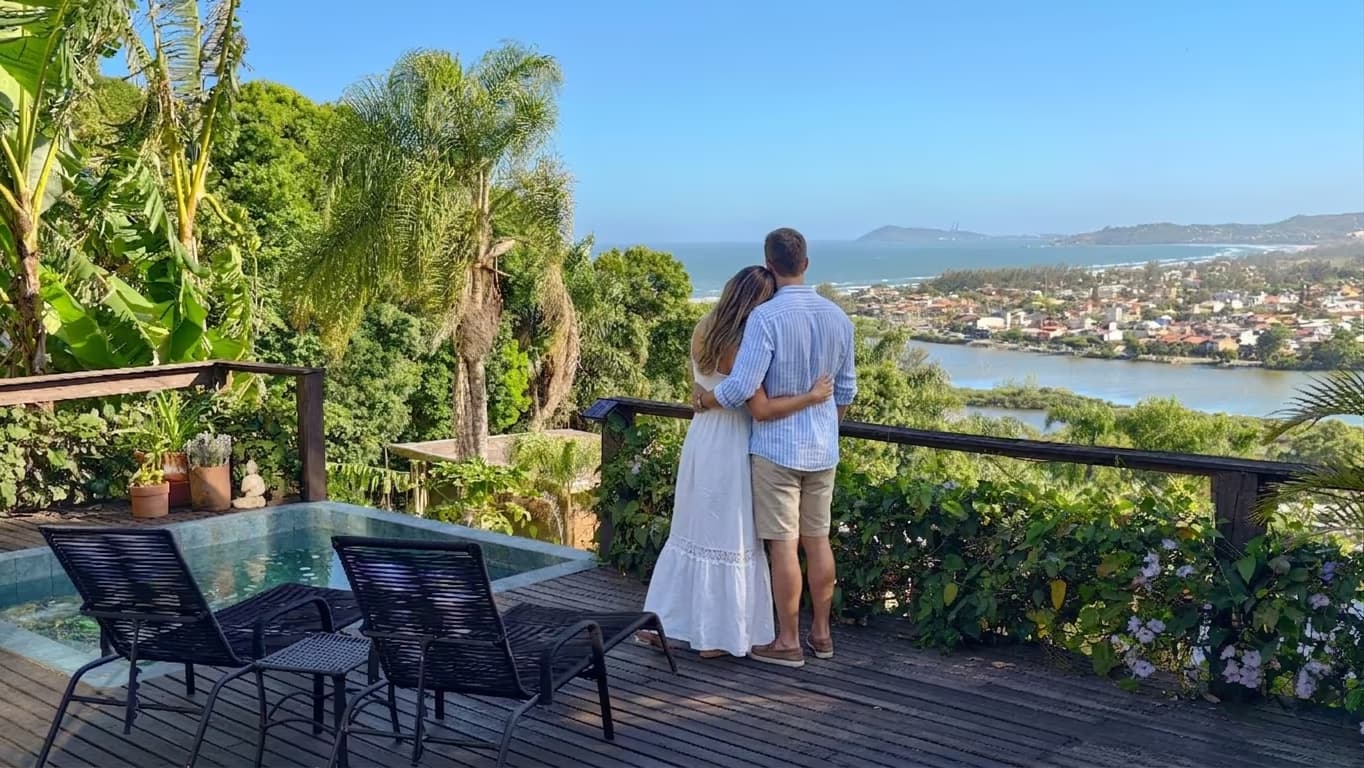
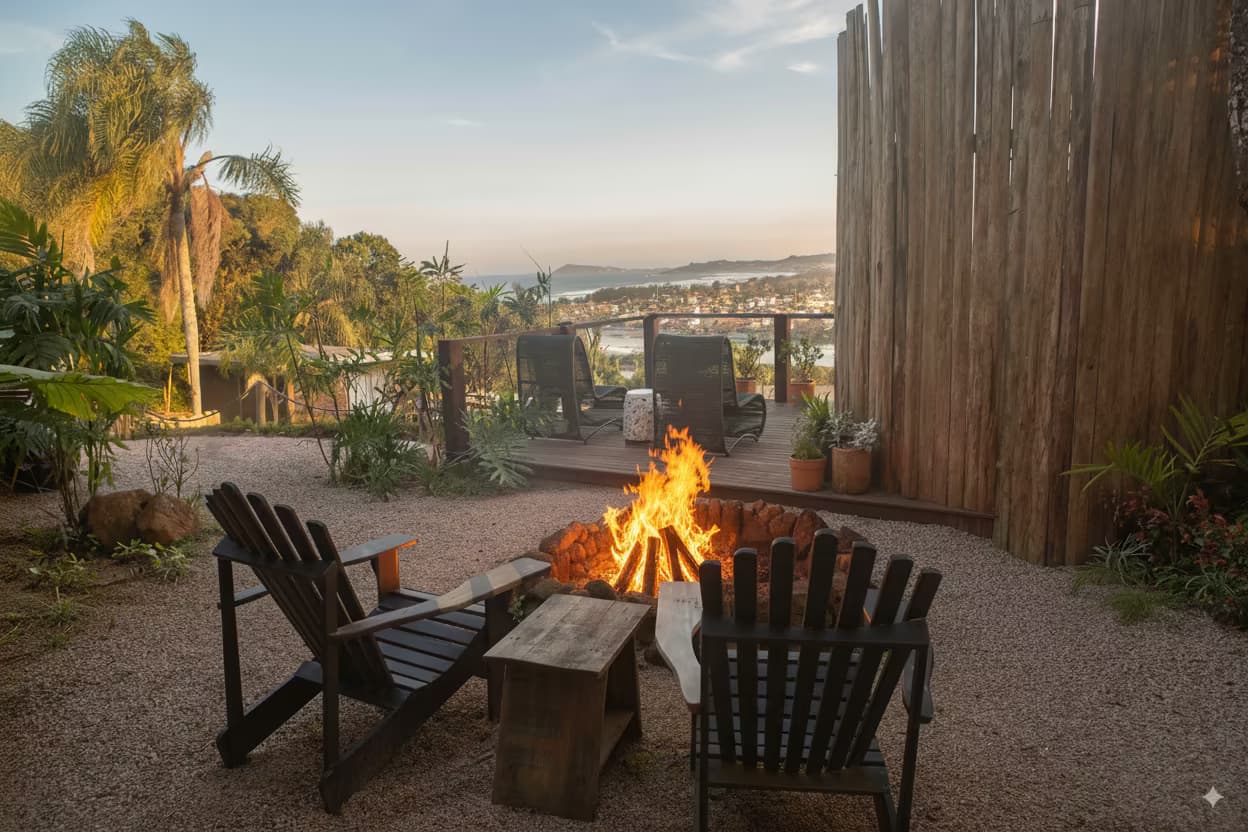
Galeria has a heated pool and fireplace. Atelier has an outdoor tub and fire pit. Bajau has a fire pit and veranda.
The hosts’ travel references: Praia do Luz is about 15 minutes on foot or three minutes by car; Praia do Rosa, about ten minutes by car. For the lagoon, we suggest the access point to suit your outing.
The houses are independent. Leo and Farrell share local suggestions with guests who want guidance and respect the time of those who prefer to stay at home.
→ The Ibirahill houses, availability and planning information at ibirahill.com/casas
Frequently asked questions
What is slow travel and how does it work in Ibiraquera?
Slow travel is the way of traveling in which the goal is to understand a place, not merely visit it. In Ibiraquera, that means staying long enough for the rhythm of the place to set in — getting to know the lagoon, finding Praia do Luz, noticing the difference between the morning and afternoon swell, having a favorite restaurant. A week is the minimum; two weeks is where the magic begins.
Is Ibiraquera suitable for slow travel or is it too busy?
It depends on the season and beach. Rosa has a lively social scene in high season. Luz, lagoon and trails vary with weather, holidays and season. Ibirahill occupies a secluded position on Morro do Elegante, with its own spaces and quiet we look after.
How long should I stay in Ibiraquera for a slow travel experience?
A week is the minimum to begin feeling the rhythm of the place. Ten days to two weeks is where the stay stops being tourism and starts being life — however temporary. The Ibirahill houses have full kitchens, making longer stays logistically simple.
What is the difference between Ibirahill and a luxury resort?
A resort resolves everything for you — and in resolving everything, it disconnects you from the place. Ibirahill does the opposite: it offers genuine comfort and privacy, but places you inside the region, not above it. Praia do Luz is 15 minutes on foot. The fish market is 10 minutes by car. The lagoon is a walk away. There is no programmed entertainment — there is a place with its own texture and time to discover it.
Is Ibiraquera good for slow travel at any time of year?
Yes, but each season has its profile. September to November combines the whale-planning window with northeast-wind opportunities, according to the forecast. Winter brings cooler days and the May–July mullet season, subject to fishing-method rules. Summer has long days and more visitors.
What is the artisanal tainha fishing?
The artisanal tainha (mullet) fishing is an Azorean tradition active in Ibiraquera and on the Santa Catarina coast from May to July. Lookout watchers position themselves on the clifftop mirantes to spot the shoals; they signal the fishermen below with gestures who cast the nets at the right moment. The fish is sold directly at the Barra de Ibiraquera. It is one of the most authentic and visible cultural practices in the region.
Keep exploring
- Ground fire in Ibiraquera — the slow ritual of evenings at Ibirahill
- Artisanal fishing and the mullet run — Azorean tradition still ruling the sea
- Atlantic Forest in Ibiraquera and Praia do Rosa — the biome behind the silence
- Praia do Rosa in the off-season — when the anti-resort meets the beach in the same state